Entries in the 'Spiritual Teacher' Category

Appeal To The Hearts

232.1Question: Charisma is a special endowment, an exceptional personality in intellectual, spiritual, or any other respect, an ability to literally appeal to hearts. You are a very charismatic person. Can you advise how to be like that?
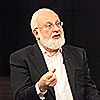
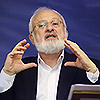
Answer: I do not think I am fortunate enough to attract others. Not at all.

I rely on science, which speaks of the universe, of all the worlds combined, including the upper force that governs the entire universe. And I slightly open the way to this enormous knowledge for everyone that wants it.

I do not have any charisma, I do not want to command, I do not want to attract. Maybe sometimes I can be harsh or rude, but this refers to the desire to be understood correctly and to only follow the path I am walking.

It seems to me that if a person has a goal, then he can captivate others with it. In general, you need to do what is closest to you, what your soul desires. And then you will give a good example to others.
[274664]
From KabTV’s “Kabbalah Express” 11/6/20

Related Material:
Leaders And Charisma
The Charismatic Leader And The Public Good
New Life 1069 – Spiritual Charisma

Does The Appearance Of The Teacher Interfere With Perceiving Him?

592.04Comment: Some researchers state that 50% of information between people is transmitted, not verbally, but by facial expressions and gestures, 38% by voice intonation, and only 7% directly through words. From this, they conclude that the most important thing is how you look and not what you say.

My Response: We live in a material world. The people I teach are in various material and spiritual states. Therefore, one must take into account their ability to be close to the source of the information.

They can be repelled by the lecturer’s behavior, his image, his language, maybe his smell, etc. That is, there is a whole complex process of communication here involving words, facial expressions, gestures; communication occurs through whatever you want.

These factors must be taken into account and expressed in such a way so that the learner or person who you want to convey the information to can be as close to you as possible without having to make additional efforts to overcome all sorts of barriers between you.

Question: During teaching, is it important to you how you look and what you say? Are you careful with every word you say?

Answer: Firstly, I am dealing with students who have known me for more than one year, more than even ten years.

As for scientists with whom I often engage in conversation, they are very simple in their communication. Today, they are no longer as arrogant and vain as they were 30 to 40 years ago. They now understand how limited science is and how it depends on our understanding of nature because it acts within a very narrow framework that is set by human psychology.

Therefore, now, it is much easier to talk to them since they are ready to scrutinize all sorts of aspects of their science in the most simple way. I’m very happy about that. This happened not so long ago, about 10 to 15 years ago. They have a common feeling that there are no “sacred cows”; it is very easy to communicate with them freely, without any “gloves.”

Question: Do you think that facial expressions, gestures, and appearance are important when transmitting information?

Answer: Every year they become less and less important. Look how much simpler scientists have begun to dress.

Question: Why is it that such a small percentage of communication is allotted to words? Do you agree that words are rather difficult for a person to comprehend?

Answer: This is the way we are made. We perceive the biggest amount of information through our sight, a little less through our hearing, and even less through our taste, smell, and tactile sensations.

Question: What are the most effective methods of transferring information? Do you know?

Answer: From heart to heart, but this is a different technique.
[272431]
From KabTV’s “Management Skills” 7/24/20

Related Material:
Non-Verbal Communication
Annul Yourself Before The Teacher
Verbal Transmission Of Information

Spiritual Growth Is Impossible Without Joy

243.04We are in the world of infinity, full of light, which fills the entire universe. But we feel this world as empty, that gives us nothing but a tiny spark of life so that we can somehow exist. Therefore, we do not value this world. Everything in it is hidden, but we need to reveal it.

Concealment and disclosure depend only on us and no one else. I just have to convince myself that I already exist in the world of infinity, in the ocean of infinite light, infinite fulfillment, and I have no shortage of anything. The only thing that I am lacking is my correct attitude. If I relate to the world this way, I will find that it is all there.

This means that I rise to faith above reason thanks to a sense of joy, unity, and mutual support. This is how we discover the world of absolute goodness and see that nothing has really changed except our perception.

Previously, I saw the whole world as black because I judged it according to my shortcomings. And when I correct my attitude to the world, rise to faith above reason, and want to see a good world full of the upper light, the Creator, I see that this is what it really is.

And this is not a psychological suggestion or self-deception but a true reality. I only need to raise myself from the degree of Malchut to the degree of Bina in order to see the world in the quality of bestowal and not receiving.

Then the world will be good, and I will see that everything is fine in it and there is no evil. It is simply that everyone judges to the extent of their own corruption: if there is evil inside me, then I see evil around me. And if I correct myself, I see the world corrected. It all depends on my inner view.

And the most correct attitude is to be in joy. And therefore, it is written: “Serve the Creator with joy.” If we relate to the Creator and the world created by Him with joy, with gratitude, without criticizing the Creator, we will feel that the world is really good. This means that we want to rise from the degree of Malchut to the degree of Bina, to faith (the degree of Bina) above reason (the degree of Malchut).

The Creator treats me well, but it seems to me that I receive blows because instead of being in faith, the power of bestowal, I am in reception. It is I who corrupts His attitude toward me. Therefore, I must make every effort to reveal the goodness of the Creator. After all, there can be no evil in the world if there is no other force than the Creator, who is good and does good.

If it seems to me that there is evil in the world, it is because I am corrupted inside. There is nothing else to fix except my attitude to reality. And then I will see that there is no evil—there is only good.
[273226]
From the Lesson for Women 11/1/20

Related Material:
Turning Anxieties Into Joy
Joy—The Result Of Good Deeds
Joy: A Consequence Of The Correct Action

Hear And Be Heard

231.01Question: The ability to listen consists of three functions: attention, understanding, and acceptance. Attention refers to non-verbal cues. The main non-verbal signal is eye contact. Now, in the era of coronavirus, when we are all in front of screens most of the time, it is very difficult for us to listen and to be heard.

How do you cope with this problem while teaching thousands of students?

Answer: First, I have a constant daily contact for three hours with my students. In addition, they have an opportunity to access the Internet sites of our organization all the time, to read necessary materials there, to watch, to listen, and to participate in common events, etc.

Question: How do you understand that they are listening to you? You cannot see their faces.

Answer: I am waiting for their questions. Students from 150 countries of the world connect to our virtual studies that are held with simultaneous translation into 40 languages. Therefore, we have a huge field of communication: We read small excerpts on a certain topic, everyone listens, and if students have questions, they immediately ask them.

Question: So you do not need to see their faces?

Answer: In principle, no. It is not necessary. I feel a person by his question.

Question: What do you do when you see that a student resists and does not accept what you are saying?

Answer: It depends on what it means that he does not accept. If he is against something, then I must explain it to him. If he is against it anyway, then I have to postpone it for a while.

Question: Do you think that it is useless to prove something?

Answer: No, it is all right to prove. It is very good to do it, just within reasonable limits, since our audience is thousands of people, and I must always feel the time limit.
[273091]
From KabTV’s “Communication Skills” 8/14/20

Related Material:
Contact Of Hearts
To Convey Your Message To The Audience
The Relationship Of Teacher And Student

Fear Of Public Speaking

214Question: How can one get rid of the fear of public speaking?

Answer: If we really have something to say to people and are able to correctly introduce the information they need into the outline of our conversation under any circumstance, then there is no place for fear.

Question: Nevertheless, what if before going out to the public your heart starts beating fast and you are overwhelmed by fear?

Answer: You need to think in advance how to start your performance.

Question: You have no fear at all? No heart throbbing, no pulse quickening?

Answer: No. This is my science and I am an expert in it. Those who do not want to listen to me can leave, and we will talk to those who do. Or, I invite the public to ask questions. Why should I get confused and think about what they do and do not like? If they say what they want to hear, I will try to tell them everything frankly.
[273173]
From KabTV’s “Communication Skills” 8/14/20

Related Material:
Fear—Agent Of Development
A Single Source Of Fears
Many Fears, One Joy

Transfer Of Information In Kabbalah

530Question: Many books that carry spiritual information are written by students who listened to the teacher and then wrote down what he said.

According to modern research, this method of transmitting information leads to its distortion, because we hear only 25% of what the other person says. How can such a transmission be reliable?

Answer: In Kabbalah the transfer of information happens in a different way than in the corporeal world because the student does not just listen to the teacher but to some extent attains him by rising above his egoism, and then he writes down what he has attained. And although it still passes through the student, a completely different information transfer takes place, a completely different channel, which comes from the similarity of qualities of the teacher and the student.

Therefore, the student can “hear” even those things that the teacher does not say but are at this degree.
[273216]
From KabTV’s “Communication Skills” 8/14/20

Related Material:
Annul Yourself Before The Teacher
Benefits Of Oral Communication
Non-Verbal Communication

When The Happiest Period In Your Life Comes

66.03Question: Some scientists have determined the most unhappy age people’s lives. People of different ages were surveyed from 132 countries and found that the happiest period is 18-20 years old.

Then the situation starts to deteriorate. And the worst is 47 to 48 years old. This is an unhappy period in a person’s sensations. This condition lasts up to 60 years and then gradually improves. And at 70, you’re like a child again, so you feel good.

Can you explain these states?

Answer: No. I believe that it all depends on people. If a person behaves normally, works hard, has a family, a job, a goal in life, then I do not think that these are critical years for him.

18-20 years, this is clear: there is a kind of discovery of the world. And then it all depends on the person.

Remark: Here everything is logically clear. By the age of 45, all your hopes are buried more and more. And then you decide: “Well, what to do?!”

My Comment: It depends on what hopes and how to bury them. I do not know what you hoped for, what you wanted to achieve, or why you were disappointed.

Question: If you do not divide the life of an ordinary person into unhappy and happy periods, how should he live, in your opinion?

Answer: Every day is like a lifetime. Start from zero and end with zero. Give everything of yourself for the day! I’ll wake up tomorrow and have a new life.

Question: How can I wake myself up so that I get up and am fully awake until the evening?

Answer: My students oblige me. I feel fear before them. Fear. I have to, I have to do something. I can’t leave them like this. I have to push them, inspire them. I have to turn them on all the time. That’s what really concerns me.

Question: And your thought, what is it for them?

Answer: For them, of course. Not with me. I try not to have any calculations with myself.

Question: In other words, the task is to fully give yourself away?

Answer: The task begins even before the morning lesson starts, when I wake up, even before I start preparing myself for the day, I consider myself dead. Yes, dead. And I don’t need anything from life, except that I have to give it all away now.

Question: So dead means I don’t exist? There is no self-care, and so I go out into the world?

Answer: That is absolutely right!

Question: Is this how I start the day and how I should spend it?

Answer: Sure. And then you have a very correct calculation with yourself, with life, with students. Well then, what happens, this is already in the power of the Creator.

Question: If you take it and transport it to an ordinary person, can they have such an attitude toward their family and children?

Answer: Absolutely the same. He leaves himself, gives himself away. But to the world.

Question: That is, to the family, neighbors, distant ones?

Answer: Yes. That’s how you live, give yourself away. You have no idea how good it is, easy, free, and most importantly, right.

Question: Is this your main advice?

Answer: Yes.

Question: And then there will be no periods of happy, unhappy?

Answer: Nothing!

Remark: I don’t exist.

My Comment: Yes. But you will constantly be in tension whether you give yourself to them.

Question: Is this a good tension? Does it have an element of happiness?

Answer: This is happiness.
[273187]
From KabTV’s “News with Dr. Michael Laitman” 9/7/20

Related Material:
Patent For A Happy Life
The Secret To A Happy Life
A Happy Life For Our Sons

Blitz Of Kabbalah Tips – 7/24/20, Part 2

294.4Question: What did you learn at school and in university that helped you in life?

Answer: I acquired knowledge in certain areas from my studies so that I would be able to understand and to explain, but they actually helped me very little.

Question: What has life taught you?

Answer: That I don’t know and don’t understand anything, and that basically I am nothing.

Question: What did you learn from your teacher?

Answer: That I need not worry that I am nothing.

Question: Do you learn from your students? If so, what do you learn?

Answer: I look at them and I understand that their path is the same as I underwent, and this makes me happy.

Question: What else would you like to learn?

Answer: To be a man.

Question: What skills are required for that?

Answer: To love and to bestow.

Question: Do you only teach or do you also study when you have the time?

Answer: I study independently when I am alone. I don’t need any books for that. Sometimes I read something on my computer. But the study is actually an internal process.

Question: Does this mean that you don’t read any books in order to acquire knowledge or certain skills?

Answer: Of course, there are the books of the writings of Rabash and Baal HaSulam and I read them.

Question: Which question don’t you have an answer to?

Answer: Who am I?

Question: Which question would you like to ask a wise person?

Answer: No question. I had such opportunities. I know that wise people simply sit and keep quiet and that is enough for them.

Question: How do you restrain yourself from passing on unnecessary information to your students?

Answer: I love them.

Question: What can you recommend to your students who see constant paradoxes in your answers?

Answer: Wait.
[272842]
From KabTV’s “Management Skills” 6/24/20

Related Material:
Blitz Of Kabbalah Tips – 7/24/20, Part 1
Blitz Of Kabbalah Tips – 7/2/20
Blitz Of Kabbalah Tips – 6/25/20

According To The Wishes Of The Public

265Question: All marketers advise lecturers to study the audience first before speaking. Do you agree with this?

Answer: But I am not going to satisfy their desires. It does not interest me at all. I have to teach them what I think is necessary and what should interest them.

My classes consist of two parts, which should be done simultaneously. This is the initiation of the desire to know what I want to give them, and the absorption of this knowledge by the students.

Question: Let’s say you were invited to an audience of several hundred people who want to hear about reincarnation, and this is a very difficult topic for newbies. Would you still say what you think is necessary?

Answer: If this topic was ordered in advance, and they discussed it with me, then perhaps I would agree, proceeding from the fact that I really want to get to this audience but they would not agree on another topic.

Taking into account their desire, I would tell them about life cycles, but only in a certain way: why nature needs them, why nature acts with us this way, how we can change them, how the current incarnation can be used to change the whole purpose of life cycles, etc. I will turn it around anyway so that they are interested and want to study.

Question: Would you advise your students to study the needs of the audience before starting a lecture?

Answer: No. The only thing is that we can make our topics fit with what the listeners are doing, for example, zoology, biology, astronomy, etc.
[273075]
From KabTV’s “Communication Skills” 8/14/20

Related Material:
Information Is A Message
Does A Leader Need To Study Public Speaking?
Management And Leadership

What Should A Speaker Do If He Is Interrupted?

597.01Question: What should a speaker or a teacher do when students interrupt him or her? How should we work with such people? I am sure you have had this experience.

Answer: Yes, and more than once. First, I ask not to be interrupted because it will not help. I still have to answer the questions from previous attendees.

Second, I tell them that this is not going to stop me. I can answer any questions, and by their behavior, they simply show disrespect to the people who are sitting next to them and prevent them from listening.

There were very few cases when people did not want to listen to me, only once or twice in America. At one of the lectures, I talked about anti-Semitism, that it would develop in their country, and everyone was outraged: “How can you say this about our America?” They would not be saying that today.

In another lecture, I was talking about the fact that God is nature and that there is no difference between them, it is one law, one force. But the outrage of that audience was just a miscommunication, what can you do…

And all the rest, unless it is an ultra-religious audience, listen to me with pleasure. I do not say anything contrary to faith or any other ideologies. I am just talking about things that are embedded within nature.
[273206]
From KabTV’s “Communication Skills” 8/14/20

Related Material:
Annul Yourself Before The Teacher
Benefits Of Oral Communication
Non-Verbal Communication