Lag Ba’Omer Bonfires
 Question: Lag Ba’Omer is mostly known as a holiday for children and teenagers who gather around bonfires in the evening. Aside from this, we know almost nothing about this day. What is the inner meaning of this holiday?
Answer: When I first heard about this holiday, I also thought it was just a tradition to gather around a bonfire, sit, talk, and sing. And mostly it seemed to be something for children, since adults do not typically sit around bonfires.
Lag Ba’Omer is also associated with Rabbi Akiva and his students, although this holiday is mentioned in sources that are over two thousand years old, meaning that they are more ancient than the time when Rabbi Akiva lived. This holiday represents a special spiritual state that was marked even before him.
Lag BaOmer also commemorates the passing of Rabbi Shimon, the author of The Book of Zohar who was a student of Rabbi Akiva. About 40 years ago, I used to go with my teacher Rabash and other students each year on this day to Mount Meron, where Rabbi Shimon is buried. At that time, about two hundred people would gather there to pray. Everything was very modest and quiet.
In the early 1980s, mass pilgrimages to Mount Meron suddenly began during this holiday with crowds of people, buses, and it became very crowded and noisy on that day. The inner uniqueness of the holiday was lost, and so we stopped going.
The essence of the holiday is reflected in its name: “Lag BaOmer,” meaning the 33rd (Lag) day of the Omer count, which begins right after the first day of the Passover holiday. What exactly are we counting?
The prayer book describes the order of the count and specifies the inner corrections made on each day in one of the Sefirot. Usually such strictly Kabbalistic terms as Sefirot are not used in the prayer book, except in the context of the Omer count.
We must count a total of 49 days, each of which is named after a specific Sefira: Chesed in Chesed, Gevura in Chesed, Tiferet in Chesed, and so on. In this way, we count seven times seven qualities that exist within our soul. These qualities were corrupted by us, and now we seek to correct them within ourselves.
A human being is a desire. If one wants to attain their true fulfillment, they must return to their source, that is, to become similar to the upper force of nature, the Creator.
The Creator is the quality of bestowal and love. This means we must correct ourselves from the egoism in which we currently exist, to love for others. This is the meaning behind the counting of the days of the Omer.
Our corrupted, egoistic desire is divided into 49 parts (seven times seven). Each day we correct one part starting from the lightest desire to the heaviest, that is, from a small hatred to the greatest hatred: 49 degrees of hatred in total. Each time, we correct one degree until we have corrected all of the hatred overall.
Hatred is corrected through light. As it is said: “I created the evil inclination and gave the Torah as a spice for the light in it reforms.” Small portions of light act upon us and correct each of our corrupted desires.
The 49 desires must receive 49 portions of light so that through them they may transform from evil into good from hatred into love. This light can only be drawn through the correct study of Kabbalah, which is called the wisdom of light, the true Torah, since it deals with the correction of the human being.
For this reason, the holiday of Lag BaOmer is connected with Rabbi Shimon, with The Book of Zohar, with Mount Meron, with everything that relates to the inner part of the Torah, to Kabbalah. Rabbi Shimon, through writing The Book of Zohar, passed down to us the method of correction.
[158764]
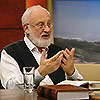
From KabTV’s “New Life 559 – Holidays And Festivals: Lag Ba’Omer,” 5/3/15
Related Material:
New Life 559 – Holidays And Festivals: Lag Ba’Omer
Lag Ba’Omer: The Secret of a Great Soul
A Day Of A Special Illumination Of Rashbi
 c
c Video:
  Audio: