An Oath That Cannot Be Broken

laitman_528_02The Torah, “Leviticus,” 23:24 – 23:25: …In the seventh month, on the first of the month, it shall be a Sabbath for you, a remembrance of [Israel through] the shofar blast a holy occasion. You shall not perform any work of labor, and you shall offer up a fire offering to the Lord.
A person is a desire to receive, to enjoy. There is nothing in him but an egoistic desire. This means that he has to limit himself in some way and to sacrifice his ego. I, for example, stopped smoking, if it can count as a sacrifice of certain pleasures.

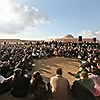
Actually it isn’t a sacrifice, but a simple calculation: I want to be healthier, which means that under the influence of the environment a person calculates what is more beneficial and the environment increases the benefits of this specific action. That is what happened when I stopped smoking. I got together with a couple of friends and we swore to each other that we would stop smoking. Everyone threw his pack of cigarettes into the center of the circle and then we swore that we were committed to keep the oath.

In other words, if I promised my friends in the circle, I have to keep my promise since it was a spiritual action that I was about to perform with the friends I came to this unified decision with. I wanted to establish an even greater connection with them through that action, which is the preparation for the feeling of the revelation of the Creator, and so I see it as a spiritual action.

There is no greater treason than breaking a promise because it is exchanging one state with another when we raise the earthly decision to the spiritual level. Generally speaking with such a yearning for unity, we can commit ourselves to anything and it will be achieved. This already depends on the people.

Question: Why do people sometimes break their promise?

Answer: A person tears himself from the circle. There are two approaches that he should constantly renew internally and even cultivate: First, he holds on to the point of view that now he is much more than whole, perfect, purer, and higher compared to the state he was in previously when he smoked, for example, and thus reaches a new level. Second, he has to constantly feel that he is in front of his friends and that he cannot betray them since the Creator is a witness to this oath.

If I keep cheering myself that I am on a higher level than I was previously, or that I am facing the friends and promise them (actually not to them, but to myself) that I will never have another cigarette, it gives me power and then I feel that nothing is too difficult. I know that I could suffer terribly if it weren’t for the friends, since a person’s physiology doesn’tchange. But it is actually because I imagine that I am committed to them that I have no problem.

For us it was a remembrance of Israel. We realized that we had gathered not simply in order to stop smoking but that we could also use this means (the group) in order to purify ourselves or to even realize that it was possible, with the help of the wisdom of Kabbalah and our advancement forward.

Question: What does the Shofar blast refer to in this case?

Answer: The Shofar blast refers to something that cannot be expressed, which stems from the heart, not of an individual but of everyone together. The Shofar blast symbolizes this state, which stems from Malchut that wants the Creator to appear in order to perform a spiritual connection and to give birth to the next level.
[154725]
From KabTV’s “Secrets of the Eternal Book” 6/11/14

Related Material:
Overcoming Instead Of Fighting Windmills
The Principal Witness Is Summoned
Only Forward And Not One Step Back

A Deficiency Worthy Of Our Effort

Dr. Michael LaitmanWe have to try hard and do our best in order to advance towards the goal of creation. After all, this road is much more than our natural development.

A Hard Nut

Nature pushes us forward and develops different desires and deficiencies in us, and we, of course, chase after and search for what we lack. What we lack are pleasures that are associated with food, sex, family, money, honor, and knowledge,

This is also how monkeys constantly take care of their needs, and their list of needs  similar to ours. In fact, we have a common lifestyle: We establish the same social hierarchy in human society; we love power, and in addition to that we love money. Nature obliges us to do so and this is how we advance.

But we haven’t advanced in any significant manner in this natural way and haven’t changed human society in any meaningful way in the last five to fifty thousand years.

If we speak about the goal of creation, however, it is about becoming similar and equal to the Creator, about adhering to Him. The Creator is a force that is opposite to our nature. We have a slight inclination to it that is tightly wrapped in a variety of “robes,” which is very subtle, covered by a shell like a nut.

To reach the goal of creation, we have to be equipped with a new deficiency not provided for by nature. This deficiency, the yearning for the goal of creation, will not grow in us by itself; we need to develop it inside us by our own efforts, of course with the help of the means we were given: a society, a method (the Torah), and the teacher.

The problem is that very few people want that, even less tend to the real search, and even less attain what is desired.

Coming Out of the Jungle

The truth is that today things are changing because we are facing global blows that threaten all of humanity. These blows have forced us to think about a new society that is not arranged according to a hierarchy or social classes that always raise those who are richer and more powerful.

Things are similarly arranged in the animate world. Generally speaking, this is the natural structure of a group, a nation, a society, humanity: the biggest baboon beats his chest and demands submission and obedience from others. We are the same: living in a general jungle divided into packs.

But the new nature, the goal of creation, demands a new organization and reformation from us; it demands that we become a circle, connected, one society. It demands new values based not even on desires for knowledge, which also give a little force, but on love and bestowal, on general mutual care.

It requires everyone to be on par with each other rather than seeking to dominate one another. In contrast to the old paradigm, the more a person exits himself further toward care for others, he can become more adapted to the real goal of our evolution, which is what we should reach.

It is time to be equipped with a new deficiency that becomes a circle, connection outside myself where I have no self interests.

The Birth of Man

But for me to flourish, something called Adam (man) needs to be revealed; there is a need for a different environment that provides me with the right examples of the new values. Where can I get the need for that? Nature doesn’t equip me with it because otherwise I would remain a baboon albeit of another kind.

However, a human being is not only a different social structure and not only equality with others. No, it is an attitude, an inclination; this relationship, mutual connection, must be conscious on my part so that I should want bestowal because of its special value. Moreover, I have no inclination for it, no power that awakens me and obliges me to want it.

Here we should somehow be equipped with a desire, with a new direction, for which we have no desire. In order to do so, there is the upper force, nature, the plan of creation that prepares an aid for me in an opposite manner so that during the process of the recognition of evil, I will still be able to understand who and what I am. And gradually, through quite difficult phases in the order of cause and effect, I will understand what deficiency I have to develop inside me in order to continue my advancement above it.

When I understand the problem I am facing in constructing a human being from the state of a baboon, I regard this new deficiency as a very valuable thing. If it is revealed in me, at least to some extent, I am very happy because this is how a human being is born that is ready to ascend above the creation.

The Exact Opposite

We have to relate to the deficiency that appears in us through the evil inclination that the Creator has created. It is called by different names: Pharaoh, Bilam, Balak, and Amalek. There are 70 names for the evil inclination, and on every level and in every state, they serve as help against opposition to the goal and enable me to advance towards it.

This help invokes an inclination, an urge in me, that is focused precisely on the goal. It helps me in a qualitative manner so that I will gradually understand how different this new goal is from my current feelings and mind. Therefore, we have to relate to all the disruptions that are invoked in us with great sensitivity.

Red Days on the Calendar

The same thing refers to all the Jewish holidays and the red days on the calendar. Rosh Hashana, Yom KippurSukkot, Simchat Torah, Tu Bishvat, Purim, Pesach, Lag Ba’omer, Shavuot, and the 9th of Av are all states along the way in which a new deficiency is revealed, a revelation of new evil that allows us to use it correctly, intentionally, and consciously.

It is revealed within us in this manner so that we will be free in our advancement towards our goal in a conscious manner, like human beings and not like baboons that nature pushes and who run ahead only by the force of the ego. We discover several forces and the balance between them.

The main thing we learn from these holidays is which special deficiencies we need to discover in order to ascend to every level that the holidays and special days represent. They require a deficiency that is focused on attaining the goal.

This deficiency stems from the human level that is external to us. If we look correctly at the problems that arise, we will discern the help against the creative force within them.
[155037]
From the 1st part of the Daily Kabbalah Lesson 3/02/15, Writings of Rabash

Related Material:
The Train Stops At Each Station On The Way To The Goal Of Creation
The Need To Be Human
Upgrading Human Psychology

Dissemination Action Is Not Easy

laitman_254_02Question: Why do many Kabbalah groups not study Baal HaSulam’s articles such as the “Giving of the Torah,” “Arvut,” etc., but  concentrate on Talmud Eser Sefirot (TES) and The Book of Zohar?

Answer: It is because it does not force them to do anything. By studying TES or The Book of Zohar, they don’t think about the main commandment which is “Love Thy Friend as Thyself,” which has to spread throughout all of Israel. This is because the nation of Israel, and later the whole world, needs to return to general unity, to the Creator.

Question: Do we see at least some movement and progress towards it from them? If, for example, I am occupied with my most corrected thoughts in doing some physical commandment, do I by that correct my relation with the friends or my attitude towards the world?

Answer: With my being occupied only in self-correction, I become a bigger egoist because I feel as if I am doing something. And remember, when a man is pulled to dissemination, he initially feels a huge resistance to it until he begins to feel that precisely in this action lies the foundation of correction. We don’t have any other way than to disseminate to large audiences, which is for us the main thing. As it is written: “When will the Messiah come? When the Torah will be disseminated in the whole nation.”

If we put ourselves into the action of strict commandments with intentions without understanding their inner meanings, then we narrow and restrict ourselves so much that we would never be able to go out to the people with this method. They would not receive or understand us; rather, they would perceive us as a cult or as just religious people that in addition to all the rest also study the wisdom of Kabbalah.
[153423]
From KabTV’s “Secrets of the Eternal Book” 5/14/15

Related Material:
A Shared Mission
The Meter Is Ticking
The Time Has Come!

A Deficiency For The Image Of The One Who Bestows

laitman_236_01Question: What is a deficiency for resembling the Creator? What should I yearn for?

Answer: I have to find out what form of the one who bestows should be revealed under the conditions of each and every concealment when I feel that something hurts or when something goes wrong. If a certain deficiency, meaning that I feel that I lack something, is revealed in this world, which is all my desire, it means that I lack only one thing: the revelation of the Creator.

But I have to determine in exactly what way. I don’t simply cry out that I feel bad. This is totally wrong. I am even glad that I feel a deficiency and am thankful for the mind and feelings that I was given that allow me to understand that it is a deficiency for the Creator. It was done on purpose so that I will pay attention to Him.

Thus, I develop a deficiency for the image of the one who bestows, not in order to feel good in my ego, but in order to have the opportunity to discover the Creator and to delight Him. I don’t even want to feel that; I don’t want to receive a reward this way.
[134467]
From 1st part of the Daily Kabbalah Lesson 5/2/14, Writings of Rabash

Related Material:
Drawing the Creator’s Image When He Is Concealed
What Is The Creator’s Image Built Of?
Understanding His Providence

The Light Of The Torah And The Influence Of The Mitzvah

laitman_527The Zohar with the “Sulam Commentary,” “Parshat Tzav,” paragraph 50: And further, “Fire shall be kept burning upon the altar continually….” This is the Torah; this is what is said about it. “Certainly my words are like fire” says the Creator, you certainly won’t extinguish them, for a transgression does not extinguish the Torah. But a transgression extinguishes a Mitzvah….

There is Torah and there is Mitzvah. Torah is the general Light that acts upon us and advances us. This is the general system.

Suppose that in the physical world physics and the laws in which we exist help us explore some space. That is how it is with the Light of Torah also. It keeps us in spiritual levels all the time; it makes no difference whether we are found above, below, in descent or ascent. We are found in descents and ascents all the time since we must constantly fall into the ego and transform it into altruism until we move through our entire ego and correct it through altruism.

The intentions in order to receive are left on the side and we move our desires to the other side with intentions in order to bestow. The fall into the ego and our departure from it are similar to the movement of a piston up and down, from the lowest critical point to the highest point in which we are found in contrasting states: either with an altruistic intent or completely egoistic. In order to get out of this state there is a general force called Torah, the Light that advances us.

The fall into a low state is called a sin. The ascent to the higher state is called a Mitzvah, correction. We are constantly found between sin and correction, sin – correction. So it is said, “There is no Tzadik (righteous) on earth who will do good and not sin” (Midrash Kohelet Rabbah 7), and only after he corrects the sin does he become a Tzadik. The state in which I am found in the high point after I have corrected the sin is called a Mitzvah. That is how the ignition is created in me. Just as a piston that reaches the high point when it compresses the fuel mixture and it is fired, so also the Light appears in me, which is an additional moving force through which I advance.

Thanks to that power of movement I begin to understand more, to recognize, to see, to be integrated into everything. This is exactly what helps me and forces me to descend into the next situation, into an even lower point, into greater ego. After all, if I accumulate sufficient power, then I can descend, perceive my egoistic desire, descend into absolute darkness, pass through the low point, and rise again.

A Mitzvah is a high state, additional Light that is created as a result of burning my egoistic power, transforming it into altruism. This means that to the general Light of Torah is added a Light called Mitzvah. Both the Torah and the Mitzvah exist only in the upper part. The additional Light makes it possible for me to descend into the lowest and most egoistic part. But the further I descend, the power of the Light of the Mitzvah also descends. So when I reach the lower part, I am ready to pass through it only because I have a small general Ohr Makif (Surrounding Light), which is called the Light of Torah. It reaches me from the environment, from the group, like a liquid that flows from one vessel to another vessel.

Question: Why don’t we explain this to people?

Answer: It is up to a person himself to produce all of these states within himself. Otherwise, my words will just remain a nice example for him. After a day or two, even after two minutes, he will forget everything. But in spite of it all he still must search and obligate himself to pass through these states, like a child who is intentionally given a task so that he will sweat and try, and so he grows. The ready made example doesn’t help.

Question: But is a person prepared to contend with this alone?

Answer: No, he can only do this with the help of the group. Towards where would I direct the Light that I received after I descended? It is towards the group, just like a receptacle.

For example, the torque of the crankshaft operates the piston. The rotary torque that accumulates the energy is the group. So I can always advance up and down through back and forth movements towards the group.
[134305]
From KabTV’s “Secrets of the Eternal Book” 11/27/13

Related Material:
The Commandments And The Laws
The General Plan And Every Step Along The Way
The Commandments Are The Steps Of Unity

Like A Bundle Of Reeds—Expendable, Part 2


Like A Bundle of Reeds, Why Unity and Mutual Guarantee Are Today’s Call of the Hour, Michael Laitman, Ph.D.

Chapter 6: Expendable
Contemporary Anti-Semitism

The Writing on the Wall

And yet, by the onset of the 20th century, the Jews had grown so far from their intended vocation that, by and large, they became either utterly preoccupied with meticulous observation of the practical commandments, forgetting or rejecting their internal meaning, or fully absorbed in worldly, material desires, forgetting or rejecting their irrevocable vocation. At a time when egotism spiked to levels that threatened world peace, neither avenue was desirable, and some of the nation’s great spiritual leaders began to warn that time was of the essence, that we had to wake up to our mission and carry it out before calamity unfolded.

The great scholar humanist, and Kabbalist, Rav Avraham Yitzhak HaCohen Kook, desperately tried to alert the Jews to the growing anti-Semitism. He warned them that no country would be safe for them, and that Israel was the only secure option. In retrospect, the content of his premonition is alarming, giving us a glimpse into the depth of such people’s clarity of vision.

The treatise in which he entreated with the Jews to come to Israel was called, “The Great Call for the Land of Israel.” Note not only his plea, but also his warning regarding the Jews’ possible future in their homelands: “Come to the land of Israel, delightful brothers, come to the land of Israel. Save your souls, the souls of your generations, and the soul of our entire nation. Save it from desolation and oblivion; save it from decay and degradation; save it from all the uncleanness and wickedness, from every trouble and plight that might befall it in all the countries of the nations without exception.

“‘Come to the land of Israel!’ We shall call out with a loud and terrible voice, with the sound of thunder and a great voice, a voice that stirs storm and quakes the heaven and the earth, a voice that tears every wall in the heart. Run for your lives and come to the land of Israel. The voice of the Lord is calling us, His hand is stretched out to us, His spirit is in our hearts, and He assembles us, encourages us, and compels us all to call out loud with a terrible and mighty voice: ‘Our brothers, children of Israel, dear beloved brothers, come to the land of Israel. Assemble one by one, wait not for formal words and orders; wait not for permits from renowned ones. Do what you can, flee and gather, come to the land of Israel. Pave the way for our beloved and oppressed nation. Show it that its way is paved already, stretched out before it. It must not rest; it has nothing to demand; it has not many ways and routes. There is one way before it, and this is the one it shall march; it is the one it must march, specifically to the land of Israel.’”[i]

The Rav Kook was not alone in his concern. In Poland, a brilliant young dayan (Orthodox judge) in Warsaw—at the time the biggest and most prominent Jewish community in Europe—Rav Yehuda Ashlag, who later became a renowned commentator on The Book of Zohar, did not settle for publicly announcing that all Jews must flee Europe. He arranged for the purchase of 300 wooden shacks from Sweden and a place for them to be erected in the Land of Israel (which was then called “Palestine”).

Alas, his plan was thwarted by opposition from leaders of the Jewish congregation in Poland. The tragic consequence of Ashlag’s failure to bring his fellow Jews with him was that of all the Jews who contemplated coming with Ashlag, only Ashlag and his family eventually emigrated. The rest of the families remained in Poland and perished in the Holocaust.[ii]

Both the Rav Kook and Rav Ashlag (Baal HaSulam) expressed how they perceived the rise of Nazism to power, and specifically Hitler. Keep in mind that Rav Kook died in 1935, four years before World War II even broke out. Below are Rav Kook’s edited words (to make them more reader friendly, due to the length of the text and its antiquated style), followed by the words of Baal HaSulam.

The prophet predicted a great Shofar of redemption. [A Shofar is a ram’s horn used for festive blowing, but it also represents a clarion.] We pray specifically for the blowing of a great Shofar. There are several degrees in a Shofar of redemption—a great Shofar, a medium Shofar, and a small Shofar. The Shofar of the Messiah is considered the Shofar of Rosh Hashanah [Hebrew New Year’s Eve]. The Halachah [Jewish law] distinguishes between three degrees in the Shofar of Rosh Hashanah: 1) A Shofar of Rosh Hashanah that is made of a ram’s horn; 2) In retrospect, all Shofars are kosher; 3) A Shofar from an impure beast, as well as a Shofar from beasts of idol-worship of a non-kosher gentile. However, if one has blown such a Shofar, one has done one’s duty.

It is permitted to blow any Shofar, kosher or not, as long as one does not bless over it, and the degrees explained in the law of the Shofar of Rosh Hashanah coincide with the degrees of the Shofar of redemption.

Yet, what is a Shofar of redemption? By the term, “Messiah’s Shofar,” we refer to the awakening and thrust that causes the revival and redemption of the people of Israel. It is this awakening that assembles the lost and the rejected, and brings them to the mountain of holiness in Jerusalem.

Throughout the generations, there have been those in Israel who felt the awakening that stems from the desire to do God’s will, which is Israel’s complete redemption [bringing all of Israel to the quality of bestowal]. This is the fine and great Shofar, the people’s desire to be redeemed.

Sometimes the desire dwindles and the zeal for sublime notions of holiness is not as fervent. However, the healthy human nature remains, and sets off a simple desire in the nation to establish its rule in its land. That natural desire is the ordinary, medium Shofar, which is present everywhere. That, too, is still a kosher Shofar.

However, there is a third degree to the Shofar of the Messiah, which is nonetheless comparable to the Rosh Hashanah Shofar: it is the small, non-kosher Shofar, which is blown only if a kosher Shofar cannot be found.

Thus, if the zeal for holiness and yearning for redemption that derives from it have all but vanished, and if the natural national desire for a national life has diminished, too, and no kosher Shofar is found by which to blow, the enemies of Israel come and blow into our ears for our redemption. They force us to heed the Shofar’s voice; they warn and rattle in our ears, and give us no rest in exile.

[This part is quoted in full.] “Thus, the Shofar of a foul beast becomes the Messiah’s Shofar. Amalek, Petlura [anti-Semitic Ukrainian leader], Hitler, and so forth, awaken for redemption. One who did not hear the voice of the first Shofar, or the voice of the second … for his ears were blocked, will hear the voice of the impure Shofar, the foul [non-kosher] one. He will hear against his will. …While there is redemption in that whip, as well, in the plight of the Jews, one must not bless over such a Shofar.[iii]

Baal HaSulam, too, made several references to Nazism, including how he believed it could be overturned. In his words, “It is impossible to bring down Nazism unless by a religion of altruism.”[iv] Note that when Baal HaSulam speaks of “religion of altruism,” he does not mean that we should perform certain rituals or observe particular conducts. Rather, by “religion of altruism” he means that one has changed one’s nature into that of altruism. At the same time, people will choose whether or not to stay in their formal denominations, regardless of this transformation.

Baal HaSulam also disputes the notion that Nazi Germany was a once-in-history event. It may have been the first, but he believed that unless we do what we must, it will not be the last. In his words, “It turns out that people mistakenly think that Nazism is only an offshoot of Germany … all the nations are equal in that, and it is utterly futile to hope that the Nazis will perish with the victory of The Allies, for tomorrow the Anglo-Saxons will embrace Nazism…”[v]

In light of the spike in anti-Semitism worldwide, it would be wise to seriously consider the words of these wise men. After all, we can evidently see that anti-Semitism has not vanished, nor has Nazism or the call to do away with the Jews.

[i] Rav Yitzhak HaCohen Kook (the Raiah), Essays of the Raaiah, vol. 2, “The Great Call for the Land of Israel,” 323.

[ii] Aaron Soresky, “The ADMOR, Rabbi Yehuda Leib Ashlag ZATZUKAL—Baal HaSulam: 30th Anniversary of His Departure,” Hamodia, 9, Tishrey, TASHMAV (September 24, 1985).

[iii] Rav Avraham Yitzchak HaCohen Kook (Raaiah), Essays of the Raaiah, vol. 1, pp 268-269.

[iv] Rav Yehuda Leib HaLevi Ashlag (Baal HaSulam), The Writings of Baal HaSulam, “The Writings of the Last Generation” (Ashlag Research Institute, Israel, 2009), 853.

[v] Rav Yehuda Leib HaLevi Ashlag (Baal HaSulam), The Writings of Baal HaSulam, “The Writings of the Last Generation” (Ashlag Research Institute, Israel, 2009), 841.

World Kabbalah Convention “Day Three” – 03.13.15

World Kabbalah Convention, Day Three, Lesson 6

[media 1] [media 2]

Reaching Happiness

laitman_558Opinion (Hugh Mackay, social researcher, author of twelve books, including five bestsellers): “I actually attack the concept of happiness. The idea that – I don’t mind people being happy – but the idea that everything we do is part of the pursuit of happiness seems to me a really dangerous idea and has led to a contemporary disease in Western society, which is fear of sadness. It’s a really odd thing that we’re now seeing people saying ‘write down 3 things that made you happy today before you go to sleep,’ and ‘cheer up’ and ‘happiness is our birthright’ and so on. We’re kind of teaching our kids that happiness is the default position – it’s rubbish. Wholeness is what we ought to be striving for and part of that is sadness, disappointment, frustration, failure; all of those things which make us who we are. Happiness and victory and fulfillment are nice little things that also happen to us, but they don’t teach us much. Everyone says we grow through pain and then as soon as they experience pain they say ‘Quick! Move on! Cheer up!’ I’d like just for a year to have a moratorium on the word ‘happiness’ and to replace it with the word ‘wholeness.’. Ask yourself ‘is this contributing to my wholeness?’ and if you’re having a bad day, it is.”

My Comment: Kabbalah offers relationship to the world in the middle line—to determine everything according to the benefits of achieving the goal of existence, which is on the convergence of happiness and difficulties. But it is necessary to reveal the true purpose that can be only above the life that leads to this goal, and to compare what is happening with the approach of the target.
[154908]

Related Material:
If You Want To Be Happy, Then Just Let It Be!
Find The Formula For Happiness
Instructor Of Attaining Happiness

I See You In The Next World

laitman_933Question: The friends may be great and feel the meaning of the concept of the center of the group and of one heart, but what should I do if I don’t feel that and don’t know how to work correctly?

Answer: This is clarified in the mutual work. You have to start seeing the friends through the center of the group, united as one. They may not know that they are and may not understand it, but you will see that they are actually already in spiritual connection.

You have to see their advanced states, and it depends on your desire to see them as such. I, for example, want to see how successful you all are since you are like my own children, and so I see that. But it is because of the concern and the desire that you should attain it that I see your future form.

Seeing the friends as successful means seeing them united and revealing the Creator in order to delight Him, which means seeing them in spiritual states.

We should see all of reality as one system. The corporeal world and the spiritual world don’t exist separately; they are a unified whole. It all depends only on the eyes of the beholder.

The Creator is revealed among the friends, which means that there is a force of mutual bestowal operating among them, that’s all. The Creator is revealed only in the right connection between us. This is called the Creator. It is in this connection that we turn to that force.

He isn’t found anywhere else. We mustn’t picture or imagine that He is in another reality, but only among us. The Creator has no form. There is a certain inconceivable identity that is revealed if we provide Him with the system to be revealed in. If all the components are properly connected, we discover Him.

It is as if there is a magnetic or an electrostatic field and if we build a system to detect that field, the system will begin to work: the lights will turn on, and the wheels will spin. After all, we have properly assembled the machine and now it perceives the force of the field that is around it, the black energy.

We live in the world of this energy that is revealed in it in different lower forms, such as the force of gravity and other physical forces, but we want to discover the primary force in which the upper thought and the desire are concealed and not the outcomes, not the particular fields.

These fields are revealed in matter, since matter is already arranged that way. This is the reason that we study matter. On the corporeal level we discover these outcomes on the surface of the earth and in the universe, but when we ascend to a different level of the connection of matter we discover a different field. It is called the “dweller (Shochen) who dwells in the Shechina.”
[133711]
From from 1st part of the Daily Kabbalah Lesson 4/20/14, Writings of Baal HaSulam

Related Material:
A Molten Sphere
Building Divinity
How Can I See The Real World?

About Internal Beauty

laitman_543_02The Torah, “Leviticus,” 21:16 – 21:18: And the Lord spoke to Moses, saying, Speak to Aaron, saying: Any man among your offspring throughout their generations who has a defect, shall not come near to offer up his God’s food. For any man who has a defect should not approach: A blind man or a lame one, or one with a sunken nose or with mismatching limbs;

From a spiritual point of view, a blemish is a flaw, an internal corruption of a person, a flaw in his spiritual yearning for connection and unity.

Question: How is a person’s inner flaw determined?

Answer: It is impossible to determine it externally since it is concealed even from the person himself until he discovers it inside him by himself. This is called the concealed wisdom or the concealed knowledge. It is only to the extent that a person can reveal the defect inside him and bear it that he can fulfill it properly.

The blemish is totally unfelt and cannot be seen on the outside since no one knows what a person’s intentions are. He can perform actions that may seem absolutely stupid and even harmful, totally tasteless and egoistic, on the outside, but in fact everything is totally different because the character and the quality of the action determines the intention.

Comment: But in our world everything is opposite from the Torah, which only refers to the intentions when it speaks about a person.

Answer: These limitations do not refer to a person’s external appearance, of course. Moses, for example is described as very handsome, tall, and strongly built. Can a 120 year old person really look that way? It is only about his internal beauty and purity.

I first understood that when I studied with Rabash. He asked me to help find a match for a certain girl and I decided to introduce her to a guy who studied with us. The girl was very intelligent, really smart, and a talented painter who later gave one of her paintings as a present to Rabash. I invited the guy and the girl to lunch at my place and they spoke and then went for a walk and two hours later he came to the lesson and told me that he doesn’t like the way she looks. I passed this information to Rabash since the future of that girl was very important to him. At first he didn’t understand what happened, but when I explained it to him he wondered: “so he only looked at her externality?!” The guy couldn’t ascend above his reason, and eventually life didn’t work out for him or for the girl. He got married and had five children, but then got divorced after a while. She got married and had one child and then divorced her husband.

Rabash always said simply: “Love is a kind of animal that is built by mutual concessions.”
[154161]
From KabTV’s “Secrets of the Eternal Book” 4/28/14

Related Material:
Process Of Self-Scrutiny
Opening Pandora’s Box
Correcting The Last Level