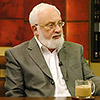
Iranians Are Conquering Fear

547.01Comment: Protests continue in Iran. It seemed like it would end very quickly that they would be crushed because the government has strong control, mainly through fear and intimidation. But suddenly the protests are continuing, which began after the morality police killed a 22-year-old girl. People went to the streets. They show footage of women taking off their hijabs and cutting off their hair.


It seemed that only fear worked, that man was a slave to fear. And suddenly, there’s a state of rising above it.

My Response: I understand. The fact is that Iran is a special country, spiritually developed, not religiously. An ancient, I would even say, respected country, which is one of the cradles of civilization.

Question: The Persians?

Answer: Yes. If they awaken correctly, this country will be very strong and prosperous.

Comment: It is interesting that you say this about our, one might say, bitter enemies.

My Response: It doesn’t matter. The enemy can also be respected.

I once visited a fugitive Sufi in England. There are many such people there. So you can’t discount all this.

Comment: How highly he spoke of love!

My Response: Yes. It lives in Iranians.

Question: Do we need to establish some kind of relationship with them after all?

Answer: It depends on them. I think we would certainly agree to it, but their party is too religious. In general, there are no qualms between us on either side. Absolutely.
[304563]
From KabTV’s “News with Dr. Michael Laitman” 9/29/22

Related Material:
Iran, Jews, and the Atomic Bomb
“Will WW3 Start Because The Tensions Of Israel And Iran?” (Quora)
“What It Takes To Make Peace With Iran” (Times Of Israel)

Any Appeal to the Creator Helps

624.07Comment: Prayer in the heart arises automatically, that is, any lack that manifests itself: I want to drink, I want to eat, I want, I want.

My Response: Every living being, everything that exists, has it.

Question: What does the Creator think about this?

Answer: Nothing. He Himself awakens these desires and He also fulfills them.

Question: Does He want me to ask? Or is there no point in this?

Answer: If you ask against your nature, above your nature, then this is a completely different matter. You consciously turn to your nature and to the Creator, and you want to change yourself.

Question: If, for example, I am ill and I want to be cured, then, in principle, is there a point to ask the Creator about this; after all, He caused this disease?

Answer: The request helps in any case. Any address to the Creator helps. It is better to turn to Him and ask for anything just to be directed straight to Him.

In fact, prayer should consist of the correct direction, called Kavana, intention, and then it will be very effective.
[303923]
From KabTV’s “Spiritual States” 9/25/22

Related Material:
What Is Prayer?
A Request To Return To The Source
The Request And The Answer At Once

Are We Facing the Fate of Sodom and Gomorrah?

631.1Changed apartments—moved from Sodom to Gomorrah (Stanislaw Jerzy Lec).

My Response: Still there is a difference. There is Sodom and there is Gomorrah.

Comment: But still, both cities were destroyed.

My Response: It does not matter. They were destroyed, but in different ways.

Question: Where should I really move to if I want to escape from Sodom, from the desire to live for myself?

Answer: Only inside yourself. Break through your egoism, and there is the Creator inside you.

Question: Then there will be a way out, we escape from Sodom to the Creator? Is that what He wants?

Answer: This is the only way to attain and reveal Him.

Question: When the Creator says: “I will destroy Sodom and Gomorrah,” what does that mean?

Answer: It means those forces that prevent us from revealing Him.

Comment: The Creator seems to say: “You have to reveal Me. But you resist, so I must destroy.”

My Response: Yes. These are two disgusting qualities that specifically prevent and very much hinder the revelation of the Creator. They are not egoistic in general, but they confuse us along the way and there is nothing we can do. These are qualities within a person.

Question: Why are these qualities not egoistic?

Answer: Let’s say a prohibition to steal or prohibition to take from the other.

Question: Are these the laws of Sodom?

Answer: Yes. It turns out that not only can you not give to the other, but you have no right to receive from the other. You cannot help and accept help. You have to live independently, on your own, very precisely and correctly.

Comment: “Mine is mine, yours is yours.”

My Response: If we all lived in the world today according to such laws, the world would be different.

Question: Then why does the Creator want to destroy Sodom and Gomorrah?

Answer: Because it does not lead to correction, to coming closer to each other, to mutual support, mutual adhesion, and to revelation of the Creator.
[304452]
From KabTV’s “News with Dr. Michael Laitman” 12/27/21

Related Material:
Heaven And Hell Are “Frames” We Experience Within
Why Was The City Of Sodom Destroyed?
Is Sodom That Bad For The Will To Receive?

Where Is the “I” Of the Kabbalist?

281.02Question: You, as a Kabbalist, are a kind of a substance that consists of desires and intentions. You look just like any other person. How do you build some of your consistent actions in our world?

Answer: On one hand I am a teacher; whoever wants to receive the knowledge that I possess from me can get it through the regular lessons on the Internet, through books, and so on. On the other hand I am an educator. Those who want to listen to my advice can receive it.

Besides that, I also influence the world based on my inner potential. This influence is not perceived and not felt by others. Those students who are next to me feel it during lessons. But, in general, it is not perceivable; it cannot be measured in any way, you can only feel that there is some kind of power in this person. When you are next to him, it penetrates you, but nothing more than that. It is not something obvious.

There are Kabbalists who lived in this world and left books and disciples behind them. Now they are gone, but this does not mean that they do not exist and do not act, and act, even more than we do! This is because they are in the system, only they are not perceived by us.

And I am still in a system that is felt by the lowest level in existence. Due to the fact that I am on the same level with them, I can help them, show them, give an example, and support them.

Question: Where is your “I”?

Answer: “I” is the most acute sense of the need for self–realization. What would I like to do most effectively at this moment in order to realize myself? This is called “I.” Obviously it already depends on the person, what he would want.

Question: And your “I”?

Answer: I think I am trying to do that in all my actions. For example, now I urgently need to run to realize my “I” in front of hundreds of people who, in turn, will listen to how they can realize their “I.”
[304244]
From KabTV’s “I Got a Call. Where is the “I” of the Kabbalist?” 9/8/13

Related Material:
Who Rules The World?
Who Is Managing The World And Is There Any Evidence?
A Kabbalist Can Stop A War

It All Depends on One’s Attitude to Life

625.02Comment: When there is pressure that you didn’t see coming, it seems easier to outlast it than to throw yourself into the millstones of the group.

My Response: It depends on one’s level and one’s understanding of his purpose in life. If my goal is to be healthy, then I am happy to go under the surgeon’s knife and I even pay a lot of money for the surgery.

But if my goal is only to live well with fewer problems, then I’m completely dead. I take all kinds of painkillers and sedatives—a drink here, a pill there, and so I prolong my existence.

Everything depends on the attitude to life. Therefore blows, yelling, or negative reinforcement are sometimes perceived as positive. It is correction!

For example they probably write lots of things about me on the Internet. But I’m not interested in that because I have a goal. How will I reach it if I don’t pursue it every moment?

If I could read serious, critical articles, comments, and discussions about myself and about my path, I would be happy to seek them out. But I know from the inner state of the world that there is no one who could argue with me on equal terms. Although I do not place myself above others, I’m implying the grasp of the spiritual level. I see no one.

Of course there are such people, but they will not show up on the Internet. These are the spiritual people like my teacher. There is a slight spiritual contact between us. This is a very special connection between people in the world.

As for all sorts of “philosophers” who understand nothing about Kabbalah but only borrow various terms, names, and definitions in order to juggle them around, I have nothing to say to them or to the various religious leaders, mystics, etc. who are based in god knows what; none of them have spiritual attainment.

Question: But is there a category of people who have reached a certain spiritual level?

Answer: Of course, but they are not in physical contact with each other. They just feel that there are other people besides them in attainment.
[304192]
From KabTV’s “I Got a Call. Real Success” 8/21/13

Related Material:
The Truth of the Spiritual Path
My Way
Success Is A Relative Concept

Seeing a Person’s Future

961.2Question: When you look at a student, do you know his or her entire path from beginning to end?

Answer: What does it matter? It is still very hard to describe, including his freewill and so on. There is nothing obvious. There is a program, but the method of its implementation is concealed.

But if we were at the end of final correction, which no one has yet reached because this can only be done together, we would see all the paths we have traveled. This can only be seen by going through them and being in the final state.

No person can fully see what is happening, what will happen, and in what form. In principle the stages of the path are known, but the time when they will come true and how they are realized is unknown since this is determined by our freewill.

Question: But you once said that Rabash knew your path from beginning to end?

Answer: Probably, but I do not think he knew exactly how it would be implemented. As far as I understand, not a single created being, until its final correction, can see an absolutely complete implementation, which is above freewill because it is on the next level of the entire picture of the universe.

That is, you must rise to the full correction of this picture, behind which there are so-called 7th, 8th, 9th, and 10th millennia.

Question: But can a Kabbalist see the dry program, I mean the program itself?

Answer: Of course. But not the dates. It is impossible to say how this will be done, by war or by peace, this year or in 20 to 30 years. Otherwise, we would not have freedom.

This would automatically cancel any of our actions. Not that you know and do nothing, but in a completely different way. If this picture were clear, visible, and realized, then you no longer need to do anything.
[304349]
From KabTV’s “I Got a Call. To See the Future of an Individual” 9/8/13

Related Material:
Make The Future Yourself
What Determines The Future Of A Person?
The Only Factor That Determines Our Future

“Why do we compare ourselves with anyone?” (Quora)

Dr. Michael LaitmanMichael Laitman, On Quora: “Why do we compare ourselves with anyone?“

We are made of a desire to enjoy, which enjoys at the expense of others. This is our human ego, and it gives us a sense of self by comparing ourselves with others. When we compare ourselves to others, we separate ourselves from them, and wish to be superior—to control and suppress them in various ways.

Such an inclination does not exist on the still, vegetative and animate degrees of nature, but only at the human level. Physically, we exist on the animate level, but our inner desire and inclination belongs to a higher degree called the “human” or “speaking.” At such a level, we wish to swallow the whole world.

Rocks, plants and animals, i.e. the still, vegetative and animate levels of nature, have no such desire to make others bow down to their commands as we humans do. We are the only ones who have such a problem. We waste our lives on it, wanting to fulfill this inclination and desire, and nature compels us to do so.

If we would not compare ourselves, then we would not feel as if we exist. We would feel like any animal, which lives in the moment and has no additional desires. We, however, contain a higher degree called “the evil inclination,” the human ego that compares itself to others and that desires its superiority. On one hand, it is called “evil,” but on the other hand, it pushes humanity to progress and try out different things—to realize that desire. We feel that we have to realize it otherwise we feel nonexistent.

Based on the video “Why Do We Compare Ourselves?” with Kabbalist Dr. Michael Laitman and Nitzah Mazoz. Written/edited by students of Kabbalist Dr. Michael Laitman.

Daily Kabbalah Lesson – 11/2/22

Preparation to the Lesson

[media 1] [media 2]

Writings of Rabash “Hear Our Voice”

[media 3] [media 4]

Writings of Baal HaSulam “Peace in the World”

[media 5] [media 6]

Selected Highlights

[media 7] [media 8]

Audio Version Of The Blog – 11/1/22

Listen to an Audio Version of the Blog
Download:MP3 Audio

“Nothing Frightens More than Losing Face” (Linkedin)


My new article on Linkedin “Nothing Frightens More than Losing Face”

Of all our fears, probably the one that is the most intense is the fear of losing face, of being shamed. To most of us, our self-respect means more than anything else. If we lose it, we often prefer to die. No other species besides humans has it. Animals think only about leading their lives as physically comfortable as possible. If they meet a stronger animal, they retreat without a second thought, and certainly without embarrassment. We, on the other hand, might choose to confront those who are considered stronger than us in the hope that it will earn us respect, or because we are embarrassed to confess that we are weaker than someone else. The complications resulting from this respect-driven behavior are enormous.

However, for all the trouble the pursuit of honor causes us, it is also the engine of human development. Were it not for the yearning to supersede others, we would not develop civilization and would still be as savage as our ancestors who lived in caves or slept in trees for fear of being eaten by animals.

Take, for example, the 8-year-old boy who just climbed El Capitan together with his father. The cliff, a towering granite monolith about 3,000 feet (914 m) high in Yosemite National Park, California, is one of the world’s ultimate challenges for climbers. What drove his father to put him in such risk? The desire for fame, the pursuit of honor, as the father himself said, “What an amazing week! I’m so proud of Sam [the boy’s name].”

To many people, respect means more than their physical life. Evidently, in some cases, it means more than their children’s lives.

The farther we move from the animate level and into the human level, the more we value respect, and the less we mind our physical existence. We envy anyone and everyone who achieved something that we consider praiseworthy because we want the praise. Some people even envy famous people from many generations ago, such as great rulers or conquerors. Others wish to be the greatest of all time in their field and hope their achievements will outlive their physical life long after they are gone.

Yet, the yearning for respect is not inherently negative. There is a good purpose for everything, including the pursuit of respect. Chasing it, this pursuit makes us polish and improve our values and goals. It lifts us from physical desires to spiritual ones, and eventually drives us to relinquish our very nature because its self-centeredness seems dishonorable to us.

When that happens, and our own selfish pursuit of respect leads us to want to become unselfish, we realize that had it not been for the pursuit of honor, we would not have come to such a sublime and noble goal. As we polish and repolish our values, we come to realize that transcending the yearning for respect and concentrating on others rather than on ourselves is the most honorable, admirable, and worthy goal. A person who has come to this will no longer pursue respect and will avoid the complications that accompany this craving.

Moreover, such a person will be kind to others, and not in order to gain their respect, but because kindness itself is the quality most worthy of respect.

Society “plants” in our minds all kinds of ideas about what is respectful and what is not. Often, these ideas are detrimental to us or to others. One who has risen above the dependence on society’s respect will not be influenced by fleeting, negative ideas about what is respectful. That person will feel that submission to one’s own ego is the most dishonorable state there is, and caring for others is the most admirable. When doing the admirable thing becomes people’s motivation for action, the world will be a great place to live in.
[304747]