Entries in the 'Spiritual Work' Category

Desires Going Faith Above Reason

laitman_608_01Torah, Numbers, 14:36 – 14:38: As for the men whom Moses had sent to scout the Land, who returned and caused the entire congregation to complain against him by spreading [a slanderous] report about the Land. The men who spread an evil report about the Land died in the plague, before the Lord. But Joshua the son of Nun and Caleb the son of Jephunneh remained alive of the men who went to tour the Land.

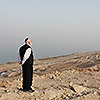
Joshua and Caleb are those desires within us that can still rise above reason. They are needed for the connection with the land of Israel.

Since they are righteous, they remain in the generation as a spiritual record (Reshimo) of what they saw in the promised land. This is why the entire generation of the desert dies except for those two.

Like everyone else, they wander in the desert for forty years. At every level, it is necessary to go through forty rungs in order to rise to the property of Bina from the Malchut, which they just revealed as being incapable of working with egoism. After all, they cannot cross the borders of the land of Israel without gaining the property of Bina.
[165881]
From KabTV’s “Secrets of the Eternal Book” 5/6/15

Related Material:
From Egypt To The Land Of Israel
From The Desert To The Land Of Israel
The Promised Land In The Desert

The Torah: Changing Yourself In Order To Reveal The Creator

Dr. Michael LaitmanThe Torah, “Numbers,” 14:13 – 14:16: Moses said to the Lord, “But the Egyptians will hear that You have brought this nation out from its midst with great power. They will say about the inhabitants of this land, who have heard that You, O Lord, are in the midst of this people; that You, the Lord, appear to them eye to eye and that Your cloud rests over them. And You go before them with a pillar of cloud by day and with a pillar of fire by night, and if You kill this nation like one man, the nations who have heard of Your reputation will say as follows: ‘Since the Lord lacked the ability to bring this nation to the Land which He swore to them, He slaughtered them in the desert.'”

Moses seems to say to the Creator: “You could have educated your children properly, if not by incentives, then at least by punishment. What kind of an educator are you if you simply punish your children and kill them?”

Moses is the innermost point in a person’s heart, where he can be in contact with the Creator. When a person ascends to the next level, from the level of Bina to the level of Hochma, for example, he undergoes an internal change. He must say that! It isn’t that Moses suddenly begins to complain: “How dare you behave that way?!” On the whole, religious people fear such thoughts: “Is it possible to think that way about the Creator? God forbid! What will happen to me if I think this way?” On the other hand, here is the opposite situation, since after all, it is nature itself that was created by the Creator that now rebels against Him inside us so that we will actually understand our current situation is opposite from nature.

This means that when a person ascends and gets closer to the Creator, he can not be afraid to disagree with Him and curse Him, even from the depths of his soul. He is glad about such changes because they actually indicate his true, high state.

Therefore, what Moses says indicates that he is about to complete his level on which he led the people in the desert for 40 years. He turns the attribute of receiving into the attribute of bestowal and now attains the last corrections of his ego. This level is like a missile that has fulfilled its function, becomes detached, and burns up in the atmosphere.

Moses’ complaints stem from the state of the end of correction, after he completed his work on the current level. The next level is totally different and on this level there is the fulfillment of receiving with the intention to bestow.

It is impossible to perform the mission that the Creator now gives the people who have just crossed the desert and reached Him. This mission cannot be attained this way because the next phase is to receive with the intention of in order to bestow. In the next phase, called the crossing of the border of the land of Israel, changes in a person from the outside towards the inside take place and totally new vessels appear within him, which is a new method of working on himself and a new perception of the world. This isn’t only the feeling of the world but the beginnings of the realization of how he has to correct the world. Until then he only prepared himself to enter the land of Israel and conquer it, which means in order to defeat all the nations of giants that live there and to attain such a level that the giant fruits that he carried would become light because he can receive with the intention of in order to bestow.

So Moses’ complaints are just because he demands new powers and new knowledge from the Creator. He wants to learn a new correction and receive education on how to enter this land and conquer it. There has to be an extreme upheaval inside a person and he has to turn into a different person.

Question: Does that mean that Moses can complain to the Creator?

Answer: The talk between Moses and the Creator is the complete recognition of what should happen to him now: “I need an inner transformation and You have to do it for me.” If he doesn’t complain to the Creator about this, it means that he is not yet ready for the transition. Therefore, everything Moses says, which may seem like a serious attack on the Creator is actually desirable to Him. This means that a person understands what a serious inner transformation he has to undergo in order to start working with his ego with the intention of in order to bestow. No one can imagine this.

Comment: Instead of not saying the Lord’s name in vain and not being angry at Him etc., everything happens in the exact opposite manner.

Answer: We shouldn’t be afraid of anything. The Creator is the attribute of absolute goodness. He is still and lifeless until you bring Him to life through your feelings. Just as you can be angry at a volcano that destroyed a certain region or fear the sun, the moon, or earthquakes, when you attribute your feelings to still objects, you also relate to the Creator in the same manner, to the attribute of bestowal and absolute love. You cannot bestow in one way or another, but simply change yourself.

When you change yourself, you change your personal reception and so the Creator seems different to you. But you are actually the one who is changing yourself! The whole Torah is based on a prayer, which in Hebrew stems from the root word that means to judge yourself.

A prayer means self-judgment, and asks what I need to change inside myself in order to reveal the Creator as the absolute good. Of course, this where Moses’ job ends, but is a preparation for the next phase.
[165477]
From KabTV’s “Secrets of the Eternal Book” 4/29/15

Related Material:
A New Level: Discovery Of The Characteristics Of The Creator
Towards Spirituality, With Help From Above
The Invigorating Power Of The Light

At The Borders Of The Promised Land

laitman_740_01Parshat Shelach speaks about what happens with a person before his entry into the land of Israel, meaning before ascent to the next spiritual level. Here, the example is given clearly of how it is necessary to go with faith above reason.

The next spiritual level that is revealed before a person is a wonderful world of a land flowing with milk and honey, but it is impossible to enter.

There was a time when the inhabitants of the Soviet Union dreamed about Communism, “This will be a good life! We can fulfill all of our wishes and needs, give vent to all our hopes, dreams, and desires!” But when they understood that  along with this comes equality, concern for others, and the necessity to work for everyone and feel happy about this, they immediately lost interest. Is this communistic happiness? Take it back!

So, when speaking about a land flowing with milk and honey, it is necessary to understand that this is not today’s milk and not today’s honey but completely different values for which I must create a desire and yearning within me.

They must specifically become the most important for me, and then I truly will enter into a state that will fulfill me like milk and honey.

Now, these values seem really terrible to me: to work for others, to be concerned for others, to think about them, and to be concerned for everyone. With this, I would fulfill my life?

Today, this seems like Hell to me! So, I need to change myself so that the new values will seem like the Garden of Eden to me, and then, for me, this land will become the Promised Land.

Question: Why are people against this? What is bad about living for others, thinking about them, and loving them?

Answer: There is nothing bad about this. Theoretically, this is basically a wonderful system, a wonderful state, but when it comes into actual practice, what happened in the Soviet regime, in the Kibbutzim and in other similar communities, is that nothing became concrete because our ego is against this.

It cannot even think about working for the sake of others. With us, the perception exists to fulfill myself, and if we think about others, this is only regarding how to satisfy ourselves through them.

The moment that a person begins to work on this, the romantic aspect ends immediately. The revolution devours its children.
[165416]
From KabTV’s “Secrets of the Eternal Book” 4/29/15

Related Material:
A New Level: Discovery Of The Characteristics Of The Creator
The Invigorating Power Of The Light
Towards Spirituality, With Help From Above

Locked In The Universe

laitman_739A Kabbalist is a scientist who investigates our lives, this world, the reality in which we are found. However, he investigates it with special tools, with new senses developed within him. In the meantime, we don’t have senses like these through which it would be possible to discover the upper world that is now concealed from us.

This sixth sense is the feeling of the higher power, love and bestowal, that we do not possess now. We feel our world through our ego with the five corporeal senses.

Our egoistic desire wants to know, to understand, and to feel the reality in which we are. An approach like this locks us into some kind of closed sphere, this universe.

The universe only seems gigantic to us, but, in fact, it is nothing compared to the world that is found beyond its limits. We need to break out from this sphere and feel the reality that is outside of us, and for this we require an additional sense based upon bestowal.

We only have senses of reception now, so we draw everything to us and are limited only by this physical world. We call everything that is discovered through the five corporeal senses the world in which we live, but this world is given to us only so that throughout this life we would break out beyond its limits to a higher, more external and extensive world. How can we break out if we draw everything to us internally? So, we need to develop a sense of bestowal, instead of the sense of reception. This new feeling of bestowal takes us out of our physical sphere.

The wisdom of Kabbalah is designed to develop in a person a desire to bestow, to love, and to grant to him a feeling of the outside world. That is how he discovers that another reality exists that is right next to us, but is revealed only through a new approach: from yourself outward.

Therefore, it was written, “you shall love your neighbor as yourself” is the great general rule of the Torah because it indicates what characteristic we must develop within us to feel the upper world, the higher power.

To be continued…
[165428]
From the Israeli Radio Program 103FM, 8/16/15

Related Material:
The Entire Universe is Within a Man
Life Behind The Walls Of An Aquarium
A Picture Of Reality Not Distorted By The Ego

The Crisis Is Being Revealed

Dr. Michael LaitmanOpinion (Gerald Celente, interview):  “The global collapse will lead to the printing of more money, but only gold will become a safe asset in the coming collapse. People will look for safe investments in the form of goods when the system will begin to collapse. We will witness riots in Brazil and Venezuela, instability from Mali to Congo, in Central Africa, the Sudan, Somalia, the Middle East and these people will flood Europe. There is no way of stopping this wave. This crisis is multilayered and it will include the economy, geopolitics and will lead to social riots, civil wars and other local confrontations.”

My Comment: Unless we become aware of the mutual connection of the world and begin to accept everyone as one whole in all our actions and in our relationships, we will not be able to manage the situation. All our actions will be divided and destructive. But seeing the world as one whole can only result from becoming familiar with the wisdom of Kabbalah and by  studying the internal structure of the world.
[165368]

Related Material:
The Global Financial Crisis Has Begun
The Three Experts: Be Prepared For A Crash
Crisis = Danger And Opportunity

The Torah Begins From A Secret

laitman_527_05The possibility of attaining the higher power of nature was revealed for the first time to a person who lived 5,775 years ago. For this reason, he was called Adam HaRishon (the First Man). This is because he implemented in himself all kinds of corrections allowing him to discover the ability to feel, understand, and attain the higher force within himself, to break through to a dimension in which this force operates.

He was the first Kabbalist because he discovered a new sense that was not based upon the characteristic of reception but on the characteristic of bestowal. Adam wrote a book about the discovery of the higher force and was survived by his students who began to develop this method, making it possible for every person to develop within himself the sense for feeling the higher force, according to his desire.

Question: It is strange to hear this because we are used to this person being a half-legendary figure who lived with his wife Eve in the Garden of Eden and ate an apple from the tree of knowledge.

Answer: The idea is that the Torah always speaks in human language, even when it talks about very exalted things.

The Torah describes a unique spiritual process on a number of levels called PARDES (Pshat – Simplicity, Remez – Hint, Drush – Allegory, Sod – Secret), and if we know how to read it correctly, then we can reach the state of Adam HaRishon, Adam.

This PARDES is four levels of understanding the Torah, and attainment of the Torah begins from the Sod, as the giant Kabbalist, the Gaon of Vilna said, because still we don’t know anything. So, when we begin from Adam HaRishon who ate an apple, for us, this is a true secret because we don’t understand what the Torah is talking about.

However, if we work according to the Kabbalistic method, gradually we approach the hidden realm, the hidden higher force, and we begin to discover this part of creation. Then we begin to see in the Torah what is really happening there, and, from Sod, we move to the simplest interpretation, to the Pshat.

The Pshat symbolizes for us that everything that is said in the Torah is simple and revealed to our understanding.
To be continued…
[165372]
From the Israeli Radio Program 103FM, 8/16/15

Related Material:
If We Met Adam…
From Secret To Simple Interpretation
The Secret From Which Everything Begins

A Day Of Mourning, A Day Of Joy

Laitman_167Midrash Raba, Shlach: The evening of the unfortunate complaints will be the ninth of Av. And the Creator ruled: you have cried in vain, for no reason, and therefore I will give you a reason for your weeping. The ninth of Av went on to become a day of mourning for the whole nation. It is actually on this day that the first and second temples were destroyed…

This is actually what has happened until this very day. If we review all of our history, we will see that the hardest events occurred on the ninth of Av: the expulsion from the countries the Jews lived in, like Spain, for example, and the plans of Hitler’s supporters to destroy the Jews, and so forth.

Every spiritual root has a parallel branch in our world. All of this takes place in the spiritual world in the opposite manner from the corporeal world, and so in our world the ninth of Av is etched as a day of mourning.

We don’t even study the Torah on the ninth of Av because the Surrounding Light cannot be conveyed unto us during this time.

The root of the ninth of Av will exist until the end of correction, and only then will it become the greatest day since it is actually the revelation of the greatest ego that will take place that day, and we will be given the greatest urge, the revelation of the world of Ein Sof (Infinity) in our world.

The deepest descents will turn into the greatest ascents. The two worlds, the uppermost and the lowest, will connect.
[165265]
From KabTV’s “Secrets of the Eternal Book” 4/15/15

Related Material:
Long Way To The Temple, Part 9
Long Way To The Temple, Part 1
Jacob’s Secret Is Revealed In Our Days

A New Level: Discovery Of The Characteristics Of The Creator

laitman_276_01The Torah, “Numbers,” 14:10: But all the congregation bade stone them with stones, when the glory of the LORD appeared in the tent of meeting unto all the children of Israel.

The people rose up against the two Tzadikim (Righteous), Caleb, the son of Jephunneh, and Joshua, the son of Nun, who urged them to go to the land of Israel undaunted by its inhabitants, and to defeat them. And the Creator was immediately involved here; this was speaking about a transition to the next level. Until now, the children of Israel lived in the wilderness and were working with the characteristic of Bina, bestowal for the sake of bestowal. Whereas now they were entering into the land of Israel, they were beginning to work with the ego, so they were constantly reminded of Pharaoh.

Reception with an intention of bestowal is a completely different level. When giants appear before us, which are egoistic desires that we need to work with an intention to bestow, we don’t understand how this is at all possible. A very serious internal change happens here because the method of working with the ego has changed. In the wilderness I only rise above it, become detached from it, for the wandering in the wilderness is one big Exodus from Egypt. Whereas now the entry into the land begins; so the work is absolutely different.

Egypt is one state, the wilderness is a second state, the land of Israel is a third state. The period of Egypt ended with ascent above the ego. Whereas in the land of Israel, I sink into the ego again, begin to dig into it, raising it up to me, and with its help I connect and communicate with everyone.

In other words, if I rose above my ego before, I gave everything that I could and I helped with everything, now I begin to raise my ego and yours, and communicate within it. This means that work is being done here with opposite characteristics that simply didn’t exist before.

And this work produces giants. If during the transition process, which is called the wilderness, we are elevated above the ego and approach only the Lights of Nefesh and Ruach, now we begin to attain the Light of Hochma because we are already working with the ego. The discovery of the characteristics of the Creator happens with this, which we couldn’t attain in the wilderness, only in the land of Israel.

This is new, complex work, which seems absolutely impossible; a new approach is required here. So Moses our teacher, as the leader of our internal characteristics, who led us through the entire wilderness, cannot go further with us. He must be replaced because the entire paradigm, our relationship to correction and advancement, has changed.

Question: What does the sudden appearance of the Shechina (Divinity) at that moment symbolize, when the people of Israel are about to stone Caleb and Joshua?

Answer: Here it is no longer possible to do anything because a few people among the nation, from the “herd” of former slaves, understand that they are found at the forefront and know how to overcome the obstacle, whereas others don’t understand.

The question arises: where is Moses here? He should be in the front! But he doesn’t belong to this level, so he didn’t go to see the land. Moreover, he died, just like a level that finishes its work and then a new level begins.
[165207]
From KabTV’s “Secrets of the Eternal Book” 4/15/15

Related Material:
The Reconquering Of Pharaoh
From Egypt To The Land Of Israel
The Power Of The Cave Of Machpelah

The System Of Our Spiritual Development

laitman_281_02Question: What is a punishment in spirituality?

Answer: There is no actual punishment in the wisdom of Kabbalah because we don’t deal with a human being who seems to get tired of something, angry, or regret something, but only with the system of providence. If we don’t perform a certain role, the system operates in an alternative manner and takes care of us accordingly.

If I drive my car in fourth gear and something suddenly breaks, I change to third gear. Now the engine works much harder and I drive more slowly and feel less comfortable, but I still keep driving. Then another part breaks and I switch to another state, which means that everything depends on our participation. The greater it is, the faster we advance, of course, in greater comfort, above time, overcoming everything by small efforts on our part, along the path of goodness and not the path of sufferings.

Therefore it isn’t about any punishments, although we use this term in everyday language. There are no punishments in our world either. If you behave properly, you advance along this path; if you don’t, you are corrected. We call this correction punishment. It isn’t a punishment but a correction.

As for the system of correction. it is absolutely unemotional. We only attribute human qualities to it, like the good and the benevolent.

I can also say that when I play the piano, for example, I regard it emotionally as if it is my partner or a friend. A person applies his feelings to objects he works with no matter what he engages in, like a computer, for example, although it is just a piece of metal. This is also how we relate to the Creator, although it is an unemotional system, as it is written: “He has given a law that cannot be broken.” The Creator is the law of nature!
[164984]
From KabTV’s “Secrets of the Eternal Book” 4/15/15

Related Material:
There Is No Punishment, There Is Only Correction
A Weighing Scale For Reward And Punishment
About Punishment

I Yearn For Bestowal

laitman_527_03Question: Why does the Creator afflict pain unto the righteous, and how can I justify Him?

Answer: It is so the righteous can justify Him. You “harness the cart before the horses.” However, the truth is that the Creator afflicts pain unto the righteous so that they will have a chance to bless and justify Him. How can they justify Him without the pain, on what grounds?

An independent person must be opposite to the Creator internally and similar to Him externally. This means that you must be made of two opposite forces, two opposite forms, two opposite attributes.

It is written, “I have created the evil inclination, I have created the Torah as a spice.” This refers to the Light in it, since the Light in it reforms it. The evil inclination, the matter of the desire to receive, remains the way it is, and we must dress the intention of in order to bestow above it. Thus, we reform it with the help of the Light and change it to the good and right form.

When we work that way, we first curse the Creator on every level and disagree with Him. This is the reason that the level of Ibur (Conception) is called “rage and wrath.” Then we reach the blessing and the justification of the Creator, until we reach self-sacrifice.

My self-sacrifice, however, is not a result of pleasure the way it is in our world when I am ready to totally sacrifice myself if it is worth it. In that case, I don’t connect to the Creator but to the pleasure that stems from Him, and, if it stops, my ego will not allow me to connect to Him anymore. We totally depend on the pleasure in this world, whereas, in spirituality, we add another dimension, another level, and reach adhesion with the Creator and not with the pleasure and the benefits that stem from Him.

Now, I begin to value my status as the one who bestows and gives. The Creator doesn’t give to me. I don’t need His bestowal. I don’t want to receive it. I don’t want to adhere to Him because of this goodness. I don’t want to be addicted to it. I want to respect the attribute of bestowal, which has no form or image. I yearn for it.

As a result, I must be made of two forms, of an internal form that is the desire to receive and the external form that is the intention of in order to bestow. Otherwise, I cannot be adhered to Him since “For our heart will rejoice in Him” and not in the Lights that stem from Him, which only confuse and bribe me, and which I must resist.

The Lights are measured from above and awaken me—which means my ego—so that I will be turned on and become addicted to the pleasure that drives me crazy and dominates my mind and my heart. Eventually, I am left with only one point that doesn’t attract me to pleasures that come from the Light, and, at that point, I can keep myself constantly outside of the pleasure, refuse the tempting offers. Not that! Not to be addicted to the pleasure!

The temptations make our head spin, and the body is confused by the excitement. Here, we need to prepare the mutual guarantee between us since, without it, I cannot be independent. The pleasure comes in order to cover the shame and to make me independent. Baal HaSulam speaks about it in the Talmud Eser Sefirot, “Histaklut Pnimit,” part 1 item 7:

… They said that there is a great flaw in free gifts, namely the shame that encounters every receiver of a free gift. To mend this, the Creator has prepared this world, where there is work and labor, so as to be rewarded in the next world for their labor and work.

But that excuse is very strange. It is like a person who says to his friend, “Work with me for just a minute, and in return I will give you every pleasure and treasure in the world for the rest of your life. There is indeed no greater free gift than that, because the reward is incomparable with the work. The work is in this transient, worthless world compared to the reward and the pleasure in the eternal world.

What value is there to the passing world compared to the eternal world? It is even more so with regards to the quality of the labor, which is worthless compared to the quality of the reward.

Our sages said: “The Creator is destined to inherit each and every righteous person 310 worlds, etc.” We cannot say that some of the reward is given in return for their work, and the rest is a free gift, for then what good would that do? The blemish of shame would still remain! Indeed, their words are not to be taken literally, for there is a profound meaning in their words.
[129326]
From the 2nd part of the Daily Kabbalah Lesson 2/16/14, The Book of Zohar

Related Material:
The Long-Awaited Guest
A Voluntary Righteous
Grateful For Feeling Shame