Entries in the 'Crisis' Category

“How Will The Coronavirus Affect Modern Culture?” (Quora)

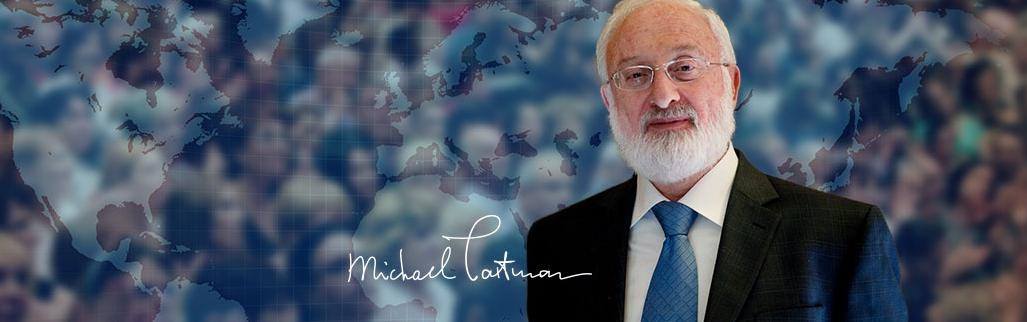
Dr. Michael LaitmanMichael Laitman, On Quora: “How will the coronavirus affect modern culture?“
The coronavirus has reeled in a new time with many changes, and those changes will require a new form of culture as well.

As the coronavirus period with its social distancing and stay-at-home orders made us reexamine what is essential and nonessential in life, emphasizing how we can secure what is essential and have to put aside the nonessential aspects of life, likewise our culture will undergo a major rearrangement.

I expect a future for culture where, for instance, stars who rose to social media fame through portrayals of good looks and lavishness will lose their fame as people in general will seek more meaningful interactions.

I also see a future where leading cultural figures will be prime examples of people who contribute immensely to society and who uphold values of unity above division.

Artists, musicians, writers and media creators across the board will create items that primarily aim to enliven and inspire unity among human society.

Monetary incentives to create art, film and music will lessen, but social incentives will increase, and cultural figures will enjoy much more fruitful and happier social lives than they currently do.

In short, a new culture would ultimately fit into a new paradigm shift where we re-prioritize benefiting others over benefiting ourselves. Instead of a culture of creators who seek to primarily fulfill their personal interests, we would see a new culture blossom, which would soak everyone into a positive unifying atmosphere.

Above photo by William White on Unsplash.

“What Should Be Mankind’s Next Step After The Coronavirus Debacle?” (Quora)

Dr. Michael LaitmanMichael Laitman, On Quora: “What should be mankind’s next step after the Coronavirus debacle?“

Our future actions and dealings need to follow two main basic conditions:

  • That they are essential to our lives, i.e. where life’s essentials are everything that makes our lives comfortable and qualitative.
  • That they cause no harm to other people or to the ecology.

We can meet those conditions if we implement a new form of education throughout society, one where we learn how to enrich our connections and shift our focus from personal benefit to how we can benefit and contribute to society at large.

The sooner we realize such a form of education, the sooner we will experience upgraded lives via improved connections to each other.

Above photo by Element5 Digital on Unsplash.

“What Is The Spiritual Lesson Of The Coronavirus?” (Quora)

Dr. Michael LaitmanMichael Laitman, On Quora: “What is the spiritual lesson of the coronavirus?“

The spiritual lesson of the coronavirus is that in order to live optimal lives, we need to develop different kinds of relationships, ones based on acknowledging our tight interdependence.

When we realize how much we depend on each other, we would then also realize that our happiness, health and well-being depends on fueling our relationships with support, encouragement and care, and any problems in our lives stem from a lack of positive relations.

Moreover, the coronavirus illuminated the idea of what is essential and nonessential in our lives, and accordingly, we can seek how to provide ourselves—all human society—with life’s essentials, and invest our free time in learning about what is most important in life and developing positive connections to each other.

By doing so, we would bring ourselves closer to balance with nature, and then receive positive feedback from nature, which would include the alleviation of future pandemics and other problems.

Above photo by Priscilla Du Preez on Unsplash.

“Why Must The Economy Be Reopened?” (Quora)

Dr. Michael LaitmanMichael Laitman, On Quora: “Why must the economy be reopened?“

Indeed, many countries, including those where new cases of the coronavirus are being regularly reported, have started reopening their economies.

Why must the economy be reopened, especially considering that a cure for the virus has yet to be found?

The problem is that many people need to pay quite dearly just to live their lives with its necessities, putting food on the table and keeping a roof over their heads, and they depend on the economy moving in order to do so.

We could ask the question differently: What would we do if we would not reopen the economy?

We then would reveal a greater problem, that we neither feel, think or act as a unified society. While divided, we succumb to the interests of various people and groups who play with power and extreme wealth, none of whom prioritize the public’s benefit.

How, then, could we reach a decision out of what would benefit society the most?

We would have to start by raising awareness of our tight interdependence, that the thoughts and behaviors of one person affect the thoughts and behaviors of everybody else.

Acknowledging our interdependence should pave way to our becoming more responsible and caring of each other, as even if we consider solely our personal benefit, when we realize that we’re interdependent, we then realize that our happiness, health and safety is linked to the happiness, health and safety of everyone around us.

The more we recognize our interdependence and increase our mutual responsibility and consideration in society, then the more we would also recognize that capitalism and egoistic competitiveness no longer serve as positive fuel in today’s interdependent humanity.

The coronavirus has acted as a hard lesson in global interdependence. It has shown the vast extent of our dependence on each and every one of us following each of our government’s health department’s orders in order to stop the virus from spreading, and how an epidemic in China quickly expanded to become a worldwide pandemic.

While the coronavirus clearly illustrated our interdependence in terms of our health and the economy, we would be wise to see how we are interdependent in many more respects, and how we all depend on each other relating responsibly and considerately—that we will at least not do to others what we ourselves hate, and in addition, that we will seek how to positively contribute to society according to our ability.

Ultimately, to experience healthier, more balanced and harmonious lives, we will need to reach a state where every single person receives great care and support. We will continue facing more and more challenges spanning health, the economy and human relations in general until we do.

Above photo by Iwona Castiello d’Antonio on Unsplash.

“What Is That One Thing Humanity Can Learn From The Coronavirus (COVID-19)? ” (Quora)

Dr. Michael LaitmanMichael Laitman, On Quora: “What is that one thing humanity can learn from the coronavirus (COVID-19)?“

The coronavirus has revealed humanity’s interconnectedness and interdependence. Accordingly, we would be wise to adjust to this revelation of our connectedness.

As experts alert us to future pandemics and problems at global scales, we should hear this message of our global connection that nature communicates to us, and likewise prepare a new global basis for dealing with all such problems.

Humanity can thus learn from the coronavirus that dealing with global-scale problems with local responses is like applying band-aids to the skin when there is a disease affecting the whole body.

In other words, it is insufficient.

As we head into a recovery mode from the pandemic, we would be wise to revise society’s leading values in order to make recovery truly possible and sustainable.

What values are optimal for humanity’s state today? They are none other than the need for more mutual responsibility and consideration to flow among all people, societies and nations.

We are one interconnected and interdependent system, and as the coronavirus did not distinguish between the socio-economic status of who it infected, or whether it infected someone who was good or bad to the ecology, but treated all people as equal, we too would be wise to learn this lesson about our equality from the coronavirus.

In learning this lesson from the coronavirus, we can see ourselves as little children who were fighting and arguing with each other, and then our strict mother caught us. No matter how much we try to point out that the other children started it and are to blame, our mother doesn’t care about all of our finger-pointing, and simply punishes us all equally, forcing us to stop playing, think about what we were doing, and how to improve our behavior.

Therefore, the main take away from this pandemic is that we should relate to each other equally, that all people, societies and nations share a common role in a globally interdependent world, and that in such a situation, we depend on everyone taking responsibility, and thinking and acting considerately toward each other.

If we fail to upgrade our relationships to become more responsible and considerate toward each other, then we can expect more and even harsher blows from nature to come and alert us of our interdependence and our need to upgrade our relations accordingly.

In order to undergo an upgrade in our relations, we need a revised educational system, which will use all communications means possible in order to raise a new global society of positively connected individuals, societies and nations.

The more we are influenced by and reminded about the idea that humanity is a single family, and as it works in a family, every member should care, support and encourage the other members equally, according to each one’s unique place in the family, then we will experience a much higher quality of life, more happiness, confidence and prosperity throughout society.

Nature has its own means to bring us to this conclusion—the coronavirus being one of them—but the sooner we raise our own awareness of our global interdependence and improve our relationships, then the less negative phenomena we will experience from nature, and the more we will feel at peace and balance with each other and nature.

Above photo by Macau Photo Agency on Unsplash.

Let’s Open Our Eyes!

laitman_278.03Question: How can you call this virus good with a straight face and say that it should be hugged, kissed, and welcomed when in Italy more than 720 people died from this virus in one day. Are ethics and empathy foreign to a Kabbalist?

Answer: What would change if I cry? I have seen a lot of things in my lifetime in all sorts of debates and bickering. All my life I have been struggling with rigidness, hatred, and misunderstanding.

Let us say that some wave comes that cuts people’s lives short. Naturally, we cannot be happy about this. But on the other hand, we must look for the rational seed in this, because nature is a closed system that does not do anything in vain as narrow-minded people think. Everything happens exactly according to the decision of the system itself, which restores itself and moves from state to state.

If the system needs to wipe out a couple of millions of people, it does it. And this is its cure. That I might be among this couple of millions—so I will be. What can I do? I will anyway.

Therefore, do not relate to what is happening like a small child. Relate to this from the point of view of the global nature. If it has to cleanse itself in such a way, it will cleanse on any level: still, vegetative, animate, and human as well.

I am not ignoring such questions; I am trying to explain how to correctly perceive an occurring situation. The easiest thing to do is to close your eyes and cry like a small child so as not to see evil. To open your eyes and look at this correctly, as an adult, is very difficult.
[263903]
Form KabTV’s “Fundamentals of Kabbalah,” 3/22/20

Related Material:
Coronavirus Is Cleansing Humanity
Nature Speaks To Us Through The Coronavirus
Let’s Start Living!

The Dreaded “Old Normal”

Dr. Michael LaitmanFrom My Facebook Page Michael Laitman 5/24/20

“In this moment,” writes journalist Anne Helen Petersen on BuzzFeed “the primary tension in America is how, and when, life is going to ‘return to normal.’ But that ‘normal’ was an economy that … was built on a form of consumption that felt compulsory, …a ‘normal’ in which the vast majority of people still felt economically precarious, burned out, …and most still struggled to cobble together enough savings to protect them from medical or financial catastrophe. A ‘normal’ in which the various manifestations of the gig economy — and the lack of healthcare, labor protections, or the general safety net that accompanies them — have been, well, normalized. So what if we don’t actually want to go back to that?” she asks.

Instead, Peterson argues that “Part of the reticence to reopen the economy is rooted in the very real fear of widespread infection. And part … is a manifestation of a desire to reject that old way of living entirely. There are different ways of being with each other as a society, different ways of caring and knowing and growing. As cheesy as all of that sounds, it’s certainly better than being told to do your part to save the country by going to Disney World or trying to distract ourselves from our exhaustion and fear by buying skincare products.”

As I have been saying since the outbreak of COVID-19, we are at the start of a new era. And that new era begins with rehab from addiction to consumerism and adoption of more pro-social, humane values.

The sooner we adopt them and usher in the new era, the sooner we will overcome the virus. Social distancing reflects our inner distance from each other, our alienation. But if we, as Peterson put it, reject the old way of life and start caring, we will not infect each other with viruses. Just as social distancing does not apply to families, it will not apply to anyone once there is no emotional distance between us.

Indeed, the old “normal” was anything but normal. It made many of us depressed, obsessed, obese, addicted, and lonely. If we only stop for a minute and reflect on our lives and what we want from them, I’m sure we can build together a new normal of connection, care, and solidarity, a world where everyone wants to live.

Medicine For Humanity

laitman_962.2Question: According to the World Health Organization, 7 million people die every year from exposure to a bad environment. These are children under five years old and old people who have many diseases.

For some reason, people do not talk about it, and today it is of little concern to anyone. And everyone is talking about the coronavirus. It even seems to me that there are some kind of double standards, as if someone needed it.

Answer: Of course, there are double standards. In general, we look at this virus very stupidly. It is the cure! A medicine for humanity. So do not worry about the fact that it has come and think about when it will leave. On the contrary.

Question: Is this medicine for the human mind? After all, many will ask: “How can this be a medicine if people die?”

Answer: Why do you think that dying is not good?

Comment: No one wants to lose their loved ones.

When I said that I was ready to die, the main thing is that the planet lives, that our children could live, I received 1,000 messages: “You can die, let your family die, but we do not want to die.”

My Response: You can understand people. This is a natural, instinctive, petty, selfish desire.

Question: But why is this medicine in the form of a coronavirus?

Answer: It is for society. So that it understands what needs to change.

And it will understand, but it will be in a very bad way. And if it doesn’t understand, there will be war, a terrible war.

So, it is better to let this virus continue. It will gradually purify everything: us, our thoughts, our souls. I’m sure everything will be fine.
[264808]
From KabTV’s “Meetings with Kabbalah: Victoria Bonya,” 3/29/20

Related Material:
Time Of Great Change
Coronavirus Is Cleansing Humanity
The Epidemic Is Not Punishment But Remedy

Reveal Your Soul Now In This Life

laitman_963.1Question: As far as I understand, the positive side of nature that we need to attract is to begin respecting nature. When people go to the country, they leave a lot of garbage behind, and few people think about the fact that they need to clean up after them.

What is the use of positive energy? How can we say that from now on I will take responsibility, I will be a conscious person who understands the forces of nature and lives on a higher frequency?

Answer: Thank you for your question, but we are talking about a completely different level of influencing nature. After all, our human nature is absolute egoism. Even all our seemingly positive, good, kind actions, love for children, for the world, and so on, come only from egoism. Our world is controlled by only one force. The second force is concealed and we must reveal it. Therefore, people do not understand what they should do.

It is not enough for us to treat each other nicely, this will not change anything. There were many such attempts in history. We must learn how to attract the positive force of nature, the plus that would begin to act alongside the minus, and we will exist between these two poles.

Then, certainly, we will find out what a perfect, eternal world and eternal existence are. We will understand that a person exists not only in the earthly form (physical body), but there is something eternal in a person, called the soul, and it must be revealed while living in this world now, today, here.

We need to reveal our future states, that is, the eternal perfect world that exists around us, but we do not see because we perceive only through our egoistic qualities. This is all we need to learn and gradually explain to people.

And they must understand that a person living in this world must rise to the next, new degree and begin to feel the true world.

This is possible. I have students who have attained this. And the system we study and implement is called the wisdom of Kabbalah. It allows you to do this.

Question: Are you talking about universal love that we can call absolute love?

Answer: No, you cannot call this absolute love because I cannot love evil. I just want people to treat each other with this goodness that is inherent in nature.

Then, through the correct system of good and evil, we will be able to distinguish, as black and white, the true picture of the world. The veil that hangs over us will disappear and we will see with our inner and outer vision that we neither exist on a small planet nor in some closed volume of the cosmos but in completely different, upper dimensions. This we must reveal now, today, in this life.

What else do we exist for? Is it in order to fulfill ourselves with small pleasures and die peacefully?

Question: You are saying that we should not love evil. However, there are a lot of aggressive people in the world and a lot of evil comes from them. What creates this aggression? How can it be cured?

It seems to me that true absolute love helps illuminate the dark side of a person’s soul. Is there a cure for this aggression and evil?

Answer: Patience and example.

Patience against a person’s evil and a good example that he could understand. Nothing else.
[264366]
From KabTV’s “Meetings with Kabbalah: Victoria Bonya,” 3/29/20

Related Material:
Open Book Of Nature
Coronavirus—Nature’s Boomerang
Coronavirus—A Consequence Of The Imbalance Of Nature

“COVID-19 Has Given Us A Lesson In Humility” (Medium)


Medium published my new article “COVID-19 Has Given Us a Lesson in Humility”

Quite probably, no danger has been downplayed more than the coronavirus. Since case 1, the virus has been described as a type of flu, a negligible threat to health, and basically, a non-issue. Yet, we can already see that this bug has a huge impact on human society. Covertly, COVID-19 has smashed the foundations of human civilization. Within two months, humanity has capitulated to an enemy it cannot see, hear, smell, taste, or touch, and whose noxiousness is questionable.

“We’ve all learned how vulnerable we are, how dependent we are on each other for our most basic needs, from health and food to human compassion.”

Flu or no flu, one by one, governments revoked all public activities, religious and political congregations, professional conventions, sports and entertainment, shopping centers, factories, hi-tech companies, transportation, and recreation. Despite the unimaginable cost, heads of state succumbed in droves to the bug and stopped their nations in their tracks.

Even more extraordinary, now, as governments are trying to restart their countries, people aren’t excited to partake. It’s not only that they’ve had no income during the lockdown, though this is true as well. It is deeper than that: Humanity is losing interest in a civilization that hails people according to their wallets.

Though policy makers and tycoons are urging people to pick up where they left off two months ago, as they stand to gain the most from the recovery, at our expense(s), this will not happen, not this time. People have changed.

Not only tycoons and policy makers have been given a humbling lesson by the virus, we all have. We’ve all learned how vulnerable we are, how dependent we are on each other for our most basic needs, from health and food to human compassion. We have learned that what really makes us happy is warm families and good friendships, not hot trends and smirking colleagues.

We are learning to be equal. We are realizing that it is more rewarding to complete than to compete, that it is so rewarding to share, to care, and to be free at last from our egoistic selves. By submitting our egos, COVID-19 has given us life.

And as every toddler does, we are taking baby-steps. At times we will stumble, at times we will fall, but our goal must be clear all along: We are learning to unite. If we strive to live in unity, life itself will teach us what we must keep from the past, and what we must cast away. We need not make decisions in advance, just try to bond with one another and see what kind of society emerges, how it caters to its members, rewards its champions, and reproaches its foes.

As our values change, so will our causes for joy and for sorrow. Our aspirations will effortlessly adjust themselves to the new environment, and we will thrive when everyone around us thrives.

Since human bonding will be the ultimate goal of society, we will not be afraid for ourselves, for our children, or for others in our care. We will not need to worry about food, housing, health care, education, friends for our children or friends for ourselves. Simply, we will not need to worry. And the only demand of us will be to do the same good for others as they do for us.

We should fear the virus and tend to our health, but we should also be thankful that it came to our aid. It saved us from killing each other and destroying our planet; it gave us a chance to start over. So in all honesty, I am grateful for the lesson in humility that COVID-19 has given us all.
[264778]