Will the Brain Be Controlled by Computer?

962.7Question: In the future we will be able to control our brains using a computer or smartphone. Does it mean that we ourselves will become robots?

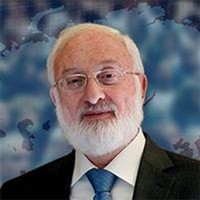
Answer: There will be such a connection perhaps partially. At least, it will be possible to give signals and commands through a smartphone or through a computer, and to extract information from ourselves and print it.

After all, what is a person? Just an interface.
[304274]
From KabTV’s “News with Dr. Michael Laitman” 2/17/22

Related Material:
The Brain As A Supreme Coordinator
A Brain Cell of the Universe
Modern Science On The Verge Of The Unknown

How Can You Check If You Are in Lo Lishma?

263Question: How can you check if you are in a state of Lo Lishma from which we come to Lishma?

Answer: Lo Lishma means that a person strives for the truth. He has heard and theoretically has an idea of what it is, but at the same time, he is still in the intention to receive for his own sake.

If we measure Lo Lishma on a scale from 0 to 100%, in a case of a friend who borrowed $1,000 from me, then 0% Lo Lishma is when a friend is obliged to repay the $1,000 to me.

1% Lo Lishma is when he returns $999 to me and I accept it as a repayment of the entire $1,000. And 100% Lo Lishma is when he gives me back $0, an empty envelope. I check it with my senses, I see that there is nothing there, and I accept it as a debt repaid in full. That is, it shows how much I can go above my desires to receive.

But of course, all this progress is possible only due to the influence of the surrounding light. When we move from Lo Lishma to Lishma, the direct light begins to act.

Baal HaSulam gives such a definition of Lo Lishma in the article “Introduction to The Study of the Ten Sefirot,” Item 12: Indeed, practicing Torah and Mitzvot Lo Lishma means that one believes in the Creator, in the Torah, and in reward and punishment, and engages in the Torah because the Creator commanded the engagement, but associates his own pleasure with bringing contentment to his Maker.
[120659]
From the 1st part of the Daily Kabbalah Lesson 11/15/13, Shamati #64 “From Lo Lishma to Lishma“

Related Material:
From Egoism To Bestowal In Faith Above Reason
Lo Lishma: Having Something To Correct
The Great Value Of Lo Lishma

“What is the basis for negative emotions?” (Quora)

Dr. Michael LaitmanMichael Laitman, On Quora: “What is the basis for negative emotions?“

We should first understand that negative emotions surface in order to change us and bring us to a more positive state. Similar to diseases, they are signs that something is wrong. For instance, if my foot hurts, it is not that there is a problem with the foot, but it shows me that there is a certain problem that I have to take care of. I thus have to delve into the depth of the problem and take care of it.

Therefore, negative emotions tell us that there is something wrong in ourselves, our families, society, and our relationships. Today, we cloud our negative emotions with leisure of all sorts. Whether it is travel, sports, entertainment, getting drunk, taking drugs or going out to various clubs, negative emotions have become so strong that there is a great need in people to forget about and suppress them, and so leisure has become a much-sought-out solution.

The fact that we turn to forgetting about and suppressing our negative emotions so much shows that we fail to understand the root cause of the problem. Negative emotions are symptoms of a deeper problem that we need to accurately diagnose in order to heal ourselves of them.

The root cause of negative emotions is in fact the root cause of all problems on individual, social and global scales, and between the person and the still, vegetative and animate levels of nature. From the tiniest problem to the worst possible disaster, our every problem is sourced in our very egoistic nature, where we wish to benefit ourselves at the expense of others and nature.

The more we evolve, the more our egos grow, and thus the more we experience outbursts of all kinds of problems. This is why we feel much more negative emotions today than in the past, and we can see such phenomena in the rising cases of depression, loneliness, anxiety, stress, drug abuse and suicide worldwide. Eventually, we will reach a state where the increasing negative emotions we experience will make us ask about their deeper cause, and we will increasingly recognize our very egoistic human nature as their base cause.

The problem with our egoistic nature is not that we want to enjoy ourselves. It is that we want to enjoy ourselves at the expense of others, and by doing so, we harm others and only then feel that we gain. Until we correct our egoism, switching the desire to enjoy at the expense of others to a desire that enjoys by benefiting others—a process that we can implement if we upgrade the way in which we educate and influence each other—then we will experience more and more negative emotions and other problems in order to show us that we are failing to conduct ourselves correctly and that desperate need to change.

Based on the video “Why Do We Have Negative Emotions?” with Kabbalist Dr. Michael Laitman and Nitzah Mazoz. Written/edited by students of Kabbalist Dr. Michael Laitman.

Daily Kabbalah Lesson – 10/31/22

Preparation to the Lesson

[media 1] [media 2]

Lesson on the Topic “All Your Actions Will Be for the Sake of the Creator”

[media 3] [media 4]

Writings of Baal HaSulam “Gatehouse of Intentions”

[media 5] [media 6]

Selected Highlights

[media 7] [media 8]

Audio Version Of The Blog – 10/30/22

Listen to an Audio Version of the Blog
Download:MP3 Audio

“The Other Side of the Coin” (Times of Israel)

Michael Laitman, On The Times of Israel: “The Other Side of the Coin”

A few weeks ago, the Israeli Ministry of Foreign Affairs presented an extremely rare 2000-year-old coin that was stolen and smuggled out of Israel, and returned following an intelligence operation by the Israel Antiquities Authority and the Manhattan District Attorney’s office in New York. The date on the silver quarter shekel coin is that of the fourth year of the Jewish Great Revolt (66-73 CE) against the Roman Empire. These days, when even organizations that are part of the United Nations deny Israel’s historic connection to Jerusalem, this coin proves it undeniably. Regrettably, no one cares about the truth, and declarations about Israel’s “invasion” into Palestine will continue, since historic truth has nothing to do with politics.

Two hundred years ago, there were no people who defined themselves as Palestinians and demanded sovereignty, much less two thousand years ago. However, this will do nothing to reverse the charges against Israel. No one will take notice of the little coin or treat it as a proof.

The root of the problem is not whether we were here or not, or whether or not the world recognizes our historic connection to the land of Israel. Regardless of history, the world does not want us here, or anywhere else, and this is why it treats us this way. If it did not hate us, we would not need to prove that we belong here. Since it hates us, no proof will help us win the world’s favor.

Humanity’s subconscious complaint against us is that we do not belong here because we are not doing what we are supposed to do, what the people of Israel were intended to do and were obligated to give to the world. Since we are not fulfilling our duty to the world, the world does not feel that we should be here or that we should be regarded as the authentic people of Israel.

Even if most people cannot articulate their grievances against us, they feel that we are not carrying out our mission; they do not understand why the world needs us, the eternal pariahs. If we did what we should, they would feel it and would immediately embrace us.

Our great “sin,” for which we are denounced throughout the world, is indeed surprising. It pertains not to how we should treat other nations, but to how we should treat one another, our fellow Jews.

For the most part, only our sages and spiritual leaders knew that our negative attitude to one another is the root cause of our problems. In every generation, they stressed that only unity and love of others would save us from adversity. They warned that unless we unite, disasters would befall us at the hands of villains from among the nations.

Our sages also made unity our motto. “Love your neighbor as yourself” is our brainchild, as are mutual responsibility, leaving part of our crops for the poor, and many other social laws. In fact, the whole concept of Tikkun Olam (correction of the world) that Jews are often concerned with stems from the notion that we have the power to make the world a better place, and that the way to achieve this is through unity.

However, what we tend to forget is that to achieve unity, the world needs a lighthouse, a beacon that sets the course. In other words, we tend to forget that we should lead the world not by preaching about unity and love of others, but by living it out among ourselves. When we tell the world we love our neighbors, yet uninhibitedly deride our fellow Jews and show them nothing but disdain, we lose all credibility.

Worse yet, because our nation was made to be a model nation, the example that the world takes from us is how we treat each other. Currently, it is an example of hatred and division. In such a state, we bring no Tikkun (correction) to the world, but only strife and sorrow.

When we stop trying to prove that we belong here, and begin to earn our presence through our efforts to unite, the world will finally believe us. If we embrace each other, the world will embrace us. If we do not, the world will punish us just as it has been doing whenever we abandon our unity.
[304640]

“What is the human ego?” (Quora)

Dr. Michael LaitmanMichael Laitman, On Quora: “What is the human ego?“

It is a key law of nature that any existing body—still, vegetative or animate—desires to sustain and protect its existence. That is not considered ego. It can be called the desire to live and to exist.

The human ego begins where we desire to harm others. It is not that we prefer our own existence over the existence of others, which happens also in the animal world, but that we want to harm others without justification. Animals, for instance, kill each other for survival purposes, and feel that nature forces them to kill and to eat other animals. However, if nature does not give an animal such an urge, then it does not kill. If a lion is not hungry, then you could walk past it, and it might not even look your way. It would simply mind its own business.

The still, vegetative and animate levels of nature have no inner program that operates in order to harm others. They derive no enjoyment from suppressing others. They harm others only for their needs of feeding themselves and their offspring, surviving and growing. Therefore, the nature in animals is not an ego. It is not an evil inclination, but just a desire.

In the wisdom of Kabbalah, the human ego is called “evil inclination” because it exists only in the human being. It makes us enjoy from harming, suppressing, subordinating and controlling others. The ego is considered evil because of how it enjoys from intentionally harming others, beyond the need for mere survival necessities, as is the case with animals.

In short, we have base survival desires, which are not considered the human ego. The ego begins where we wish to feel pleasure by harming others.

Based on the video “What Is the Human Ego?” with Kabbalist Dr. Michael Laitman. Written/edited by students of Kabbalist Dr. Michael Laitman.

“Are Waves of Isolation, Separatism in Europe’s Future?” (Newsmax)


My article in Newsmax: “Are Waves of Isolation, Separatism in Europe’s Future?”

Following decades of left-leaning governments on the old continent, Europe is taking a turn to the right.

Specifically: Italy, Hungary, and Sweden have recently elected new governments, all of which are conservative, or otherwise right-wing.

Judging by their platforms, they will focus more on the nation states, and less on the European Union (EU).

Is a wave of isolation and separatism on the way in Europe?

European countries seem to be experiencing a reactionary wave against the leftist, liberal, pan-European policy that Germany and France have dictated for the past three decades.

The influx of migrants, many of whom are Muslims (who have no intention of adopting European culture or faith), the escalating economic crisis hurting Europeans and undermining their financial security, and the member states’ loss of independence on many aspects, have driven Europeans to rethink their EU participation.

Their realistic observation is forcing them to take reactionary measures and reclaim some of the independence they had given up in favor of empowering the Union, which some of them now regret — at least partially.

The slogans of European unity and declarations that Europe will be a single, powerful superpower, have clearly not been realized.

Small countries, who have been hit the most by the loss of sovereignty, are sobering up from the dream.

This writer always prefers realism to naïveté, and believes that Europe’s new direction is healthier and better for everyone — especially for Europe.

And this writer doesn’t see more countries performing their own Brexits from the European Union at the moment, but enhancing the independence of the nation states within the Union will help them remain within it while also tending to their home affairs.

Unity is wonderful, but when it’s executed under duress, it creates hatred and oppression, eventually exploding. When it can’t be done based on genuine concern for the welfare of all concerned, it’s better to remain distant and respectful.

If Europe wants to create a continent-wide nation, it must first establish solidarity among all the member states destined to participate in such a union.

Only once a sense of solidarity and cohesion has been established among the people can a political union succeed. Had European leaders chosen this path and went by this order, the transition from nation states to a “United States of Europe” would have been natural and smooth.

Because the Union was primarily fiscal and hindered countries’ sovereignty and independence, without first creating mutual responsibility among the nations, it established itself on a wobbly basis that could not endure.

This is why we are witnessing a reactionary wave today.

Perhaps now that countries are reclaiming their independence, and considering the mutual dependence that still exists among the EU countries, they will be able to gradually develop stronger and healthier ties.

However, if they wish to move even closer, they will have to foster a common European identity that all the member nations sympathize with and value more than their own national identities.

For this to come to fruition, there is still a long way to go.
[304582]

Revolution of Desires

537There is no escape; after all the twists of history that may still happen, we will all the same come to the decision that we must rise above human egoistic nature and come to bestowal (Lishma). And only this goal stands before us—unlike the material ideal of getting rich and becoming the king of the world.

It is impossible to pursue two goals at once. The desire should always be big and unique. It is either a spiritual ideal, the desire to get closer and unite with the Creator, or a material ideal, to master all the riches of the world.

Although, there have been many Kabbalists in history who were rich people, this was not their goal; it was just the way life turned out. And at the same time, there were Kabbalists who lived in poverty.

All people who have existed throughout history are divided into these two groups: those striving for the spiritual and those striving for the material. And although we all come out of the material world, out of the desire to receive, life gradually teaches us that we need to move on to spiritual development.

Nowadays we are experiencing a genuine revolution although we may not feel it yet. People are beginning to turn from material desires for food, sex, family, wealth, honor, and knowledge toward a new direction, to spiritual values. Of course, this does not happen to everyone at once but little by little, step by step, it is capturing new layers of the world’s population. Gradually, this change is taking place in the entire common desire of mankind.

According to the program of creation, the whole world must achieve Lishma, the intention to bestow, like the Creator. As it is said: “Everyone will know Me from small to great, for My house shall be called a house of prayer for all peoples.”
[304400]
From the 2nd part of the Daily Kabbalah Lesson 10/24/22, Writings of Baal HaSulam “Exile and Redemption”

Related Material:
Evolution Of Desires, Part 1
The Evolution Of Desires
My World Is A Collection Of Desires

Reincarnations—The Benefit of Life Cycles

600.02Question: On one hand, according to Kabbalah there is only one soul. On the other hand, they speak of “the reincarnation of souls”; that is, there are many of them. How should one understand this?

Answer: The common soul was divided into parts. It is called Adam because in total it should be similar to the Creator, from the Hebrew word “Domeh” -similar. And then it must undergo all kinds of transformations and at the same time constantly draw closer to similarity of form to the Creator.

Question: Let’s say a person lives. He must die and be reborn, and again go through dozens or hundreds of lives. What is the benefit of this?

Answer: The fact is that these parts, which feel like people, eventually unite, achieve some kind of mutual merger of intentions and desires, and become like the Creator.

Question: There is such a thing as a male and female soul. What is the difference? What is this talking about here?

Answer: It does not depend on gender, but only on the qualities of the soul at the moment.

The soul is a desire with an intention. This is the construction of the soul. For every form of desire to receive, there is an intention for what.
[304313]
From KabTV’s “Spiritual States” 10/9/22

Related Material:
Reincarnations—One Life Is Not Enough
Reincarnations—In the Vein of Bestowal and Love
Reincarnations—What Remains after the Death of the Body?