
Learning from the Friends

944Question: Rabash writes that there must be equality in the group; otherwise, you will not receive the importance of the goal.

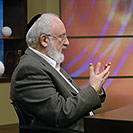
Why is equality one of the principles of spiritual work?

Answer: We must very precisely ensure that in the group everyone respects and loves each other, yearns for connection with each other, and no one is more or less than the rest. This is the work with your egoism.

Question: In this case, how can we learn from others?

Answer: You can learn from the other when you consider him important. The condition you set for yourself is to imagine each friend as your teacher. In this case, being in a group where everyone is bigger than you, you will have the opportunity to learn from everyone.
[322523]
From KabTV’s “Practical Kabbalah” 12/5/23

Related Material:
Learn From Friends
Who Can Be Considered A True Friend?
Who Are You, My Friends?

Why Do We Have to Be Ashamed of Our Nature?

549.01Question: The reason the creations do not receive pleasure lies in the difference of form between the Creator and the creations. The Creator is giving and the creations are receiving.

This causes shame in creations and as a result the Creator must conceal Himself. But why does a person have to be ashamed if the Creator made him this way?

Answer: The Creator created the property of shame with the purpose that through our own efforts and with His method we would gradually rise from the animate level to the level of the Creator, the highest level in the spiritual world. We must come to this state.

Typically the force from above brings a person to a group. There he sees people similar to him and he wonders: “How can I be connected with them? How can I get closer to them according to the principle “love your neighbor as yourself?’”

This helps him feel what the property of the Creator means and gradually rise to His level.
[322135]
From KabTV’s “Practical Kabbalah” 12/5/23

Related Material:
Shame to Face the Giver
Shame Is a Separate Creation of the Creator
Shame Is A Beneficial Quality

Raise Your Questions to the Creator

509Question: It happens that when you turn to the Creator, there is a feeling of inspiration and relief, and sometimes, on the contrary, there is a feeling of dissatisfaction and emptiness.

What does this mean?

Answer: It means that you are dissatisfied with the Creator.

Question: If I feel depressed in relation to what is happening in the world, does this mean that I lack faith above reason? How do I switch to the positive?

Answer: Connect to your friends and raise your head to the Creator, but not physically. Just raise your questions to the Creator with a request for Him to answer them.
[322740]
From the Daily Kabbalah Lesson 12/21/23, Writings of Baal HaSulam “What Is the Exaltedness of the Creator?“

Related Material:
How Can We Get the Creator’s Answer
How To Deserve Answer From The Creator
How Can We Turn to the Creator

Higher Knowledge

276.04Question: It is said that the determination of whether our actions relate to holiness is made in relation to knowledge, because in holiness there is knowledge, while in the Sitra Achra there is not. But does the Sitra Achra also feed on the knowledge of holiness?

Answer: But the Sitra Achra does not manifest the knowledge of holiness because it represents the light of the Creator, which manifests itself precisely in the intention to bestow, in the intention to be connected with others.

But in this case, first you attract the light of Hassadim, and then the light of Hochma manifests in it. This is called higher knowledge.

Question: Which actions in the ten are good deeds that pertain to holiness and reveal joy?

Answer: Actions of giving, rapprochement, love, and desire to help friends, such actions are beneficial and help us get closer to the Creator and to the purpose of creation.
[322744]
From the Daily Kabbalah Lesson 12/22/23, Writings of Baal HaSulam “Joy Is a “Reflection” of Good Deeds“

Related Material:
Faith And Reason
To Believe Means To Feel
The Great Property of Bina

Shake up a Person

289This means that when the Creator wants the wicked one to repent, He makes the netherworld so low for him that the wicked one himself does not want to be so. Hence, one needs to pray pleadingly that the Creator will show him the truth by adding to him the light of the Torah (Baal HaSulam, Shamati 47 “In the Place Where You Find His Greatness“).

Question: What does the fact that the Creator sends great trials to some people, but does not seem to send any trials to others depend on?

Answer: It depends not on the person himself, but on the root of his soul. Each of us receives signals that control us from there.

Question: If a person is in a peaceful state, does this mean that the Creator has to send him trials?

Answer: Yes, the Creator needs to do make him shake himself up a little.
[322636]
From the Daily Kabbalah Lesson 12/15/23, Writings of Baal HaSulam “In the Place Where You Find His Greatness“

Related Material:
The Way to Heaven through Hell
The Spiritual Root Of Suffering
In Times of Severe Trials

Questions about Spiritual Work—51

253Question: We say that a person should be like a guy who thinks about a girl all the time. The girl in this example is the Creator. Who is the ten in this example?

Answer: The ten is a society that sets up a guy to connect with a girl.

Question: To build the right screen, do you need to know and keep the commandments, or is it just a work with the intention?

Answer: For now this is only work with the intention.

Question: What is the difference between faith and the Kelim of bestowal?

Answer: Faith is the quality of bestowal. And we need the Kelim (vessels) of bestowal in order to raise our faith to the Creator from them.

Question: You say that prayer must be complete so that it does not remain in the air. On the other hand, you say that the Creator will correct our prayer if it is wrong. Which prayer do we leave up in the air, and which one will the Creator correct?

Answer: The Creator decides this.
[322734]
From the 1st part of the Daily Kabbalah Lesson 12/25/23, Writing of Rabash “The Main Difference between a Beastly Soul and a Godly Soul”

Related Material:
Questions about Spiritual Work—50
Questions about Spiritual Work—49
Questions about Spiritual Work—48

Daily Kabbalah Lesson – 1/5/24

Preparation to the Lesson

icon for podpress Video: Play Now | Download icon for podpress Audio: Play Now | Download

1st part of the Lesson — Writings of Rabash, “What Is, ‘The Torah Exhausts a Person’s Strength,’ in the Work?”

icon for podpress Video: Play Now | Download icon for podpress Audio: Play Now | Download

2nd part of the Lesson — Writings of Baal HaSulam, “Disclosing a Portion, Covering Two”

icon for podpress Video: Play Now | Download
icon for podpress Audio: Play Now | Download

Selected Highlights

icon for podpress Video: Play Now | Download icon for podpress Audio: Play Now | Download

Audio Version Of The Blog – 1/4/24

Listen to an Audio Version of the Blog
Download:MP3 Audio

“Rabbi Shimon bar Yochai Exits the Cave, Dawning Our Era” (Times of Israel)

Michael Laitman on the Times of Israel: “Rabbi Shimon bar Yochai Exits the Cave, Dawning Our Era

We live in such times today where the more we develop without cultivating unifying relations among each other, then the more a repugnant stench of division and hatred darkens our lives. Today, more than ever before, we need to nurture genuine love above our divisive drives, the kind of love that the Torah depicts and that Rabbi Shimon bar Yochai expounded on in the cave with his nine friends.

For 13 years, Rabbi Shimon and his son Rabbi Elazar dwelt in a cave in Peki’in. Later, eight more wise disciples joined them, and collectively, they wrote The Book of Zohar—a commentary encompassing the Torah, the Prophets and the Scriptures.

Upon delving into The Zohar‘s intricate interpretations by that ten, we can recognize the high level of the Torah’s encryption. The simplistic historical narrative with numerous plots and human characters, both good and bad, is by no means the sole way to comprehend it.

In the introduction of The Book of Zohar, written while Rabbi Shimon and Rabbi Elazar were secluded in the cave, there exists a distinct article named “Rabbi Shimon’s Exit from the Cave.” This piece beautifully illustrates how physical history intertwines with spiritual teachings.

Historically set around 2,000 years ago during Roman rule in Israel, the story narrates Rabbi Shimon and his son Elazar evading the Romans, seeking refuge in a Galilean cave. Despite the cave’s ruin by an ancient earthquake, the story remains untouched by time:

Rabbi Pinhas was regularly before Rabbi Rehumai, by the shore of the Sea of Galilee. A great and elderly man was Rabbi Rehumai, and his eyes grew weak. He said to Rabbi Pinhas, ‘Indeed, I heard that Yochai, our friend, has a gem, a good stone, a son. I looked in the light of that gem, and it is as the illumination of the sun from its sheath, illuminating the entire world.’” – Zohar for All, “Rabbi Shimon’s Exit from the Cave.

This peculiar story portrays the Kabbalistic sage Rabbi Shimon bar Yochai’s son, a young boy revealing himself as a luminous wonder and a true Torah disciple. At a deeper level, it shows that unveiling the inner essence of The Book of Zohar requires a connection between generations, between “fathers” and “sons.”

Further along, the article describes Rabbi Pinhas attempting to contact the missing Rabbi Shimon, resorting to nature’s elements for communication. He reaches out not through chirping birds but via spiritual means, connecting with Rabbi Shimon through a degree known as “Chai” (Heb. “animate”), foreseeing his emergence from the cave and the placement of The Book of Zohar heralding the Messiah’s era.

When the ten friends finished composing The Zohar and exited the cave, Rabbi Shimon ordered its burial until the generation capable of ending spiritual darkness, destruction and exile—initiated and continuing since his days—would arise. In this awaited generation, there would be people who would grow an awareness of the evil of the egoistic human nature, which divides people from one another and from the source force of nature that the sages of The Zohar had revealed. Such people would go on to seek a higher form of unity among themselves and with nature’s force of love, bestowal and connection—as The Zohar anticipated.

Now that The Zohar has been revealed on a mass scale, Kabbalist Yehuda Ashlag (Baal HaSulam) crafted a commentary named the “Sulam” (“Ladder“). This Sulam commentary of The Zohar is crucial for ascending to the lofty treasure that it unlocks. Its discovery and arrangement indicate the era of the Messiah, i.e., the era when the upper force of love and bestowal emerges to “pull” (“Messiah” from the Hebrew word for “pulling” [“Moshech”]) us out of our egoistic and divisive relations in an ever-flourishing ascent to absolute love, as it is described in the Torah and The Zohar:

There is love, brotherhood, and truth in the Torah. Abraham loved Isaac; Isaac loved Abraham; and they were embraced. And they were both gripped Jacob with love and brotherhood and were giving their spirits in one another. The friends should be like them and not blemish them, for if love is lacking in them they will blemish their value above, that is, Abraham, Isaac, and Jacob.” – Zohar for All, Ki Tissa [When You Take], Item 54.
[323036]

How Can You Recognize the Answer of the Creator?

934Question: If we receive some answers from the Creator, but then we cannot follow them, what does this mean? Does it mean that we lack His greatness?

Answer: Yes, it means that you have already left this area, and therefore you do not feel the Creator. Try to connect with the friends and turn to the Creator together.

Question: How can I recognize the Creator’s answer to my question?

Answer: If you have a question and insistently ask for an answer, then gradually you begin to feel the Creator’s answer in your mind.

Question: Could it happen that the answer we receive will become irrelevant after some time?

Answer: It can. Then you should ask a new question.
[322792]
From the Daily Kabbalah Lesson 12/21/23, Writings of Baal HaSulam “What Is the Exaltedness of the Creator?“

Related Material:
How Can I Understand the Creator’s Answer
How Can We Get the Creator’s Answer
How To Deserve Answer From The Creator