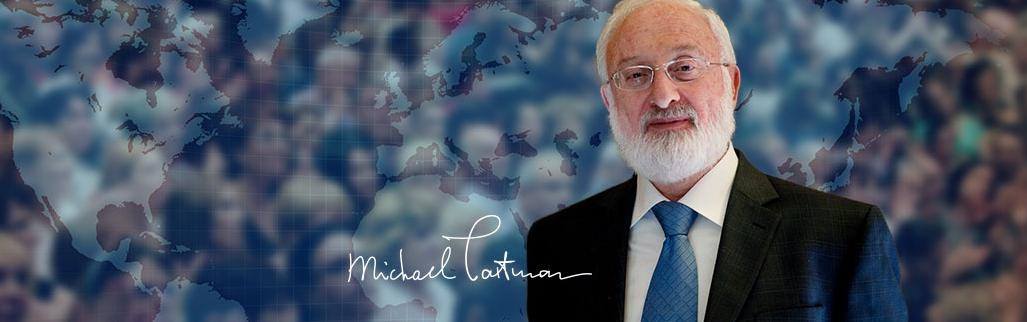
“A Peace Treaty Is Great, Now We Need Peace” (Times Of Israel)

The Times of Israel published my new article “A Peace Treaty Is Great, Now We Need Peace

40 years after the peace treaty with Egypt, and 26 years after the peace treaty with Jordan, Israel signed another peace treaty with an Arab country: the United Arab Emirates (UAE). Unlike the former two treaties, this treaty seems poised to create a warm relationship with a country that is ready and willing to conduct full and warm diplomatic and trade relationships, with embassies, investments in technology, and tourism. And in the absence of territorial and refugee related disputes, the road to successful implementation of the agreement seems smoothly paved.

But for all the merits of a peace treaty, there is a big difference between peace and a peace treaty. A peace treaty will last just as long as the parties have an interest in keeping it. It relies on narrow calculations, enough of which have piled up between countries to sign an agreement that will benefit those interests. But when the interests no longer hold, nothing will maintain the peace.

The Hebrew word for “peace” is shalom, from the word shlemut (wholeness). This is interesting because wholeness does not imply lack of hate, but rather inclusion of hate under the governance of love. We can think of it this way: We cannot even want to unite with someone before we feel the pain of separation from that person. Likewise, in order to build love with someone, we need to want it, and we cannot come to want it unless we first feel that we hate that person and want to get rid of the hatred and turn it into love.

When a positive feeling first awakens toward someone, it is still not love; it is enchantment. By nature, enchantment is intense yet momentary. If we want to keep feeling love after the enchantment is gone, we have to work on it and rise above the disenchantment and other negative feelings that surface in us toward the previously admired person. If we succeed, this will be the beginning of love. From here on, the evolution or devolution of the love will depend on our willingness to transcend recurrent spells of hatred and rejection by building love that is stronger than the manifested hatred.

It turns out that the intensity of the love depends on the intensity of the hatred that precedes it. When you have reached a state where the hatred between you has exposed itself to the fullest and you still managed to cover it with love, then you have achieved a state of shlemut, namely wholeness, peace. You felt the most intense hatred yet you chose love over it. From here on, nothing can divide between the loved ones; they have attained shalom, peace.

And what is true for people is equally true for nations. The peace treaty with the UAE has no reason to fail. As said earlier, we have common economic interests and no reasons for disagreements. But to achieve true, solid, and lasting peace in the Middle East, the neighboring nations will have to rise above tremendous amounts of hatred.

I know that in the end, peace will win. All of creation is moving toward increasing unity, so eventually all nations will have to transcend their belligerence and choose peace. The only question is how many innocent people will have to suffer until that happens.

People think that making peace requires making concessions. I don’t think so. If you make concessions, you will forever wait your turn to take over everything. But peace, as we just said, means wholeness, and wholeness means that each person must feel fully satisfied. This is possible only if all the people feel that they are sharing a common goal that is greater than either their individual ambitions: the goal of unity.

While each person remains in his or her religion or faith, people will want to unite above these differences. And just as greater hatred forms the basis of greater love between people, greater division forms the basis for greater unity among nations. When nations make wholeness their utmost goal, they learn to value both their individual perspectives and the ability to unite with other perspectives to create a common whole. Then, and only then there will be peace. And when that happens, the strongest connection will be with those who are currently the worst enemy.
[269556]
“What Are The Key Lessons From This Pandemic?” (Quora)

Dr. Michael LaitmanMichael Laitman, On Quora: What are the key lessons from this pandemic?

One key lesson is that the pandemic is only an initial blow from nature, and we can expect many more blows in more severe forms because the time has come for us to undergo a major transformation: a shift in our entire approach to life, from a competitive self-centered approach to one where we share mutual responsibility and consideration for each other and nature.

The pandemic-charged changes we already see in society, from social distancing conditions through to increased unemployment and falling businesses, hint at how this change of our approach to life will have to transpire.

Especially in the realm of work, we have built a society filled with businesses and professions that we have no real need for.

Through the pandemic, nature started filtering out the nonessential from the essential. Businesses that served our basic needs continued serving us, while those we had no real need for became sidelined.

If we look at the animal sphere, we see how a certain amount of animals die off, and others develop in their place, according to various changes that appear in nature.

It is similar with us.

We are parts of nature, and nature operates on us by placing us in new conditions. Accordingly, nature adjusts the human population and the emphasis of its activity.

Under the coronavirus’ influence, many people have become unemployed, and it is because there is a prominent declining need for much of the professions we once held.

We can expect businesses and professions that we have a real need for to continue, which is only about five percent of the service sector that has developed over the last 70 years or so.

Likewise, we will see that around 95 percent of what we engaged in will gradually disappear. People will feel that the materialistic values we held, which drove us to strive for expensive clothing, prestigious cars, and traveling incessantly around the world, will decline, and we will feel needs for more basic and simple fulfillments, together with more meaningful social connections.

Therefore, society and authorities alike will need to think hard about what to do with the growing unemployed mass around the world.

It is on this point that I have proposed a setup where people will have their basic needs provided by authorities in exchange for participating in learning and activities that aim to increase the sensation of meaningful connection in society.

On one hand, we won’t be able to revive our pre-coronavirus economy and lifestyle, and on the other hand, if we simply fulfill people’s basic needs without offering social accolades and goals worth striving for, then society will stagnate.

Therefore, by supplying life’s essentials in exchange for participation in learning and activities that aim to improve social connections, we will see a major shift in values—from egoistic to altruistic, individualistic to mutually dependent, and materialistic to people-focused—which will make this transition appear advantageous to everyone.

Moreover, by prioritizing positive social connections above all other engagements, we will also come closer into balance with nature’s interdependent and interconnected form, and will thus experience positive feedback from nature: elated harmonious sensations the likes of which we have yet to experience.

Health And Medicine, Part 3

565.01Change Your Attitude Toward Life

Question: Modern medicine does not cure, but prolongs the ability to lead a wrong lifestyle. Classically, people believe the state should take care of them. A person pays taxes, so he wants to receive reciprocal care from medicine. Is this approach correct from your point of view?

Answer: No, this is wrong. Our life, medicine, and the state are built on a very false basis of ignorance of who we are and in what volume of nature we are. Therefore, our attitude to nature, society, and man is wrong. Not to mention medicine, science, and everything else that we do. This must be radically changed.

We need to change the basis of our attitude to life. After all, it is selfish, distorted, and we do nothing about it. And a person needs to be corrected. Then his attitude toward himself, toward the world, toward life will become different. He will make society and himself different.

A person will work where needed and how much is needed, nothing more. He will relate to nature only to the extent that he can take what he needs for existence, without robbing and destroying the environment. Thus, he will live in a huge, good, kind volume of nature, and will not pour oil into the ocean and burn forests. All of this must change quickly. Otherwise, we will not have this earth.

Question: Is your approach complex and not point-by-point?

Answer: An integrated approach boils down to human education.
[269077]
From KabTV’s “The Post-Coronavirus Era” 5/14/20

Related Material:
Health And Medicine, Part 2
Health And Medicine, Part 1
A Healthy Body Reflects A Balanced Soul

Life Credo—Love

523Question: Can we say that love is a feeling that is a consequence of the right relationships between people?

Answer: I would describe it differently. To love means to feel other people and try to do everything to fulfill their desires.

Question: Do you think that this is the basic law of human society and that we must reveal it in the same way we revealed all physical laws?

Answer: We must not only reveal it, but also constantly implement it. This law should become our credo in life.

Question: And then all the other laws of ethics and countries will also exist, but will take different forms?

Answer: Naturally. They will all proceed from this law: the constant rapprochement of all parts of creation with each other, the constant rise above egoism, and the approach to an absolute, perfect state.
[268839]
From KabTV’s “Management Skills” 5/7/20

Related Material:
Love Without Conditions
Antibodies Against Egoism
Get To Know Yourself

Self-Realization Is The Embodiment Of The Person’s “I”!

278.01Question: Personal growth is a process of human development, which includes self-realization and growth practically in all spheres of human activity. Psychologist Abraham Maslow built all human needs in the form of a pyramid. At the bottom of the pyramid are physiological needs: warmth, hunger, thirst-quenching. Then came the need for security. Further, social needs, which he also divides into belongingness, affection, caring for the family, esteem, self-respect, and respect for others. The highest are spiritual needs: self-actualization and self-realization.

What is behind the desire of a person for self-realization?

Answer: Self-realization is the most powerful desire of a person to reach the embodiment of his “I.” Practically, it is the desire to be God, depending on how one imagines it.

But if one does not realize himself in this way, it means that the spark of being human is lacking in him. After all, Adam is from the word Edome, Domeh—similar to God. Therefore, when a person wants to realize himself, he feels that he is creating a Creator from himself. It turns out that self-realization is the desire to know the Creator. Since the Creator and nature are identical concepts, this is the desire to know the entire creation.

Question: How does it differ from common knowledge? After all, there is a desire for knowledge in Maslow’s pyramid.

Answer: No, we are not talking about just knowledge, as for example in physics. It is the desire to dominate over nature, over everyone. At least in something I have to be special, something that others do not have and is only in me.

Today, practically everyone wants to be a master of nature. We see how we try to tame nature, to be above it.

Question: Can self-realization be at every stage of the pyramid? Let’s say I want to realize myself in business. Not even for money’s sake. I simply have a desire to manage, build a business.

Answer: Yes, on every stage. Therefore, a person must be taught how to correctly understand this realization, how to develop oneself, how to compare oneself with others. He must be in a certain struggle, in competition with others. Otherwise, there will be no progress.
[269039]
From KabTV’s “Management Skills,” 6/25/20

Related Material:
Don’t Avoid Your True Self-Fulfillment
How Do You Find Your Destiny?
Getting To Know Ourselves

Daily Kabbalah Lesson – 8/21/20

Lesson Preparation

[media 1] [media 2]

Writings of Baal HaSulam, “The Arvut (Mutual Guarantee)” 

[media 3] [media 4]

Selected Highlights 

[media 5] [media 6]

Audio Version Of The Blog – 8/20/20

Listen to an Audio Version of the Blog
Download:MP3 Audio

“Prepare For A Tough Winter”

Dr. Michael Laitman

From My Facebook Page Michael Laitman 8/20/20

We are nearing the end of the summer and Covid-19 isn’t letting up. Wherever restrictions are eased, it erupts stronger than before, infecting younger and younger people, and with strains up to ten times more contagious. As temperatures begin to drop and outdoor entertainment becomes less appealing, people will either avoid going out or attend indoors events and increase the already high risk of contagion. At the same time, those who stay home can expect irritation and low spirits, at best, and temper tantrums are more than likely. And worst of all, domestic violence is bound to soar.

Also, as jobs run out and scores fall into a cash-flow crisis, food insecurity and disconnection from utilities will become commonplace. In that state, hopelessness coupled with the tense upcoming elections will exacerbate street violence, homicide, looting, and arsons to the point where they become routine. In many towns and neighborhoods, people will not dare set foot outside their homes. Unless something changes fast, we’d better prepare for a very tough winter.

But if anything can change, it is the future. The future is always in our hands to shape. And now is our last call to shape our society into a community, a congregation of accountable individuals who are responsible for one another and do not let other people fall by the wayside just because they’re not on my political, racial, or ethnic side.

We are living the final days before the collapse, but we haven’t fallen yet. We can eyeball the hatred in our hearts and tell it, “The more you grow, the more we the people will unite. It is only thanks to you, hatred, that we tighten our bond.”
It’s natural for opposites to dislike one another. Love between people of conflicting views always requires hard work. But precisely because of it, it is the only love that you can truly say you chose of your own volition. Only when you rise above your natural inclination can you say that you have made a free choice. But once you’ve made it, it is yours.

This should be our preparation for the tough winter ahead. Hatred will come for sure, but we must be prepared to fasten the wings of our society together right above the hate. And the more it grows, the tighter we will tie ourselves together. If we do that, then by winter’s end, hatred will be gone, and Covid will be gone right along with it.

“Covid-19 Has Quenched The Flickering Candle Of Higher Education” (Medium)


Medium published my new article “Covid-19 Has Quenched the Flickering Candle of Higher Education

Covid-19 has crippled every conceivable aspect of civilization. Yet, some aspects suffered such a blow that in all likelihood, we are witnessing their premortem spasms. One such aspect is higher education. After decades of accelerated ethical and political decadence, and voluntary discarding of academic integrity in pursuit of wealthy donors, all that remains of the Ivory Tower is an empty shell. Now, thankfully, social distancing has puffed away that, too, exposing what was once the zenith of human engagements as the nadir of human indulgence.

Today’s employers attribute much greater weight to candidates’ professional experience and independent learning skills than to their academic background. In that regard, a study that surveyed over 3,000 U.S. teens and adults found that half of young Americans think that their degree is irrelevant to their work.

When Plato founded the Academy, he encouraged diversity of perspectives and discussion of alternative views. Being a participant in the Academy did not require adherence to Platonic orthodoxy. What a stark contradiction this is from today’s blatant political agenda that every academic institution advocates. If you can tell what political views students of a certain academic institution will have at graduation, this takes away even the pretense of academic or intellectual integrity.

Worse, when every student is indoctrinated according to the institution where he or she studies, the more institutions you can buy into promoting your ideas, the more you will control the leadership of the country in a few years when the graduates take their places in the country’s corporate world and political leadership.

When universities began to develop in Europe in the early Middle Ages, they started as monastic (or cathedral) schools that focused on religious studies, as well as liberal arts (grammar, logic, and rhetoric, music, arithmetic, geometry and astronomy). As in ancient Greece, their focus was on development of thought, but also on provision of knowledge. In the middle, and especially the late Middle Ages, universities began to emerge as independent institutions in Italy, England, France, and elsewhere in Europe. By the time of the Renaissance, they were fully developed academic institutions, and many of them were funded by the Monarch rather than by the Church.

Yet, in doing so, they also lost their academic independence. To maintain the favor of the benefactor, academic institutions had to “bend” science to meet the views of their sponsors, and objectivity flew out the window.

While it is possible to accept partiality when it comes to humanities, it is far less acceptable when concerning hard sciences, and it is downright detrimental when it comes to medical studies and other fields of research that concern human lives and people’s health and well-being. Over the past few decades, there have been numerous cases where medical research was distorted, and medical evidence concealed in order to meet the interest of the funder, often causing horrific consequences to numerous people. The thalidomide distribution scandal of the late 1950s and early 1960s, for example, left a lasting effect on the world. Released as a sedative drug in the late 1950s, thalidomide was also found to ease the effects of morning sickness in pregnant women. The drug was sold over the counter for five years before it was discovered that it could interfere with developing fetuses and cause death and horrible birth defects. During those five years more than 10,000 children were affected, some 40% of whom died and the rest were born with abnormalities to the arms and legs, as well as other parts of the body. And worst of all, at least in Britain, the company that distributed and sold thalidomide knew almost six months before it was pulled from the market that there were credible claims it caused terrible deformities and the deaths of infants.

Since the 1960s, the situation has only gotten worse. When even medicine is for sale, anything is for sale. Today’s universities are mostly funded privately, or rely heavily on private donors to secure their budgets. These sums are not pro bono. They carry a very clear and high price tag, which the university agrees to pay when it decides to accept money from individuals, corporations, or foreign governments. These donors often get to determine much of the curriculum, the lecturers, and even some of the public statements that the university makes on issues of interest to the donors. In fact, these are not donations; it is quid pro quo.

But fortunately, times are changing thanks to the coronavirus. Covid-19 has uncovered the worst of the medical community, exposing nearly every official medical personality as a promoter of the financial or political interest that he or she supports. The views among so called “experts” concerning the nature of the virus and the ways to deal with it are so conflicting that it has become clear that none of them can be trusted to speak with the public interest in mind. In that state, the public cannot know the truth about the virus because either no one knows it but will not admit it, or no one tells the truth because it does not promote his or her vested interest.

Even more importantly, the transformation that the job market has been going through since the turn of the century has made universities almost superfluous. Today, when you study computer science, for example, by the time you graduate, at least half of what you learned in the first year has been changed and your knowledge has become irrelevant. Today’s employers attribute much greater weight to candidates’ professional experience and independent learning skills than to their academic background. In that regard, a study that surveyed over 3,000 U.S. teens and adults found that half of young Americans think that their degree is irrelevant to their work.

It is not that young adults do not need to learn. They need to learn and they learn a lot, but not in universities. They find that dedicated, professional trainings in their field are far more relevant, affordable, and effective. They get what they need from these short, usually online courses, which make them more professional in their fields and do not leave them in debt for decades to come, and with heaps of irrelevant knowledge.

When Covid-19 forced social distancing on the whole country, it shut down the universities. Thankfully, this coming fall, hundreds of them will not reopen but will continue teaching online. In doing so, it takes away the little appeal that universities had — the campus atmosphere.

I think it is time to move to the next phase in learning. There is no point funding behemoth institutions that do not benefit the public. Medical research institutions should be funded solely by the government so as to maintain objectivity and their ability to focus on the public benefit and not on catering to various vested interests.

Social sciences and humanities should not be regarded as sciences, since they are not. Those who want to study them should be able to do so, but institutions should openly profess what ideology they are endorsing so that when people study there, they will know what will be their views when they come out. Additionally, people who listen to a graduate from this or that institution will know what to expect and will not be misled into thinking that that person presents objectively researched information.

It is a long overdue cleanup of the Academia, and the coronavirus expedited it. In the near future, I believe that higher education will take on a completely new and much healthier form.

The Era Of The Last Generation

The state of the last generation is a shift to a new form of social organization, where we gradually learn how to work correctly with our ego and come to sensing an integral connection between us.

Today, we are in a transition phase that lets us realize the corruptness of our attitudes toward our social and natural environments and start rebuilding ourselves to fit the whole, complete, and caring structure of nature.

Therefore, the main value of tomorrow is our ability to mutually support and take care of each other.