Audio Version Of The Blog – 1/27/19
Posted on January 27th, 2019 at 9:55 pm
Listen to an Audio Version of the Blog
Download:MP3 Audio

Listen to an Audio Version of the Blog
Download:MP3 Audio
 From My Facebook Page Michael Laitman 1/27/19
“Never again.” A powerful statement with deep personal meaning to me since childhood when I started asking questions about why most of my family perished under the Third Reich and what the future would look like for my people, I was compelled to get to the bottom of why the Holocaust happened. On the 74th anniversary of the liberation of Auschwitz, we need to face the reality that, in spite of all the suffering the Holocaust brought, hatred against Jews is still alive, strong, widespread, and on the rise.
How can we make sure history doesn’t repeat itself if we fail to understand where the hatred of Jews comes from? While we commemorate Holocaust Remembrance Day around the world, I suggest that there is something deeper about our history as a people that we must remember so we can assure ourselves and our children that “Never again” truly means never again.
A recently uncovered book from Hitler’s personal library revealed his intention to extend the Nazi tentacles to include North America in the grip of his Final Solution plans, which were prevented only by the victory of the Allies. If such a thing nearly happened then, how hard is it to imagine the potential for a similar operation in today’s globalized world?
Every year, we remind ourselves that history must not be repeated. However, truth be told, we are witnessing very similar conditions to those before World War II, this time with rampant bigotry and hatred against Jews across the entire globe, basically everywhere. According to a survey recently released by the European Commission, nine out of ten European Jews report feeling that anti-Semitism has increased over the past five years and almost a third of them avoid attending Jewish events or visiting Jewish sites because they do not feel safe. In the US, the FBI reports a rise in the incidence of anti-Semitic acts since 2016. Out of all religion-based hate crimes, 58% targeted Jews or Jewish institutions.
The trends show that history is not necessarily a good teacher and we have failed to learn our lessons well. There is still time to correct our mistakes in this test of life. The clock is ticking for us, and until we scrutinize and internalize the reason for the constant pressures against us, we will not be able to make a course correction to eradicate anti-Semitism.
Over many centuries, our ancestors fought to maintain their unity above their growing selfishness. But two thousand years ago, they succumbed to unfounded hatred and were exiled from the land of Israel. Since then, Jews lost the ability to be a light unto nations because we lost our unity. This was the starting point of anti-Semitism as we know it.
Our unity determines the state of the world and its fate. Through our unity, we allow the world to connect as we let the positive, uniting force of love above differences stream into this need of the world. Conversely, our separation denies humanity such a soothing power and invokes within it hatred toward Jews when they are deprived of the calming force. The failure to deliver the ability to unite above differences causes the nation’s aggression toward Jews and is the subconscious reason why they perceive us as the root of all evil.
Our sages explain the phenomenon of such hatred toward us with these words: “No calamity comes to the world but for Israel” (Yevamot, 63a). Jewish leaders throughout the ages have circulated this message widely. They did so as a reminder that the only remedy capable of protecting us from trouble is the power of connection which we Jews can provide.
Rabbi Kalman Kalonymus wrote in Maor va Shemesh (Light and Sun): “When there are love, unity, and friendship between each other in Israel, no calamity can come upon them.” Similarly, Rabbi Shmuel Bornsztain wrote in Shem mi Shmuel (A Name out of Samuel): “When Israel are as one man with one heart, they are as a fortified wall against the forces of evil.” The Midrash (Tanchuma, Devarim [Deuteronomy]) states likewise: “Israel will not be redeemed until they are all one bundle.”
In a nutshell, “love your neighbor as yourself,” brotherly love, and mutual guarantee are the keys to the security and prosperity of the Jewish people. When we unite above our conflicts and disputes, we unleash nature’s positive force. It is the force that maintains the balance of creation, and its absence among us causes human society’s decline. In his “Introduction to the Study of the Ten Sefirot,” Rav Yehuda Ashlag (Baal HaSulam) called this force “reforming light,” and explained that it can balance our self-centered nature and thereby heal human society.
Only if we rekindle the brotherly love we cultivated centuries ago and share the method for achieving this with everyone, will the world stop hating and blaming us for all its troubles.
In his essay, “The Arvut (Mutual Guarantee),” Baal HaSulam writes that “the Israeli nation was established as a conduit to the extent that they purify themselves [from egoism], they pass on their power to the rest of the nations.” Therefore, the International Holocaust Remembrance Day can be more than a commemoration of the millions who died. It can also be an opportunity for us to remember that we have a method for connecting the world, a true means to prevent the atrocities from recurring.
At this time when anti-Semitism is intensifying across the globe, we must strive to rise above our differences and draw the positive force that will connect us, unite the world, and uproot all hatred. Now is our time to radiate light to the rest of the nations, the light of unity, peace, and balance through our shining example of reuniting above all our differences.
 Criticism is allowed for only 30 minutes after a person has worked for 23 1/2 hours a day in the right line, that is, he has justified everything. The work in the right line is to transfer our left line, our discontent, into the right line, through our efforts.
After a person has made the correct preparation during the 23 1/2 hours, keeping himself in the right line all the time and having trained himself to work in it, he should force himself to awaken the left line, the critical attitude. It is not easy for him to do this; he has already become accustomed to being in Hassadim, in mercy, merged with the Creator in the right line, and now he checks how much he can add to this bestowal for the sake of bestowal, to the small state.
One should always strive for a small state (Katnut); a big state (Gadlut) is only an addition, AHP de Aliya (AHP of ascent), that is, a tiny part of the desires to receive that can join the desires to bestow. The main thing is that a person moves to the left line not when he suddenly dislikes something, but only after he has built the right line with his efforts and has the right to awaken the left line.
We are constantly positioned against the Creator: “There is none else besides Him.” But the Creator clothes in outer garments, representing the whole of reality: inanimate nature, plants, animals, and people. We must penetrate through these garments, clothe in them, and accept and reveal the Creator in them. In order to break through these garments, we must first gain the desire for bestowal. Only then, as small additions, do we add the desires to receive to it, which is called the 30 minutes a day.
You can determine this proportion not only by time, but by weight or size. The idea is to strive for the small state, it is important, and the large state is only an addition that must be carefully weighed. We should understand that we do not work with genuine desires to receive, but weigh what desires to receive we can work with to add pleasure to the Creator above our desires to bestow.
The work with the desires to receive is much more difficult, high, and sublime than the construction of desires to bestow, the giving attitudes toward the Creator.1
From the 1st part of the Daily Kabbalah Lesson 1/20/19, Writings of Rabash, Vol. 1, Article 30 “What to Look For in the Assembly of Friends”
1 Minute 24:10
Related Material:
Women’s Criticism
Obedience Or Criticism?
Criticism Of The Past
 Question: If there is none else besides Him, why doesn’t the Creator fulfill the lack of something? For example, He does not help a person with an incurable illness.
Answer: He’s the one who sends the illness! Everything is done by the Creator.
Every day, from dawn to dusk, He brings various troubles, and we have to make efforts to somehow run away from them.
We understand that it is impossible to escape, but meanwhile we still appeal to Him and try to find out where He is hiding behind all of it. This is the purpose for the blows we receive. He sends us troubles to attract our attention.
Question: Does it mean that it makes no sense to ask Him to change all of this?
Answer: No, we need to ask only about one thing: revealing His Oneness to the world.
[239241]
From the Kabbalah Lesson in Russian 9/2/18
Related Material:
Why Doesn’t The Creator Hear Our Complaints?
What To Ask From The Creator?
Prayer As A Systematic Action

New Life 1074 – Social Alienation
Dr. Michael Laitman in conversation with Oren Levi and Yael Leshed-Harel
There is a natural, social alienation in each one of us. The human ego constantly develops and produces the feeling that excessive closeness with others is a threat. We feel a sense of foreignness, distance, coldness, and even hatred when we want a person to disappear from the world altogether. Technology has caused us to become more alienated because it makes it possible for us to connect while, at the same time, keeping our distance. As a result, we will live more and more through our phones. The alienation we are experiencing is neither good nor bad but the outcome depends upon how we use it. The foundation of the Israeli nation was based upon a gathering of strangers whom Abraham taught to love one another above the differences and social alienation. Nature will compel us to achieve a state of inner, heartfelt, spiritual connection with one another.
[237954]
From KabTV’s “New Life 1074 – Social Alienation,” 12/6/18
 Video: Play Now | Download |
 Audio: Play Now | Download |
Lesson Preparation
| [media 1] | [media 2] |
Lesson on the Topic “To Bestow Contentment to The Creator” (Preparation for the Convention in Arava 2019)
| [media 3] | [media 4] |
Talmud Eser Sefirot, Vol. 6, Part 16, Table of Answers for the Meaning of the Words, Item 304
| [media 5] | [media 6] |
Writings of Baal HaSulam, “The Future Generation”
| [media 7] | [media 8] |
 The assembly of friends (Yeshivat Haverim) is the most important action. And this is not only when we gather physically and sit together. Assembly (sitting together) in spirituality means that we do not use our desires to receive but only the desires to bestow (to sit). We restrict our desires to receive and relate to each other only with bestowal.
While preparing for the assembly of friends, I should imagine that I am going to assemble and unite the parts of my soul into one soul, into one spiritual Partzuf, despite all their differences. And the more this Partzuf grows, improving its quality, the more noticeable the internal differences between the friends will become, simply unbearable. But at the same time, we should unite in order to create one spiritual Kli, a Partzuf in which all opposing properties exist and unite above all differences.
From this, it is clear that the assembly of friends is the most important action through which we correct our soul and make a place for the Creator to reveal Himself, and we realize the purpose of creation.
We need to perceive the assembly of friends not as a simple meeting for an hour or two; we need to think about the essence of this action. The purpose of man’s existence, his mission in this world, in the spiritual world, and in his life, this all must be brought together to the assembly of friends so that it takes place only for this purpose.
The assembly of friends helps in implementing all the conditions revealed in each of us and in the whole world. We must not ignore any parameter; we need to attach each one to the one Kli for its maximum completeness on our level so that the Creator could reveal Himself and enjoy us.1
From the 1st part of the Daily Kabbalah Lesson 1/20/19, Writings of Rabash, Vol. 1, Article 30 “What to Look For in the Assembly of Friends”
1 Minute 00:28
Related Material:
What To Look For In The Assembly Of Friends
A Successful Gathering Of Friends
Invitation To An Assembly Above Time And Place
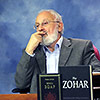 Zohar for All, Torah, “BeHaalotcha” 58: Woe unto one who says that the Torah comes to tell literal tales and the uneducated words of such as Esau and Laban. If this is so, even today we can turn the words of an uneducated person into a law, and even nicer than theirs. And if the Torah indicates to mundane matters, even the rulers of the world have among them better things, so let us follow them and turn them into a law in the same way. However, all the words of the Torah have the uppermost meaning.
It is very difficult to explain The Book of Zohar to beginners. This is a completely closed book. Its texts seems to be literary or historical, often frightening, mystical.
When I began to study with Rabash, I was offered to study the article “Preface to the Wisdom of Kabbalah” by Baal HaSulam, which is one of the introductions to The Book of Zohar. But the entire method, the technique of spiritual work, is clearly described in it in the language of Kabbalah and not in the language of feelings.
The Book of Zohar cannot be used as a textbook, it can be used only as material for extra classes for people who are seriously studying Kabbalah.
Question: What secrets are hidden in it?
Answer: It is impossible to reveal these secrets to a person because everything will be unclear to him since he does not have a corresponding mind that must put together incomprehensible things.
The fact is that a person currently studying Kabbalah has an ordinary earthly psychology. He must work on himself until the Light begins to change him a little, and in accordance with this he will differently perceive the material being studied.
Question: Then why was The Book of Zohar written?
Answer: So that you have something to study, that you can change, and in the measure of your changes, feel how the world, which used to seem one-sided, is changing, and now you see it as integral.
Then you will perceive it completely differently: complementary, interchangeable, as one common whole. All the inanimate, vegetative, animate, and human nature will be perceived as one system.
But you will live in it. You will be unable to change something without changing everything else.
The Book of Zohar is a commentary on the Torah. In the Torah, absolutely everything concerning the way of a person and of all humanity is registered from the beginning to the end. Only the one who changes in accordance with the ascent on the spiritual steps attains what is written in it.
[238844]
From the Kabbalah Lesson in Russian 8/26/18
Related Material:
The Book Of Zohar, The Main Book Of The Wisdom Of Kabbalah
Not Just A Book
Feeling The Book Of Zohar
 Question: If there is no punishment in the world, then what is pain and suffering?
Answer: There is no punishment in the world and there is no reward except for the revelation of the Creator’s uniqueness by you and within you.
Question: But what if I do not want to suffer?
Answer: From this you will not escape. If you do not want to suffer, then you must reveal the Creator faster than He urges you to it.
[238935]
From the Kabbalah Lesson in Russian, 9/2/18
Related Material:
Wired And Wireless Communication With The Group
We Won’t Follow The Path Of Suffering Forever
You And Me And The Whole World Too

New Life 1072 – Evolving From Nationalism To Humanism In Israel, Part 1
Dr. Michael Laitman in conversation with Oren Levi and Nitzah Mazoz
Humanity wanders through waves of humanism and nationalism similar to the breath’s contraction and expansion. From an egoistic point of view, there is a difference between my nationality and the world. When we hear about natural disasters, our reactions depend on the degree of closeness we feel to the people involved. Humanists from generation to generation have related to this philosophically whereas today we require a more practical approach. According to the wisdom of Kabbalah, true humanism is above human nature and requires the acquisition of a unique power. Through education about love and altruism, a person can expand his boundaries from the family to the nation and even to the whole world. A person who develops love embraces the entire world and begins to feel all of nature and the phenomena in it. The more the person rises in love of others, the more he enjoys and feels wholeness and eternity.
[237860]
From KabTV’s “New Life 1072 – Evolving From Nationalism To Humanism In Israel, Part 1,” 12/4/18
| Video: Play Now | Download |
Audio: Play Now | Download |
 Daily Audio Version-MP3
 Get the Weekly eNewsletter
 Follow on Twitter

