A Gift at Mount Sinai, Awaiting the Receiver

740.03Question: What is the meaning of the holiday of the Giving of the Torah (Matan Torah) and what does it mean that we have received the Torah? We do not seem to keep its commandments. It is rather the opposite. It says “do not steal”—we steal; “do not covet other’s property”—we covet.

How does the Torah relate to our lives today? Could the Creator have been mistaken when He gave the Torah specifically to the people of Israel?

Answer: There is giving of the Torah, and there is receiving it. The problem is that although the Torah was given to us, we never received it. Today’s Israeli society is very far from what it should be in living according to the laws of the Torah. Therefore we are still considered to be in exile.

Question: But we got the Torah, we have it!

Answer: We have the book that says “Torah,” but that is not enough. The Torah is the upper light that returns to the source. The light corrects our egoistic nature, and leads us to love and mutual participation, until we love others as ourselves.

This is called the realization of the Torah. The Torah is the light, as it is said: “I created the evil inclination and the Torah to correct it.” The Jewish people have the most developed egoism, and it is not for nothing that our people are called “stiff-necked.” Therefore we received the Torah for its correction—the light that reforms.

In the past, during the time of the First and Second Temples, the people of Israel used this light for correction. Later they fell from this level, which is called the destruction of the Temple, and they went into exile. It is an exile from a life based on the law of love of others.

Today no one even thinks about loving others anymore. Only the external traditions remain of the Torah.

Question: Have we not received the Torah yet because not everyone fulfills religious commandments?

Answer: We are not talking about religious commandments. The law of the Torah is to love one’s neighbor as oneself. Rabbi Akiva calls this the great rule of the Torah, which includes all other commandments. Therefore by fulfilling the commandments mechanically, a person should check: does this bring him closer to love of others, or does it maybe even alienate him? Does it create a split among the people and incite hatred?

Is this the Torah that we got? We have received the highest remedy, because the Torah is light, an upper force that affects us, if we fulfill special conditions. This force can correct our nature and allow us to open the upper world, to open our eyes and see where we really are.

The Torah is eternal, and with its help we can also achieve eternal life. But this is only on condition that we really find out what the true Torah and the commandment of loving one’s neighbor as oneself mean, which combines all the commandments.
[159702]
From KabTV’s “New Life 560 – The Holiday Of The Giving Of The Torah,” 5/5/15

Related Material:
New Life 560 – The Holiday Of The Giving Of The Torah
Shavuot: The Way To Life
A Joyful Giving Of The Torah Holiday

Talks about the Steps of the Ladder, Part 139


Talks about the Steps of the Ladder, Part 139

Chapter 14. The Desire for Spirituality

The Creator created the will to receive in accordance with His purpose “to do good to His creations,” to bring the will to receive to a state of perfection. For “doing good,” according to the Creator, means to do so perfectly, like Him. Anything less than perfection is not considered true goodness. Only the Creator is perfection.

In order to bring the created being to equivalence, to such perfection, it is necessary for the created being to want to become corrected, to change, and to bring the state that is opposite to perfection to ultimate perfection. Perfection is achieved only from its opposite, as “the advantage of light out of darkness,” as “there was evening and there was morning.” From a vessel that feels deficiency, the filling is sensed, and from a felt lack, delight is perceived. We cannot understand or attain anything except from its opposite.

The essence of delight, the essence of light, is the Creator. To attain and feel Him is only possible through having the opposite form. This means that the nature of the created being must be opposite to the nature of the Creator in order to enjoy the state of perfection, the degree of the Creator. Therefore, the breaking of the vessels takes place. Through the breaking of the vessels into the will to receive of the created being, which is “existence from absence,” qualities of the Creator (“existence from existence”) fall in. Therefore, we acquire desires for fulfillments, which necessarily come from the Creator.

The way to reach the purpose of creation begins from the lowest degree where we have basic bodily-animal desires for food, sex, and shelter, which are desires found also in animals. We long for them even when living alone. Next, we develop human-social desires for wealth, honor, and knowledge, which society instills. Only after we more or less know, recognize, and fulfill these desires, do we reach desires called “spiritual desires,” which neither body nor society can fulfill, only the Creator can.

There are thus three stages of the desire’s development. The development begins by fulfilling animal and human desires, known as “desires of this world.” We begin to talk about a human being only from the moment when spiritual desires awaken, desires that can only be filled with the upper light, with the Creator, with the sensation of the Creator. These are called “desires of the world to come,” the spiritual world.

We who develop a spiritual desire, where the desire for spirituality is conceived, work to develop and fulfill this desire against all other desires. We work on the point in the heart, the desire for spiritual fulfillment, against all other bodily and human desires. We labor against these opposites with all of our might, using the society, the study, and inner searching. We want to grow and nurture the point in the heart, the desire for spirituality, against all the other corporeal desires.

If we complete this work (and we do not know when that will be), we long only for spirituality, day and night, in a state described as “until it does not let me sleep,” and we only fulfill the other desires out of necessity for basic existence, not as luxuries. If all of these conditions are met, it is a sign that we have finished our work in this world, and then we are given a new degree: the level of work is raised. Instead of the general bodily desires in the heart, we are given desires called Klipot.

Opposite the point in the heart, instead of the expanded point, we are given the feeling of the Creator. Now, instead of a heart filled with animalistic and human desires and a small point with a vague longing for spirituality, we receive a new heart, a Klipa within which is Kedusha. The Klipot are various thoughts and desires against the Creator, against His unity, collectively called “Pharaoh.” Kedusha is the desire and yearning for the Creator, the soul. The relationship between Klipa and Kedusha is like the relationship between the heart and the point in the heart at the level of this world.

Thus, we continue our work. Our whole connection, life, and yearning becomes directed toward the Creator, while Pharaoh (the Klipot, the disturbances) constantly resist them. Yet, as it is written, “Pharaoh brought the children of Israel closer to their Father in Heaven.” It is precisely through these disturbances, through the Klipot, that we strengthen and magnify our connection, yearning, and desire for the Creator.

When we complete the work, the end of the work is called “the end of correction,” we enter a state where all our desires are completely corrected in accordance with perfection and Godliness, and we become fully filled with the upper light. These are the differences between the degrees of this world and the degrees of the next world, between the beastly soul and the Godly soul.

Related Material:
Talks about the Steps of the Ladder, Part 138
Talks about the Steps of the Ladder, Part 137
Talks about the Steps of the Ladder, Part 136

Daily Kabbalah Lesson – 6/16/25

Preparation to the Lesson

icon for podpress Video: Play Now | Download icon for podpress Audio: Play Now | Download

1st part of the Lesson — Writings of Baal HaSulam, Shamati #10 “What Is ‘Hurry, My Beloved,’ in the Work?” (9.30.21)

icon for podpress Video: Play Now | Download icon for podpress Audio: Play Now | Download

2nd part of the Lesson — Lesson on the Topic “Everything Is Obtained by the Power of Prayer”

icon for podpress Video: Play Now | Download icon for podpress Audio: Play Now | Download

3rd part of the Lesson — Writings of Baal HaSulam, “Preface to the Wisdom of Kabbalah” 

icon for podpress Video: Play Now | Download icon for podpress Audio: Play Now | Download

Selected Highlights

icon for podpress Video: Play Now | Download icon for podpress Audio: Play Now | Download

Audio Version Of The Blog – 6/15/25

Listen to an Audio Version of the Blog
Download:MP3Audio

Choose to Accept the Light of the Creator

935The festival of Shavuot—the time of the giving of our Torah—is approaching. He means that the Creator is clothed in the heart, meaning that at that time the Torah dresses in the hearts of each and every one from the whole of Israel (RABASH, Letter No. 52).

The Torah clothes itself in a person’s heart, that is, one feels that in these days there is a connection with the Creator unlike any experienced at other times. In these days, the Creator draws near to His people, and everyone feels that this is a holiday.

If we do not feel the holiday, then we must open our hearts and receive what can be attained in these days in order to feel that the Creator dwells within His people. If the holiday is barely felt, we should examine what is lacking in our preparation for it, that is, in our readiness to receive the Torah.

When the Torah clothes itself in the heart and a person feels the light of the Torah within, he begins to fulfill the Torah according to this inner clothing. Meaning, the will of the Creator enters a person’s heart, and now the heart itself compels one to fulfill the Torah with love and joy.

If, during all the days from Passover to Shavuot, we prepare ourselves to receive the Torah, then on this holiday we will be ready to accept it. Initially, the human heart is egoistic, but it transforms through the states one goes through and ultimately comes closer to what the Creator demands of it. This is what it means that the Torah clothes itself in the heart of a person.

The sign that a person is ready to receive the Torah is one’s willingness to open one’s heart and receive all the light that comes to him or her to feel how the Creator settles within one’s heart.

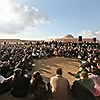
It is said that when the people gathered at the foot of Mount Sinai, the Creator gave them a condition: either you accept the Torah or this will be your burial place. In other words, a choice is set before them: either cleave to the Creator or remain in separation; it is time to choose. And we choose unity and connection, and thanks to this decision, the holiday arrives!
[344843]
From the Daily Kabbalah Lesson 6/1/2025, The Time of The Giving of The Torah

Related Material:
Shavuot—The Holiday Of Finding A Connection With The Creator
The Kabbalistic Meaning of the Holiday of Shavuot
Shavuot – A Day-Long Eternity

Based on the Intention

219.01Question: Where does advancement from our current state begin?

Answer: We do not need to change any of our actions; we are only required to give all the actions we perform in life the correct direction. That will be the difference.

A person does not perform bad or good deeds; his desires remain as they were and must receive their fulfillment. Just as Malchut was filled before the first restriction, so it will be filled at the end of correction. The first restriction acts only in order to build an intention for the sake of bestowal upon each desire.

That is, a person should not be thinking about his actions at all. When educating him, we do not forbid anything; we only teach how to connect with the Creator. If a person wants to establish a connection with the Creator, then adhesion is his final state, and now he must find a foothold for that connection; that is his current goal.

This is exactly what we teach him: how to grab hold of the “end of the rope,” how to ascend along it continuously. This ascent by the “rope” of intentions is called the spiritual ascent through the ladder from world to world until he reaches 100% intention, 100% connection.

As for a person’s desires, the essence of his actions will change according to the intention; yet the actions themselves will remain the same as before. Will he no longer eat or drink? Will he not reproduce or work?

Everything will remain as it was. Simply, based on the intention, he will naturally calibrate his actions. And in doing so, he will not have to restrain himself. This will occur because his inner world will establish a new relationship between thoughts and actions and filter them, but only from within his internal development, without any external suppression from us or anyone else.

We see how useless suppression is. What can the police do? What can all the prisons in the world achieve? Absolutely nothing! Education can rely only on personal example and should serve solely to give a person a connection to the upper force from which he will then receive everything. And only then, thanks to this, will the person change.

It is impossible to change a person by any other means. We have already seen all possible methods throughout history, and not one of them has worked—not a single one! Because aside from the change of intention, there is nothing else we need to do in the entire universe.
[344677]
From the 1st part of the Daily Kabbalah Lesson 5/12/2025, Writings of Baal HaSulam “The Arvut (Mutual Guarantee)”

Related Material:
Correction Is Changing the Intention
The Intention Determines The Act
When Everything Is Fine

Find the Point of Connection with the Common Kli

938.04Question: If a person tries to carry out spiritual work in thought and action, but the heart remains deaf, a feeling arises that some kind of heaviness is constantly happening there.

How can I unite with the others from within this heaviness in the heart? What should I do to make use of this opportunity?

Answer: You must find the point of connection with the common group, with the common Kli. And from there you will begin to feel yourself in the center of that group. There you will receive answers.

Question: Am I searching for this common point through prayer?

Answer: Yes, the prayer is there as well.
[344503]
From the Lesson #2 World Kabbalah Convention 5/22/2025, “Believing that the Creator Is Good and Does Good”

Related Material:
Together in Spiritual Space
Advance into the Depth of the Common Heart
Whom Should We Ask For Help?

Start Talking to the Creator

235Question: Is fear of the Creator equal to the measure of difference in qualities between me and Him? How can I stop being afraid of the Creator?

Answer: It is very simple. Start talking to Him. That is the easiest thing.

Question: And how can I hear the answer?

Answer: How to hear the answer? That is already a problem. If you strive for Him to hear you, from that you will understand what you need to do in order to hear Him.
[344506]
From the World Kabbalah Convention 5/22/25, Lesson 2, “Believing that the Creator Is Good and Does Good”

Related Material:
Engage the Creator in a Dialogue
How Can You Learn to Speak with the Creator?
How Can You Communicate Correctly With The Creator?

The Kabbalist’s Secret

912Question: How did you reach such a high degree of love among the greatest friends? What did you pay for it?

Answer: With my free time. I filled all my free time with the study of Kabbalah—The Book of Zohar, The Study of the Ten Sefirot, the original Kabbalistic sources, that is the entire secret.
[344509]
From the World Kabbalah Convention 5/22/2025, Lesson 2, “Believing that the Creator Is Good and Does Good”

Related Material:
How Do You Become Devoted To The Wisdom Of Kabbalah?
The Upper Goal Determines Everything
Commitment To The Spiritual Path

Talks about the Steps of the Ladder, Part 138


Talks about the Steps of the Ladder, Part 138

Why Do Man and Woman Together Bear Male and Female Offspring, and Not Each Their Own Kind?

Man and woman together bear both male and female because each degree includes both aspects. Through their coupling, they produce the next degree. In the next degree, there is again a split between male and female, two opposing sides, “a help against Him,” until they find a correction where they cling together, and through their adhesion, they give birth to another degree, the next state. In every new state that we enter, we discover these two opposing elements of male and female, and begin to unite them.

We find within ourselves the discernments called “woman” (female desires). We correct these desires toward the goal, which is an act called “male.” “Male” refers to the Creator within us, the bestowing part. We make a coupling (Zivug) between the two, and thereby give birth to their next state. In the next state, we go through the same process. These are the inner reincarnations we undergo. We can sit in a lesson for just a few hours and go through thousands of reincarnations, from generation to generation, parents to children, and it all carries out within us.
From a Talk on the Article “If a Woman Inseminates,” 6/8/2002

Related Material:
Talks about the Steps of the Ladder, Part 137
Talks about the Steps of the Ladder, Part 136
Talks about the Steps of the Ladder, Part 135