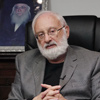
The Times Of Israel: “What Has Changed This Jewish Year?”


The Times of Israel published my new article “What Has Changed This Jewish Year?”

An Introspection at Rosh Hashanah, 1st of Tishrei, 5779

What has changed this year compared to last year? As Jews, do we feel safer?

If we look at world events, unfortunately, the situation has changed for the worse. We are in the thick of a groundswell of hatred against Jews and Israel.

Anti-Semitism Everywhere

Anti-Semitic incidents are at an all-time high in Europe and North America. In Britain, the Labour Party is rocked by anti-Semitic scandals and its leader, Jeremy Corbyn, is at the center of a crusade against Jews and Israel. The current climate is making British Jews consider leaving the country.

In Germany, 1,000s of neo-Nazis are taking to the streets more often and more openly, mobilizing to rekindle Hitler’s thoughts and ideals. Their rallies recently became the most violent protests in decades, placing even civil authorities in jeopardy.

France, Poland, Austria, Canada and the US also join the legion of countries where anti-Semitism is on the rise. In the US, anti-Semitic incidents are a widespread phenomena. Only last year, there was a 60% spike, the largest single-year increase on record, according to monitoring groups.

Israeli and American Jews’ Growing Rift

And what about Israel? If Israel has been considered a safety net for the Jewish people, it is currently the source of a growing rift between the world’s two largest Jewish communities: Israeli and American Jews. Those in the Diaspora expect more pluralism from the Jewish state and self-determination in the way they conceive and live their Jewishness. There is also a significant split on how President Trump’s handling of the US-Israel relationship is viewed: 77% approval from Israelis, while only 34% of American Jews express positive views.

As we approach the introspective period of Rosh Hashanah, there is growing urgency to understand where we are, how we’ve reached this place, and how we advance from here.

Rosh Hashanah: The Beginning of Change

The words, “Rosh Hashanah,” come from the Hebrew words, “Rosh Hashinui” — the beginning of change. Besides food and family gatherings, Jewish festivals have profound meanings. Rosh Hashanah is not just the beginning of the Hebrew calendar. It is a symbol of renewal, when we start examining ourselves and determining how we want to improve ourselves.

We taste from a fish’s head to state that we want to be the head and not the tail, meaning that we want to determine our path and not blindly follow the herd. We eat pomegranate seeds, where each seed represents a desire we discover within, and which we want to learn to use not selfishly, but in order to benefit others. Also, we eat an apple, the symbol of the sin (of self-centeredness), and sweeten it with honey, which symbolizes learning to use even that primordial temptation altruistically.

Jewish Holidays Symbolize Stages of Our Correction

The people of Israel coined the saying, “Love your neighbor as yourself,” and to various degrees implemented it until the ruin of the second Temple. All of our festivals symbolize milestones along the path of transformation from the evil inclination — namely egoism — to altruism, where we love our neighbors as ourselves.

It is written in the Mishnah and the Gemarah (and countless other texts) that the only reason why the second Temple was ruined is unfounded hatred. That is, when egoism takes over, we fall. We have been established as a nation only when we vowed to be “as one man with one heart.” When we broke that vow we were dispersed and exiled.

No less important than our vow to be as one was the promise we received that we would be a light for the nations. But in the absence of the bond between us, what light do we emit? When we are united and project that unity, we become a light for the nations and cannot be referred to as “warmongers” because we spread unity.

Jews Must Fix Growing Alienation in the World

Today’s biggest problem is the global mistrust we see on all levels. One by one our illusions shatter. Who can we trust? I’ll spare you the dismal examples that answer this rhetoric question, but it is clear that we are growing increasingly alienated from each other — the opposite of the unity and brotherly love that are so vital for survival in a world where everyone depends on everyone else.

The more we pursue the current trend, the greater the pressure that will be applied on the Jews. Deep down, the world remembers that the Jews once knew the secret to proper human connection. When that memory surfaces, it is vented out as accusations that we are warmongers, manipulators, and other “compliments” that have become part of the anti-Jewish lingo.

Although we, too, are disconnected, but we are the ones who can and must rekindle our unity. We may still be very far from unity, but here at least is a recognition of the indispensability of this unjustly derogated value.

Finding The Key To Our Happiness

So this Rosh Hashanah is an amazing opportunity to really make it Rosh Hashinui, and begin to change how we relate to one another. As we gather with family and friends, we must make it a point to rise above our differences and find the common goal of unity. And when we do that, the previously mentioned woes will be no more, since if you look at them, you’ll see that all of them derive from one and only origin — our overblown egos.

This year, let’s spread some honey on our overblown egos, symbolized by the apple (Heb: tapuach, from the word, tafuach [bloated]), and sweeten them with unity. This is all we need; this is all the world needs; and it is the key to our lasting happiness.
[232854]

Difference Between Klipa And Holiness

921The difference between Klipa and holiness is not in action, but in intention. Holiness is all that is for the benefit of others, including the Creator, and all that is for one’s own good is a Klipa.

It turns out that there is no difference between Klipa and holiness in actions, but only in intentions. If we pay attention to this, we will see that it is easy to move quickly from a Klipa to holiness, and vice versa, to fall from holiness into a Klipa.

Therefore, one needs to pay attention only to the intention, and one can quickly correct one’s actions. The internal states the Creator throws us into do not matter. We just need to check the intention, and if necessary, immediately change it with the help of corrections within the group. This is the most reliable test.

It takes many years for a person to form this picture, but when it is formed, he makes corrections relatively quickly and easily.
[232067]
From a Talk in Iceland, 5/19/18

Related Material:
One Way Channel Of Bestowal
Life In Bestowal, Death In Receiving
The New Definition Of Sanctity And Impurity

Perfection

laitman_439Question from Facebook: What is perfection?

Answer: Perfection is absolute harmony between the created beings and the Creator when they mutually complement each other in such a way that no imperfection is left between them.

Perfection is the Creator. However, it is not Him by Himself; rather, it is how we define Him in our sensations.

Question: What is a perfect person?

Answer: A perfect person is one who is completely similar to the Creator. The Creator is the absolute perfection of nature.

The general state of the entire universe that is in absolute connection in all its manifestations—that’s perfection. The source of this perfection that we attain is called the Creator.

Question: Does it mean that there is no perfection in our world?

Answer: Of course not! In our world, everything is opposite to perfection because one acts at the expense of the other. Our world is the lowest, the worst of the worlds. Only ascent above it is possible. There is nothing worse than this world.
[229376]
From KabTV’s “News with Michael Laitman” 04/17/2018

Related Material:
“The Lord Raise His Countenance Toward You”
The Unattainable Greatness Of The Upper
Not To Live In A Lie

Daily Kabbalah Lesson – 9/3/18

Lesson Preparation

[media 1] [media 2]

Lesson on the Topic “Conception”

[media 3] [media 4]

Talmud Eser Sefirot,  Vol. 3, Part 10, Item 2

[media 5] [media 6]

Writings of Baal HaSulam, “A Speech for the Completion of The Zohar“

[media 7] [media 8]

Audio Version Of The Blog – 9/2/18

Listen to an Audio Version of the Blog
Download:MP3 Audio

Passing On Attainment To One Another

laitman_961.2Question: How do Kabbalists pass on attainment to one another?

Answer: This is a complex system of combined Partzufim, when one’s attainment is partially transmitted to another from the top down or from the bottom up, just as in our world there is a transfer of knowledge between the teacher and the student.

One must have a Kli (vessel) to receive, and the other must have a corresponding desire to give so that a there would be a fusion between them, a proper interconnection, and then from the upper Partzuf, the Light will spread in the measure that you can correctly clothe it in your reflected Light.

Having received from the highest Light in your reflected Light, you can make a Zivug de Hakaa (coupling by striking) on it and correctly receive it.

Remark: But Kabbalists talk about a reality where there are no bodies, there is no time and space—something that cannot be explained.

My Comment: Try to understand creation a little deeper. It consists of a desire and a fulfillment. Clumps of desire and fulfillment—that is the whole reality.

Question: Is it possible to depict all of humanity as one great desire?

Answer: It is so in relation to the Creator, but with respect to us it is a spilled “emulsion,” which must be collected. Imagine that you landed on some planet and there you find something jelly-like and crawling—such is the earthly form of life.
[232070]
From the Kabbalah Lesson in Russian 4/8/18

Related Material:
Passing On Secrets From One Kabbalist To Another
Passing The Wisdom From A Teacher To A Disciple
Passing The Light Of Attainment Down The Chain Of Souls

Blitz Of Kabbalah Tips – 4/1/18

laitman_250Question: What element conveys spiritual information to a Kabbalist, like a quantum in physics?

Answer: A spiritual information unit is called a Reshimo (reminiscence) or information indicator. It tells us about the level of egoism with which we are working: 0, 1, 2, 3, 4.

Question: Why can a Kabbalist see the spiritual future and potential of the student’s soul, but doesn’t know the earthly speed with which the student will realize it?

Answer: A teacher sees the potential of the student, the size of his soul, but he doesn’t know how he will realize it because this is where the student has freedom of choice.

Question: Do the connections between actions through cause and effect explain the consequences of events in the life of a person?

Answer: No. I can do very good deeds and yet suffer. This is in no way connected to that.

Question: How is it possible to learn to observe oneself?

Answer: Observe your friends and feel your reaction regarding them. This is called “observing oneself.”

Question: It is said, “He who holds back his rod hates his son” (Proverbs 13:24). How do you punish your students? In what way is this expressed?

Answer: I don’t punish them; they punish me. In a case like this, a person punishes himself. I try to give all that I can, and accordingly they take what they are capable of taking.

Question: How can a student know that he is advancing correctly? Is there some kind of indicator?

Answer: It is only in relation to the assessment of the teacher and the friends, how much more he understands what they need.

Question: What is good and bad in spiritual relationships? Or are there no concepts like these?

Answer: When you work for others, this is good. When you work for yourself because of compulsion, this is bad.

Question: Can the wisdom of Kabbalah harm creativity?

Answer: The wisdom of Kabbalah is creativity itself. If a person is captivated by it, then corporeal pursuits can certainly be harmed as a result of this.
[231811]
From the Kabbalah Lesson in Russian 4/1/18

Related Material:
Blitz Of Kabbalah Tips – 3/25/18
Blitz Of Kabbalah Tips – 3/11/18
Blitz Of Kabbalah Tips – 3/4/18, Part 2

New Life 1033 – Overcoming Difficulties In Relationships

New Life 1033 – Overcoming Difficulties In Relationships
Dr. Michael Laitman in conversation with Oren Levi and Tal Mandelbaum ben Moshe

In order to overcome difficulties in relationships, we must try to accept one another rather than criticize, dominate, and change each other according to our own desires. Love creates one from two when we behave according to the principle, “Love covers all transgressions” (Proverbs 10:12). This means that when something doesn’t please me, I cover it with love, as if it were mine, the same way we do with our children. Only when we concede our prideful egoistic natures, can we build a loving connection and even attain a higher power.
From KabTV’s “New Life 1033 – Overcoming Difficulties In Relationships,” 7/10/18

icon for podpress Video: Play Now | Download
icon for podpress Audio: Play Now | Download

Daily Kabbalah Lesson – 9/2/18

Lesson Preparation

[media 1] [media 2]

Writings of Rabash, Article 31 “Concerning Yenika [Nursing] and Ibur [Impregnation]” (1986)

[media 3] [media 4]

Talmud Eser Sefirot,  Vol. 3, Part 10, Item 1

[media 5] [media 6]

Writings of Baal HaSulam, “A Speech for the Completion of The Zohar“

[media 7] [media 8]

My Thoughts On Twitter 9/1/18

Dr Michael Laitman Twitter

Switch from self-protection to sternness toward yourself.
And gentleness toward the friend…
Relax, be closer to your friend with your heart.
Let go of the resistance.
Set yourself free, like a bird out of a cage.
#Wisdom #quotes #Motivation #success

Kabbalah’s difference from other teachings: They use elements of Kabbalah to describe actions in our world. There’s nothing spiritual in our body/actions! Kabbalah doesn’t say a word about our world. Only by receiving Ohr Makif will we attain the quality of bestowal/the upper world.

The Creator’s gift is when you feel a desire to bestow to Him.
This is called the light of faith. It carries the quality of bestowal.
It produces a desire to think about the Creator, to please Him.
This becomes important like a mother cares for her baby.
We attain our mutual work.

The Creator’s greatness is the sensation that He governs all my states and there’s None else besides Him. There’s no other force. He incorporates all decisions, thoughts, forces. If one feels this, it means he attains the Creator’s greatness and there is nothing above/besides it

In Hebrew the New Year is the Head of the year: we ask to be the head, not tail. We wish to rise above egoistic desires, to bestow and not receive, so the intention of bestowal—i.e., equivalence to the Creator, will determine all our actions. And likewise all year long.
From Twitter, 9/1/18

Related Material:
My Thoughts On Twitter 8/30/18
My Thoughts On Twitter 8/29/18
My Thoughts On Twitter 8/28/18