Audio Version Of The Blog – 9/20/26
Posted on September 20th, 2026
Listen to an Audio Version of the Blog
Download:MP3Audio

Listen to an Audio Version of the Blog
Download:MP3Audio
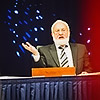 Question: What kind of marital union can keep a family from falling apart? What are the roles of the woman and the man in such a union?
Answer: There must be proper upbringing. No matter what happens, throughout your life, thousands of different situations and adventures may occur with each of you, but you know that you have a family, and it is your obligation to support them and stand by them. As long as you live, you must take care of them. That is first and foremost. As for feelings, well… What feelings? You cannot build anything on feelings alone.
Comment: You have said more than once that a man looks for his mother in a woman.
My Response: That is true. A man looks for something of his mother in a woman. And if he finds it in her, that ensures his attachment to her.
Question: So, if a woman understands that he is looking for his mother, does that make the union work?
Answer: Yes. That is why it is said in the Torah that our forefathers would bring their brides into, say, their mother’s tent. And the brides would live there. And after the bride had lived with her mother-in-law for a while, the man would marry her.
In other words, she learned from his mother how to take care of him, what to do with him, what he likes and does not like, how his mother cooks, how she does everything, and so on. She watched everything and learned.
Comment: So she learned to be a mother to her husband. That is certainly a paradox.
My Response: How is that a paradox?
Comment: She came there not to learn how to be a wife but to learn how to be his mother.
My Response: You cannot imagine how attached a man becomes to a woman then. If she reminds him of his mother, he will look at her like a child does! He will constantly catch his mother in her.
Question: And he will never want to get divorced?
Answer: Never! How could he get divorced? Leave his mother?
Question: So, you do not abandon your mother?
Answer: That is correct.
Comment: And what about the phrase a wife says: “Go to your mommy! I am not your mother! Let her bake your pies for you!”
My Response: You see what kind of arguments people make! “I am not your mother!” That is the problem.
Comment: And there must be a high percentage of divorces because she does not take on this role of being his mother.
My Response: She must understand that the only way to keep him, to make him hers, is this way! There is no other way. It is written in the Torah, written in the Bible, simply in black and white.
Question: So, maybe you are telling us the secret behind all divorces right now, and we do not need any psychologists?
Answer: This is the secret of clear-cut relationships. Until the end of his life, a man will see his mother in his wife and will never run away from her.
Question: And what is the man’s role in the family, then?
Answer: If he is attached to her, what more is needed?
Question: So, this is her security? Is that what she seeks in him?
Answer: Yes. Nothing else. He will do everything to make her happy. He will give her compliments every day.
Question: And he will earn money and work?
Answer: He will do everything, of course. I know this for sure. This is human nature.
Question: What does a woman need from a man? Is it this sense of security?
Answer: First and foremost, attention. Attention to her, to the children, to the home. So, once you get married, that is it! The bride goes to live with her mother-in-law and learns from her all about her son’s weaknesses. And she learns how to deal with him as a woman. Here and there, she knows how to say or do something that reminds him of his mother. He falls for it immediately, instantly, and forever.
Comment: And he will do everything she wants.
My Response: Yes. He needs this. A man does not give birth; he remains a child, and that is what wins him over.
Question: So he remains a child? All the time? Even when he is 70 or 80 years old?
Answer: It doesn’t matter!
Comment: People will not exactly be outraged, but they will ask: “What about the man? It is all about the woman, the woman.”
My Response: The man must provide everything the woman requires. Nothing more is needed. That is in the material sense. But spiritually, everything is different—the opposite.
In other words, the man’s spiritual development is not the family’s concern. It is not. It is a privilege, a prerogative. I don’t know how to put it. It is solely his personal choice. In this respect, he is the man and the head of the family. But this is regarding spiritual development. As for the material side—the woman.
In spiritual development, the man is in charge; in material development, the woman is in charge.
Question: If the man is in charge of spiritual development, then is the woman’s role to give him the opportunity to work on his soul?
Answer: Yes, of course.
Comment: And then he will also provide her with everything she needs.
My Response: Twice as much!
[359840]
From KabTV’s “News with Dr. Michael Laitman,” 7/16/26
Related Material:
There Is No Place More Comfortable Than Home
The Family As The Center Of The Universe
Homework For Two
 Question: Does the transition from the Klipa (impurity) to holiness occur through suffering?
Answer: There are two possibilities for moving from the Klipa to holiness. One is through blows, but this is a very slow path. You can remain inside the Klipa, say, as in this world, suffering through several life cycles, until your “measure becomes full,” and you begin to think about the meaning of life, and eventually start searching. As it is written: “What reason does not accomplish, time will.”
But there is also another possibility: let reason do it, not time. What does “reason” mean? It is a force of attraction from the other side, when it is not suffering that pushes you from the Klipa toward holiness, but you begin to search and ask, “Perhaps there is something good in holiness?”
Then you happen upon some group, a few friends, who show you pleasures in other things, in a different way, in a different form. In this way, you neutralize the negative development.
Question: But if I am in the Klipa, then are all my desires also in the Klipa?
Answer: Your desires are in the Klipa, while your reason, let us say, is already in holiness. You need to increase your reason, and strengthen your connection with holiness to such an extent that the image you create in your mind can withstand the pleasures that the Klipa seems to be offering you. And then you will see that it is truly worthwhile.
You must build such images in your mind that they can withstand the attraction of the Klipa. This depends on the individual, on his development.
[361171]
From the Daily Kabbalah Lesson 8/28/26, Rabash, “What Is the Work of Man, in the Work that Is Attributed to the Creator?”
Related Material:
Difference Between Klipa And Holiness
One Way Channel Of Bestowal
Life In Bestowal, Death In Receiving
 Our problem is that we consider our states good or bad and measure ascents and descents by our mood, physical well-being, and how energetic we are in our work. This has nothing to do with the true state.
The intention for the sake of bestowal or reception, its sharpness and clarity, awareness of the evil contained in it, and the ability or inability to perform good are not measured by our sensations but by the intention itself, by how deeply we clarify it. According to this, we can measure our advancement.
Perhaps, in one’s clarifications, a person reveals that he is entirely in the state of receiving for himself, that there is nothing in him for the sake of bestowal, and that he is therefore far from the Creator. In this, he is indeed far from the Creator, but he is close to Him in that he is advancing in clarifying the intention and in the process of correction.
Therefore, our sensation determines nothing on the ladder of degrees by which we ascend, because this must be considered only according to the depth of the clarification of the intention. How good or bad a person’s sensations are during these clarifications does not matter; the deeper they are, the more he advances.
Therefore, we should strive only to renew our intention—that is, constantly examine what our attitude toward the Creator is. We must constantly examine this mutual connection, this system of relationships, and deepen it as much as possible.
[361504]
From the Daily Kabbalah Lesson 9/8/26, Rabash, “What Is, ‘Every Day They Will Be as New in Your Eyes,’ in the Work?”
Related Material:
How to Evaluate One’s State
Knowing The Stamp From Its Imprint
A Clear Criterion
 Question: What would you call the connection that unites people into a group?
Answer: A connection in which each person feels that without the others he cannot attain correction, fulfillment, spirituality, or connection with the Creator is what is called a group.
Everyone may think this for purely egoistic reasons: “I need them, otherwise I will die.” And nothing more. This is how it happens in any other society.
It is not by chance that they are called friends, a group. It is not by chance that some other name was not invented for this.
In our world too, if we want to succeed in something, we must unite, trust one another, and so on. Our group differs from others only in its goal.
[361499]
From the Daily Kabbalah Lesson 9/2/26, Rabash, “What Is ‘The Concealed Things Belong to the Lord, and the Revealed Things Belong to Us,’ in the Work?”
Related Material:
The Group Is the Embodiment of the Connection between Souls
Where the Property of Bestowal Manifests
What Is A “Group?”
 Question: What happens to someone who has reached the end of correction (Gmar Tikun) in this world, in this incarnation?
Answer: It is impossible to reach the final correction without being in this world. The end of correction is a state to which we come here, while living in the material world. Our inner intention for the sake of bestowal, for the sake of bringing contentment to the Creator, extends as far as possible over everything that can be revealed within me.
Question: What does such a person do afterward? Does he return in order to invest effort in other people?
Answer: In the Introduction to The Study of the Ten Sefirot, it is explained that even before a person reaches the end of correction, there are levels called “to share in the suffering of society,” and afterward “to merit the consolation of society.”
I can attain my personal end of correction only if, from my side, I connect with all souls. From my side, I correct them by sharing in their suffering, taking their suffering into myself, and raising it to the Creator. In this way I receive corrections for them and correct them.
What does “I correct them” mean? I correct within myself the parts belonging to them, which I possess through the mutual inclusion of all souls. When I have corrected within myself the part connected with the other souls, this means that I have reached the end of correction. All these Kelims become filled with the light of final correction, and this is called a person’s reaching the end of correction.
How do the other souls feel this? Will they feel it, or do they already feel it somewhat? It certainly helps them.
Question: So, is there no way back from the end of correction?
Answer: Let us put it this way: if 99% of humanity reaches the end of correction and only one soul remains that has not yet begun its correction, then even within that soul there will be 99% of corrected parts that have already been corrected by other souls. By connecting with it, they corrected it, and only that soul itself has not yet corrected itself.
This soul does not feel itself to be 99% corrected because it has nothing with which to feel it; its personal part, the point in the heart, is still black. But as soon as it begins to work on this point, it will immediately feel that everything has already been prepared and arranged for it. Therefore, one who corrects himself in order to reach the end of correction helps all souls.
[361494]
From the Daily Kabbalah Lesson 9/2/26, Rabash, “What Is ‘The Concealed Things Belong to the Lord, and the Revealed Things Belong to Us,’ in the Work?”
Related Material:
The Work Of The Final Stage Of Correction
Preparation In Action
Sharing The Public’s Grief Is The Key To The Revelation Of The Creator
 When can I say that I will enjoy solely for your sake? I essentially create a state in which I have nothing, and I want to ensure that I am not deceiving myself.
I check whether I truly have nothing, and I agree to remain in that state. I undergo a correction so that I do not feel lack from the fact that I have nothing. I no longer think about myself; all that remains for me is to feel what you lack.
Then I open your Kli and fill it. And how can I fill your Kli? Only if I myself become filled with enjoyment. Then I again reveal my desire to enjoy. To the extent that I feel how much I can delight you, I fill the corresponding part of the desire in myself.
And while I fill it, I remain focused on you with all my senses in order to see how much you are enjoying. Here there is a whole sequence of complex corrections.
But the very first correction is to make a restriction, to arrange it so that I do not experience any enjoyment from this world.
[361311]
From the Daily Kabbalah Lesson 8/27/26, Rabash, “What Is the Work of Man, in the Work that Is Attributed to the Creator?”
Related Material:
What Do We Enjoy In Spirituality?
The First Restriction—Reception for the Sake of the Creator
The Secret Of Spiritual Pleasure
It is as our sages said about Abraham, who asked, “Is there a city without a leader? Promptly, the leader of the city appeared before him and said to him, ‘I am the leader of the city.’” That is, he saw a city lit up, meaning he saw the world, which is called ‘a city,’ where everyone was suffering. He said about this, “Is there a city without a leader?” (Rabash, “What Is the Work of Man, in the Work that Is Attributed to the Creator?”).
Is there someone who sends these sufferings? Apparently, there must be some reason and purpose behind them. It cannot be that everything simply happens for no reason. Abraham was a person who came to the Creator through his own investigation of nature. He was the first who, as it were, attained the Creator from below. The phrase “Can there be a capital without a ruler?” was his credo, his approach, his very essence.
In other words, he reached this conclusion through investigating nature and understood that there must be a reason for everything that happens around us. It was simply a rational approach.
Certainly, nature does not afflict the world without a leader to nature.
Everything depends on how we relate to nature. Either it seems to us that nature is blind, or nature is something greater than us and apparently possesses intelligence. And indeed, today major scientists seem to feel that behind all the actions taking place around us there is some kind of universal intelligence.
Thus, he began to search for the leader. Promptly, the leader appeared before him and said, “I am the landlord of the world.”
Question: How did he achieve this?
Answer: After Abraham asked the question. To “ask” means that the Kli is complete.
What does it mean to “ask for rain”? A person raises such a request, MAN, that rain must necessarily come as a result. What is “rain”? It is when corrections descend from Bina to Malchut, causing Malchut, the earth, to blossom.
Thus, one can ask whether there can be a capital without a leader only after all the investigations you have carried out within yourself. You investigate yourself, and only afterward do you ask: “Is there some upper force behind all my thoughts, desires, passions, and sufferings, a force that is doing all this, governing everything, and leading me toward some goal?” In reality, you are asking about yourself. And if you ask such a question, you will certainly be called Abram, before you come to be called Abraham.
A “question” means that the Kli is truly ready. Everyone asks something. But that is not yet called a question. For example, when a child is hit, he asks; when he is not being hit, he does not ask.
When a question burns within a person to such an extent that there is nothing else besides it, this is a sign of a completed Kli.
For comparison, imagine the difference between a crying child and a crying adult. A child forgets everything within a moment and runs around happily again. But if an adult is crying, it is clear that something serious has happened. Or compare a crying woman and a crying man. A woman may cry over something that is not particularly serious. But if a man cries, then it is truly serious.
Therefore, to ask the question “Can there be a capital without a leader?”, to which the answer is “I am the leader of the capital,” means to ask about the one who governs, the very source of governance. Such an answer comes to a person only after all the sufferings and all the examinations he has undergone.
[361315]
From the Daily Kabbalah Lesson 8/28/26, Rabash, “What Is the Work of Man, in the Work that Is Attributed to the Creator?”
Related Material:
Understand the Creator’s Plan
Abraham’s Discovery
The Secret To Abraham’s Success
 Talks about the Steps of the Ladder, Part 236
How Can We Understand the States We Undergo?
We do not know why or in what sequence various states are imposed upon us. In fact, we have no idea how we exist at all. We are like babies who are unaware of the purpose of our lives. We want various things, and certain things are given to us. That is, we are given all kinds of desires and impulses from within, changing qualities, environmental conditions that change from time to time, and we thus continue to exist, flowing onward.
This is how each of us rolls along, carried by the current of life, and it only seems to us that we determine or control something. It is simply untrue, an absolute falsehood.
So why were we given intellect and thought? It was in order to seek the one thing worth holding on to, to learn what is happening to us, and this learning should bring us to conclusions that are called “recognition of evil.” There is no need for us to oppose anything. We should not force anything because that would be in vain. We only need to pay a little attention to what the Creator is doing with us, and from this we begin to understand who we are, who the Creator is, what the Creator wants, why He arranges things for us in such a way, and with what subtle cunning He does so.
Through this, we gradually come to know nature. The wisdom of Kabbalah is the study of nature in its broadest form, including the world of causes, where everything that happens here is prepared and made ready. This world of causes subsequently includes our nature, ourselves, and our environment. We learn the overall reality through ourselves, through self-study: “From Your actions we know You”; “From my flesh I shall behold God.”
Related Material:
Talks about the Steps of the Ladder, Part 235
Talks about the Steps of the Ladder, Part 234
Talks about the Steps of the Ladder, Part 233
Preparation to the Lesson
 Video: Play Now | Download Video: Play Now | Download |
 Audio: Play Now | Download Audio: Play Now | Download |
1st part of the Lesson — Writings of Rabash, Article 27 “What Is the Meaning of Suffering in the Work?” (1989) (9.30.2003)
| Video: Play Now | Download |
Audio: Play Now | Download |
2nd part of the Lesson — Building a Spiritual Society
| Video: Play Now | Download |
Audio: Play Now | Download |
 Daily Audio Version-MP3
 Get the Weekly eNewsletter
 Follow on Twitter
