Audio Version Of The Blog – 06.24.17
Posted on June 24th, 2017
Listen to an Audio Version of the Blog
Download: MP3 Audio

Listen to an Audio Version of the Blog
Download: MP3 Audio
 Question: Is self-love a bad thing?
Answer: On the contrary, it is a necessary sensation in a person when he or she realizes that one loves oneself and does everything for one’s own good. For the sake of this good, he discovers the method of attaining life until he reaches its essence. All this stems only from self-love, from great egoism.
Question: Is self-love an attribute of egoism?
Answer: Self-love is egoism: I love myself and want to fill myself, it is crucial for me.
[208146]
From the Kabbalah Lesson in Russian 2/26/17
Related Material:
What Interferes With Our Attainment Of The Upper World?
Marriage To Yourself
There Are No Two Loves That Are Alike
 Question: At what point can a person who studies the wisdom of Kabbalah be considered a Kabbalist?
Answer: A person is called a Kabbalist when he reaches the level on which he can perform the first restriction on himself and nullify himself before all the of the Creator’s bestowal.
[208115]
From the Kabbalah Lesson in Russian 1/29/17
Related Material:
What Does It Mean To Be A Kabbalist?
Who Can Consider Himself A Kabbalist?
Who Is A Kabbalist?
 Question: How can we accelerate the frequency of the change of states during a convention?
Answer: That depends on many parameters, but mainly on the group, on the ten you are in.
If you are ready for a breakthrough, you will be able to do it even independently of others. It is very important to know that and to try to fulfill it.
Question: What does the pace of the transition from one level to another depend on? Does it depend on our degree of despair or on our sensitivity? How can we go through the states of despair faster?
Answer: That depends on your merging with others.
[208192]
From the Kabbalah Lesson in Russian 2/19/17
Related Material:
How One Hastens Development
Let’s Redouble Our Efforts Now!
The Switch For The Higher Light
 Torah, Deuteronomy, 26:12 – 26:13: When you have finished tithing all the tithes of your produce in the third year, the year of the tithe, you shall give [them] to the Levite, the stranger, the orphan, and the widow, so that they can eat to satiety in your cities. Then you shall say before the Lord, your God, “I have removed the holy [portion] from the house, and I have also given it to the Levite, the stranger, the orphan, and the widow, according to all Your commandment that You commanded me; I have not transgressed Your commandments, nor have I forgotten [them].
You should give everything you can to others, and what you can’t give, you grudgingly leave for yourself because your egoism doesn’t allow you to tear away more from yourself. Therefore, the instruction is to give away a tithe, nothing more is required from you. But it is a tough condition.
A tithe is a tenth part of the net earned product that you have to pick out and instead of using it yourself, you give it for the use of others through the Temple. Through the Temple means for full bestowal that has no relation to you. This means giving to the Creator. You give unselfishly, without gaining any benefit for yourself, because this is for the Creator.
Question: Does it mean I don’t even know where it is going?
Answer: This isn’t yours! You give and that’s it. Let’s say, you have 100 sheep, 10 of them you give away, but it isn’t easy, as if you cut something from yourself. It is very difficult for a person.
However, the fact is that this difficulty isn’t even quantitative, but qualitative because you must give constantly despite your egoism. Many people in our world give various donations. A person clearly understand that it is all for him! Otherwise he wouldn’t be able to give because we all are egoists.
However, here the state appears when you understand that you throw away your tithe into vacuum, into an interplanetary emptiness. Therefore, it breaks away with an incredible difficulty.
Comment: Sometimes you say that if a person doesn’t give away this ten percent, they won’t do him any good anyway.
Answer: Everything in our world happens in this way: If you don’t voluntarily give something that you need to give away, it is taken from you forcibly. After all, the world nevertheless must exist, and it exists according to the laws in which the principle of giving away the tithe is observed. Although we don’t see and don’t know it, it is taken away from us. At that we suffer, we don’t want, we are not ready to give, but we see that we lose.
And all this instead of the opposite, to receive while giving.
[207957]
From KabTV’s “Secrets of the Eternal Book” 11/9/16
Related Material:
One Tenth Of The Income
Maaser – The Tenth Part Of The Desires
Who Corrects the Tenth Part of a Desire?
Listen to an Audio Version of the Blog
Download: MP3 Audio
 Question: How was The Book of Zohar written? Did its authors rely on some kind of source like the Torah, for example, or did they write everything only from their attainment?
Answer: The authors of The Book of Zohar had no library, computer, or connection to any information because the information itself was found within them; they were its source.
All ten people who wrote The Book of Zohar were one single spiritual body in which all the information that they described and partially expressed was found.
[208189]
From the Kabbalah Lesson in Russian 2/5/17
Related Material:
Who Wrote The Book Of Zohar?
Zohar, Commentary On The Torah
New Life #728 – The Book Of Zohar And The Power Of Good
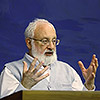 Question: What is beauty from the point of view of a Kabbalist?
Answer: Beauty is an association of what cannot be associated. In this case, a person has a feeling of joy and happiness.
I would call someone beautiful if he had very huge contradictions that he is constantly working on and bringing into balance and completion.
[208312]
From the Kabbalah Lesson in Russian 1/29/17
Related Material:
Internal And External Beauty
Youth And Beauty Of The Soul
About Internal Beauty
 Question: Where did the congresses come from? Are there historical facts indicating that Kabbalists used to bring thousands of people together and hold such events, or is this something new?
Answer: There is nothing new here, and we are not inventing anything.
Kabbalah is built on the laws of the upper world; therefore, in everything we do, we must find out whether it is in accordance to its laws. Otherwise, it might harm us.
Conventions were held even in ancient Israel when people were in attainment of the upper world.
Kabbalists used to come to the Temple in Jerusalem three times a year: on Sukkot, Pesach, and Shavuot in order to study and to participate in the study and the meals with everyone. What is more, throughout the year people used to come to the Temple to study and have meals together. This was considered a very good deed, and we may even say, a Godly one.
[208075]
From the Kabbalah Lesson in Russian 2/19/17
Related Material:
The Secret Of Kabbalah Conventions
Solitude Or Congress?
The Three Days Of A Convention Are Something Precious
 Torah, Deuteronomy 25:19: [Therefore,] it will be, when the Lord your God grants you respite from all your enemies around [you] in the land which the Lord, your God, gives to you as an inheritance to possess, that you shall obliterate the remembrance of Amalek from beneath the heavens. You shall not forget!
Don’t forget that you must constantly obliterate the memory of Amalek.
Under no circumstances weaken your focus, be always on guard, and remember that Amalek—the intention for my own sake—can approach you at any moment, get inside of you to some specific desires and intentions, and steal them for himself. In this way, he will again receive sustenance from you, and you will be weakened on your path.
Question: When does the Creator finally give repose?
Answer: There is no repose.
[207626]
From KabTV’s “Secrets of the Eternal Book” 11/2/16
Related Material:
Who Wins Over Amalek?
Amalek, A Cunning Enemy
The War Against Amalek
 Daily Audio Version-MP3
 Get the Weekly eNewsletter
 Follow on Twitter
