Audio Version Of The Blog – 1/24/26
Posted on January 24th, 2026 at 10:55 pm
Listen to an Audio Version of the Blog
Download:MP3Audio

Listen to an Audio Version of the Blog
Download:MP3Audio
 Everything is determined solely by the degree of my connection with the other souls at the level on which I was before we fell into a state of separation from one another.
If I somehow jump over this separation, then I seemingly return myself to the spiritual state that we essentially want to reach.
If I try to do this, then whatever comes out of it, whether it succeeds well or perhaps not very successfully, if I make the effort, it turns out that this is the only action by which I can push myself toward a spiritual state.
I am a Kli (vessel), and from my side, there is only one action: to increase the Hisaron (lack), and then a greater light will enter this Hisaron. And I can increase the Hisaron only by jumping over the screens between the 600,000 parts of the soul despite the screen separating us that arose as a result of the breaking of the Kli when the state that connected the desires, the parts of Adam HaRishon, broke and the connecting screen turned into a separating screen.
This is the only action that I can perform, because I am a small Kli that becomes a large Kli due to this.
Aside from this, I have no other possibility to fix anything in my development, on my path.
[351875]
From the Daily Kabbalah Lesson 1/11/26, Rabash, Article No. 17, 1986 “The Agenda of the Assembly – 2”
Related Material:
The Spiritual Work Of Each Person
All The Creation Is Me
Building Bridges In The Connection Between Us
 I must create a Kli so that the Creator can fill it. If I receive inspiration from the Creator, that is not my merit but His. If I receive inspiration from the friends, that too is not my merit but theirs.
I take inspiration from the friends. I, the insignificant one who has nothing and is incapable of uniting with them or desiring the Creator, take this inspiration from them and act with it. I myself have acquired this inspiration.
Here, there must necessarily be two points: I am completely nullified, a zero, the lowest of the low; yet, I received inspiration from them because I exalted them in my eyes to a great height. Then the inspiration I received from them through my work in relation to them becomes like Keter for me, while I myself am like Malchut. Here I have as if a Reshimo deHitlabshut and a Reshimo deAviut. This is how I act. There is no other way.
If I simply take inspiration from the Creator, it is His inspiration. And if I simply take inspiration from a friend, it is the friend’s inspiration. How, then, does it become mine? There must be two points here: I, who am not inspired either by the Creator or by anything else, have now acquired inspiration from a friend.
There must necessarily be two points. Where is the point of my “I”? How will I reveal it if I do not act according to the rule love your neighbor as yourself?
You show the friends greatness so that they will show you this greatness in return.
Question: Why is it that when I show them greatness, I see even more that I myself am incapable of it?
Answer: You can come to see that you are incapable only if you try this with the friends and, in practice, see that you are unable to do anything. With regard to the Creator, you cannot see this. It follows that you must receive both the point of Malchut and the point of Keter from the friends, from the group.
[351871]
From the Daily Kabbalah Lesson 1/11/26, Rabash, “The Agenda of the Assembly – 2”
Related Material:
What Does Working with Friends Consist Of?
Strive for Soul Connection
The Only Thing That Is Placed Upon Us
 Question: It is said that even a commandment without an intention is called a commandment of the Creator. Yet we study that a commandment without an intention is like a body without a soul. How can these be reconciled?
Answer: When Kabbalists write about commandments without intention, they do not mean ordinary people. Ask a child who learned at the age of 13 to put on Tefillin why he does it, and he will say: “That is how I was taught.” Another, a bit wiser, will answer: “It is the Creator’s will, and so I do it.” A third will say: “I want to gain something good for myself through this.” There are many different reasons.
The Kabbalists who wrote the books never meant the physical actions of our bodies. When they say that a person performs an action without intention, it means that I am making every possible effort, yet I still do not have the intention for the sake of bestowal. Perhaps I am trying to act for the sake of bestowal, perhaps I do not yet understand, but I am already engaged in this and investing some effort.
In our community, there are many people who do not know what the intention for the sake of bestowal is, not even what spirituality is. Yet they made an effort and came at three in the morning to study. I do not think that many of them clearly understand why they are here, analyze their intention, clarify it, and are now implementing that intention.
No, for many, this is still an initial state. But they are making inner efforts, performing various actions, as it is written: “Whatever is in your power and ability to do, do.” They make different attempts to attain something to which they are being pushed from above. This is called actions without intention.
That is, the Kabbalists do not mean people who were taught to mechanically observe commandments and therefore do so. They mean those who sit here with the desire to attain the correct intention, but in whom it has not yet been revealed.
This is a transitional period in which a person gradually begins to see various states and what to do with them.
[351735]
From the Daily Kabbalah Lesson 1/8/26, Rabash, “Concerning the Reward of the Receivers”
Related Material:
Understand the Inner Meaning of the Commandment
Actions And Commandments
“Material Commandments” And Correction Of The World
 What does it mean that the correction should be in the form of awe, Kelim of bestowal? The fact is that if we get pleasure in the desire to receive, this pleasure instantly cancels the desire.
For example, when we are hungry and start eating, we experience pleasure from food. But gradually, as we become satiated, the pleasure fades, and even from more delicious things, we no longer feel the same pleasure as from the very first bite.
This is all because the pleasure, filling the desire to receive, cancels out the lack (Hisaron) to the same extent. As soon as the Kli reaches saturation, it ceases to feel that it is filled.
We feel the same way when, for example, we chase after a purchase or strive for something, dream about it for a year or two, achieve it, and, after a week or two, it becomes ordinary. The pleasure filled the Kli, and the Hisaron, the hunger, disappears.
In order for the pleasure to be not accidental, temporary, fleeting, but eternal, it must grow with the fulfillment and not decrease or disappear altogether.
On the contrary, the greater the filling, the more the enjoyment, and they will literally be able to help each other by increasing each other. How can we do it? If the intention, which is added to the desire to receive, becomes for the sake of giving, the Kli will receive a state above time, place, and space.
What does it mean? Even if my place, my Hisaron, my “stomach,” is filled, but my intention as I fill it is to give, then I will have even more appetite to give.
Above time means that the more I get filled, my Hisaron, my appetite, my hunger, will not decrease but only grow as I am able to give more.
Therefore, in addition to the desire to receive, we must add the concept of intention, since intentions make the desire to receive something eternal, something that does not cancel out before the light that fills it but, on the contrary, turns it into a semblance of light. This is the teaching of the science of Kabbalah, the science that teaches how to receive for the sake of giving.
[351672]
From the Daily Kabbalah Lesson 1/7/26, Rabash, “Concerning Fear and Joy”
Related Material:
The Patent for Infinite Pleasure
If There Is No Desire, There Is No Pleasure
Perception Reboot
Listen to an Audio Version of the Blog
Download:MP3Audio
 On the spiritual path, there are guidelines that lead us to final correction. This path is divided into corrections, the first of which is called Ira—fear or awe.
In The Book of Zohar, a question is asked: where can this awe come from if the Creator is good and does good, if He is perfect and above all calculations for Himself? Why then should a person fear Him? It does not befit the Creator, who abides in absolute perfection, to act in a way that causes fear. How can this be?
The Zohar explains that there is a kind of fear called fear on the level of our world, when a person fears punishments for himself and for his family in this world. Moreover, he fears what will happen to him in the world to come, although this is already a higher concept. Nevertheless, it is still fear of punishment.
But when a person corrects his Kelim into Kelim of bestowal and acquires a screen (Masach), then he ceases to fear the Creator altogether, because he sees that He is good and does good. The Creator is revealed to him, and he begins to understand that even before he felt fear not because the Creator exists and can punish him, but because within his uncorrected Kelim he feared receiving punishment. In truth, there is no such thing as punishment from above. Separation from the Creator is itself the punishment.
And so, a person comes to another kind of fear—to awe that he may be unable to bestow. This essentially is correction itself; it is the thing that gives him the ability to build the Kelim of bestowal of his soul. In the revelation of this awe, a person receives the filling called love. Thus, love is the result of awe.
To the extent that he fears being unable to bestow, the light fills him and conveys a sensation of love to him, a feeling of similarity to the Creator, equivalence with Him in qualities, unity and adhesion with the Creator. Therefore, the concept of awe is correction. Because initially we are created with a desire to receive, and it must be for the sake of bestowal; otherwise, we will not feel delight.
[351669]
From the Daily Kabbalah Lesson 1/7/26, Rabash, “Concerning Fear and Joy”
Related Material:
There Is No Love Without Fear
On The Way Towards Love
Love and Awe
 Question: How can I check whether I am applying effort correctly?
Answer: How to check whether your effort is correct? There are many ways to check this. First of all is whether you want it or not. Usually, what you do not want may be the correct thing. Secondly, whether it is respected in the eyes of the friends. Check it in relation to what is written in the primary sources and to what the teacher says.
Before the Machsom, we have no clear system by which we can examine and evaluate ourselves. Essentially you are asking where that standard is against which you could check yourself and see how much, more or less, you correspond to it, or on the contrary, do not correspond.
Before you enter the spiritual world, this is not revealed to you. This is why it is called “concealment.”
But you can evaluate yourself in relation to your will to receive, in relation to the group and the teacher; at least in this way you can test yourself. It is not for nothing that it is said: “Do not trust yourself until the day of your death.” As long as your egoism has not died, you can make mistakes—terrible, foolish mistakes, and even the simplest ones. And here is what is interesting.
You keep making mistakes again and again, as if in the same situations, which seem simple. How can this be? You went through such big things, you did not get confused, you managed them somehow, and suddenly you fall into some foolishness again?
That is how it is. We do not know the degrees. It seems to us that each degree is like this. No. They can appear to you in a very simple, natural form. You suddenly become like an infant who stands and cries from having lost his mother.
All periods before the Machsom are like this. After it, everything depends on the screen, on the degree to which you are merged with the Creator.
[351788]
From the Daily Kabbalah Lesson, 1/8/26, Rabash, “Concerning the Reward of the Receivers”
Related Material:
The Correct Way of Making Efforts
No Effort Is Lost Without A Trace
Efforts Every Minute
 We will yet become convinced that all the negativity that has existed throughout all times among all peoples was only suffering caused by our distancing ourselves from each other and not understanding how, on the contrary, we should be drawing closer together. And now all this suffering will manifest in us and push us toward connection. And then we will be grateful for them and will understand that there is only happiness in the world and one movement toward the light.
Question: And this is happening?
Answer: It is already happening now.
Question: Everything that is happening, is it all a movement toward happiness and light?
Answer: Yes, everything that is happening.
[351802]
From KabTV’s “News with Dr. Michael Laitman,” 1/9/26
Related Material:
Our Whole Life Is Internal Movement to the Light
“We Live Dreaming Of Peace”
Recognize the Need for Unity
 Question: How can I confirm I am on the right path if I still do not feel the spiritual world?
Answer: Whether you are advancing correctly can be determined according to how much the Creator helps you by hindering you. A person sees how he is constantly being knocked down by various obstacles that disconnect him from the sense that he is under control of a single upper force besides which there is nothing.
I am below, the Creator is above, and between us is the reality of this world. It turns out that I have to reveal the Creator through this world, and also through it, the Creator influences me.
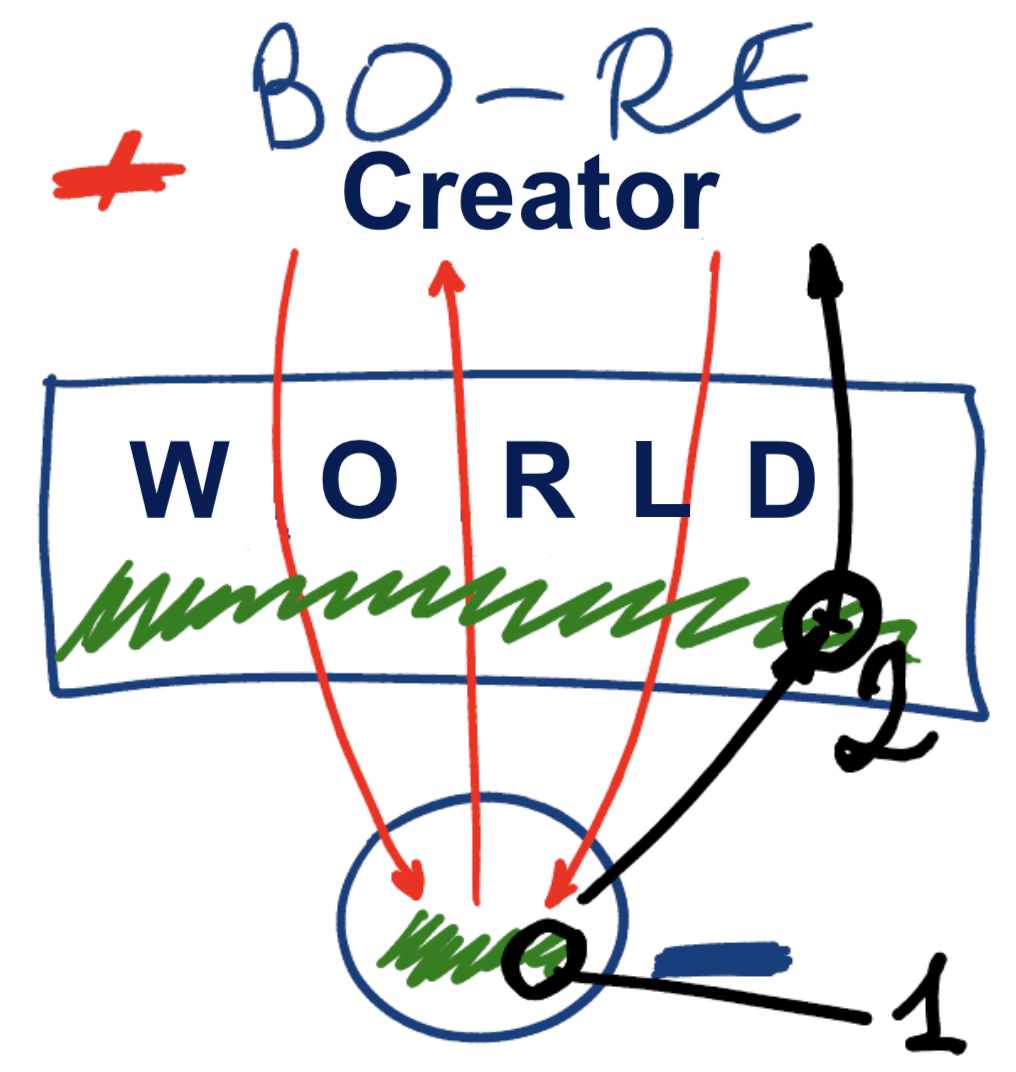
Our entire job is to transform this world from an obstacle into a connection with the Creator. Otherwise, it is impossible to reveal the Creator. We are in complete negative, in our egoism, and the Creator is entirely in positive. How can we reveal each other?
That is why the Creator created this world (Olam), from the word “concealment” (Alama), so that I could work in spite of all the obstacles He creates. Someone attacks me, shouts, hinders me, my body is sick, but I attribute all these external and internal hindrances only to the Creator, saying they all come from Him. In this case, I turn only to Him to eliminate these obstacles. After all, I want to be connected only to Him and not give any importance to the obstacles He deliberately sends me. Then I realize that all obstacles become an opportunity to connect with the Creator.
I have nothing to catch the Creator with, but if I work with an obstacle and relate it to the Creator, it becomes the place where I can cling to Him. After all, He is creating this interference to confuse me. And I relate this interference to Him.
It turns out that we connect to Him precisely within this obstacle. He does so from His end by putting up this obstacle, and I, from my end, by neutralizing this obstacle that was confusing me. Now it ceases to be a hindrance, and from a barrier separating me from the Creator, it becomes a link connecting me to Him.
That is how I work with obstacles, one after another. It could be a court case, any problems or troubles. And I must work with them on the plane of this world, because I am in it. But regarding the Creator, I do my job by relating everything that happens to Him as the one who does it all.
I correct the obstacle in me (1), and correct the obstacle in the world (2), and then the Creator reveals Himself. That is the entire work.
Question: What does it mean to attribute the obstacle to the Creator?
Answer: It means deciding that there is none else besides Him, and He is sending me all the obstacles so that I think they came about on their own, i.e., someone simply yelled at me or conversely praised me. Any attitude toward you that you consider as coming from the inanimate, vegetative, or animate world, and especially from people rather than from the Creator, is an obstacle. You think there is something else besides Him.
Even if you think your body, your mind, your feelings, and the whole world exist, then this is an obstacle. And if you attribute all this to the Creator, realizing that He created this whole illusion for you so you would make an effort to connect everything only to Him, and that, in fact there is none of this but only the Creator, this allows you to reveal Him.
This whole world will turn into a spiritual world, into vessels in which you reveal the presence of the Creator besides whom there is nothing.
Question: What should I do if I try to perform such an action but get no confirmation of its correctness, and feel nothing?
Answer: That is correct. We do not yet have feelings, reason, or relation, we have nothing. However, that does not mean we cannot begin the work. We begin with a lack of reason and feeling, because this makes us independent. After all, from a complete separation, from absolute zero, we begin to acquire a sense of the upper.
[180994]
From the Daily Kabbalah Lesson 3/14/16, Selected Passages from the Writing of Baal HaSulam
Related Material:
To Tango With The Creator
Secret Language Of The Creator
A City That Is Not Afraid Of Coronavirus
 Daily Audio Version-MP3
 Get the Weekly eNewsletter
 Follow on Twitter
