Audio Version Of The Blog – 4/11/25
Posted on April 11th, 2025
Listen to an Audio Version of the Blog
Download:MP3Audio

Listen to an Audio Version of the Blog
Download:MP3Audio
 We do not go through the stage of the forefathers, through what happened in the beginning: Adam HaRishon, Babylon, the land of Canaan, Jacob and his twelve sons, and the descent into Egypt. We begin to reveal ourselves already in Egypt. The earlier period refers to the “forefathers” and is included within us as spiritual genes (Reshimot), inner qualities.
Our actual work starts in Egypt where we eventually realize that we are in an egoistic desire and must escape from it since it gives us less and less life forces. It takes years to recognize this and to flee.
If we are together in a group during this process, we help one another. It is written: “And the children of Israel sighed from the work,” meaning “all together.” The entire exodus from Egypt happens together.
The Exodus is the departure from separation toward connection. It is not a physical departure from a geographical location. In Egypt, we discover that we are separated by our egoism. All the work during Egyptian slavery is in the fact that we attempt to connect to one another and fail. We come to see that Pharaoh stands between us and prevents our connection.
We keep working on our connection, and each time we reveal that it is impossible. Then Moses appears, kills the Egyptian, and flees to the desert for 40 years. All of this is constant ongoing work toward connection until Moses returns, goes to Pharaoh, and demands: “Let my people go”; that is, “allow us to connect.”
I want to connect with those who now seem alien to me. It is Pharaoh who shows them to me as strangers, and makes them appear as though they are not part of me. But I ask for the ability to unite with them. Let Pharaoh remain; I want to unite above him. Therefore I need a greater force, stronger than all his vast desire and egoism that twists me any way it wants.
It turns out that I need to ask for my egoism to shrink, to stop ruling over me. This is what I ask of Pharaoh. And Pharaoh replies: “Should I descend from my height, from my throne?!” He only hardens his heart, and so I need the Creator to be even stronger than Pharaoh.
This is Pharaoh’s role: to elevate the Creator in my eyes so I am forced to increasingly value the general force of bestowal that governs nature. Only it can give us the ability to connect with one another.
We must understand correctly what Egypt is. The Creator must constantly grow in my eyes or I will never be able to unite with my friends, which is what the Exodus means, and I will remain in slavery forever.
Egypt is separation. But where am I fleeing to? I want to unite above that separation, above the hatred, that is revealed to me, Mount Sinai (“the mountain of hatred”), and that is why I leave Egypt. This act is called the Exodus.
[68853]
From the Daily Kabbalah Lesson on 2/05/12, Writings of Baal HaSulam “And It Came to Pass in the Course of Those Many Days”
Related Material:
When Will We Finally Exit Egypt?
Farewell To Egypt
Exile Is Separation From Brothers
 Question: What are the “vessels of the Egyptians?”
Answer: They are egoistic desires in their purest form. The golden vessels symbolize the degree of Behina Dalet, the silver ones symbolize Behina Gimel.
Question: We are learning that I should rise above my egoistic desires as much as possible, not use them, and unite with my friends. What does it mean that I borrow these desires from the Egyptians?
Answer: You ask the Egyptians for desires and intentions to bestow, and you use the little light they have.
You use it in your egoistic desires that go through the stage of recognition of evil, your oppositeness to the Creator. Thus you begin to rise above egoism by gradually rejecting it. This is when your exit from Egypt begins.
Question: The vessels the children of Israel borrow from the Egyptians, do they bring them along into the desert or do they later bring them into the land of Israel?
Answer: These are very good Kelim (vessels); they keep them. Later, at each stage, we can delve into what happens to them.
[328200]
From the 1st part of the the Daily Kabbalah Lesson 4/16/24, Writings of Rabash “What Is the Need to Borrow Vessels from the Egyptians?”
Related Material:
Getting Out of Your “Egypt”
From the Egyptians
The Miracle Of Exiting Egypt
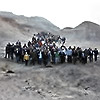 Question: How do we correct the Kelim (vessels) of the Egyptians in practice?
Each of us lives in our own “Egypt” and at the same time we strive to connect with our friends during the lessons. And it is like two different worlds. How can we correct these Kelim?
Answer: Try to connect with other friends with your Kelim and thus feel the common Kli in your unity. And it will already pull you up.
Question: It is said that the best way to increase the desire is to fall into egoism. Where is the guarantee that when I fall Moses and Aaron will come and get me out of there with my big desires?
Answer: It depends on how you work. You must descend into egoism with the intention, with the hope of, pulling out new Kelim from there with which you can move forward.
[323275]
From the Daily Kabbalah Lesson 1/2/24, Writings of Rabash “What Is the Need to Borrow Vessels from the Egyptians?”
Related Material:
Why Rush Out Of Egypt?
We Exit Egypt Every Second
The Miracle Of Exiting Egypt

Talks about the Steps of the Ladder, Part 103
What Is the State of Rest?
Spirituality exists beyond the speed of light. It is in constant motion, not just in motion, but in a state of continuous acceleration. In spirituality, a constant speed is considered zero speed, a complete stop at rest. Only changes in speed, whether positive or negative, acceleration or deceleration, are perceived.
We can also observe this concept in aspects of this world. If a vessel is consistently filled with pleasure, it does not feel that it has received anything. There must be a new vessel, an additional desire, and accordingly, additional pleasure. More desire leads to more pleasure; less desire results in less pleasure.
But there must be a distinction between what was before and what follows. If what was before lasted ten hours, all those hours are perceived as a single moment. That which does not change is like a single instant. Whether it be a million years or a single second, it is the same.
Therefore, in spirituality, a state of absolute rest is actually a change in speed. This speed itself does not determine anything for us. We anticipate it throughout our every correction and remain constantly ready for change. This is the end of correction. The end of correction is called “eternal rest.” Some mistakenly think of it as death. In general, in our world, it is commonly thought that the next world is the dwelling place of the dead.
We should thus understand that only a state in which we can accept ourselves without any limitation—all restrictions, fulfillments, concealments, and revelations—is called a state of rest. True rest is boundless. In such a state, we are no longer burdened by effort. Nothing prevents us from acting as we wish.
Related Material:
Talks about the Steps of the Ladder, Part 102
Talks about the Steps of the Ladder, Part 101
Talks about the Steps of the Ladder, Part 100
Preparation to the Lesson
 Video: Play Now | Download Video: Play Now | Download |
 Audio: Play Now | Download Audio: Play Now | Download |
1st part of the Lesson — Writings of Rabash, Article 23, “What Is, If He Swallows the Bitter Herb, He Will Not Come Out, in the Work? Part 1”
| Video: Play Now | Download |
Audio: Play Now | Download |
2nd part of the Lesson — Writings of Rabash, Article 23, “What Is, If He Swallows the Bitter Herb, He Will Not Come Out, in the Work? Part 2”
| Video: Play Now | Download |
Audio: Play Now | Download |
 Daily Audio Version-MP3
 Get the Weekly eNewsletter
 Follow on Twitter
