Entries in the 'Spirituality' Category

Bringing the Alienated Souls Closer to the Creator is Not a Vice
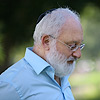
Dr. Michael LaitmanA question I received: I think that the main problem that people have with you is that you teach Kabbalah to everyone, even secular people and non-Jews.

My Answer: Here’s a quote about this by the Rabbi from Breslav in Likutei Yedut Meshulash, chapter “Emet Ve Tzedek”:

“In every generation there is judgment over the righteous. This argument is mostly about the righteous who draw closer the souls that are most alienated from the Creator, because the quality of opposition is revealed on the scale of the souls and jealousy arises in the heart of the world. Sometimes jealousy arises in the hearts of the sages, forcing them to contradict those who are righteous who bring the souls so close that it seems to them that their actions are wrong. This happens again and again, and continues, and it started back when the tribes of Israel argued with Joseph.”

So I’m not worried, and I suggest you relax as well!

Related Material:
Laitman.com Post: Today’s Souls Cannot Be Suppressed
Laitman.com Post: The Creator Does Not Have Arms or Legs
Article: “Who am I?”
Baal HaSulam Article: “Matan Torah (The Giving of the Torah)”
Baal Hasulam Article: “A Speech for the Completion of The Zohar”


Advice to Students: Study, Connect, and Disseminate


Questions I received on the spiritual path:

Question: I have been studying Kabbalah for a pretty long time (4+ years) and have been doing dissemination from the very beginning. From my first lesson and to this day, whenever I am especially impressed by something in the lesson (or by news of some great dissemination going on), I feel a clear physical sensation that is unique and that I never feel in any other situation. It feels like a wave of energy (like electricity) is going through my body, and is sort of a nice feeling. However, it always leaves me puzzled – I don’t know if this is normal, what it means, and how to relate to it. I know that spirituality is not supposed to be reflected in corporeality and shouldn’t be confused with it, but I’ve wanted to ask you this for a long time. What does it mean, and how should I relate to it?

My Answer: Gradually, everything will reach balance. You just need to alternate studying with dissemination.

Question: Would you please elaborate on how to measure one’s efforts? I may think that I am exerting a lot of effort where others might look at me and say that I’m not. And in which area should the efforts be made: dissemination or study?

My Answer: If you are always thinking about spiritual advancement, this means that you are making the necessary efforts.

Question: How do you explain it when a person who wasn’t sleepy at all before the lesson starts falling asleep during the lesson?

My Answer: This happens because the material you study does not coincide with your spiritual or physical interests and desires.

Question: I am on the path of suffering, but I never part with the book Shamati in English. What else should I do to make sure that everything I’m going through won’t be a waste?

My Answer: Study, connect to others, and disseminate. In particular, during the period of suffering, or in other words, while you still haven’t evoked the Upper Light upon you, you should focus most of all on dissemination together with the friends.

Question: I have been studying Kabbalah for two years and I have already had several descents. Right now I am in a state of a descent, which started a week and a half ago. It brought me to an environment of people who are not interested in spirituality. Now my depression is telling me that I need to go back to studying. How can I live with this?

My Answer: This is the Creator’s way of pushing you towards Him, because the descents also come from Him. You need a group, a thorough reading of the Shamati materials, and constant studies with us. Otherwise you won’t make it!

Related Material:
Laitman.com Post: The Rate of One’s Spiritual Development Depends On One’s Efforts
Laitman.com Post: We Raise the Entire Universe Up to the Creator
Laitman.com Post: The Source of All the World’s Problems
April 2005 Congress Intention Book – section, “Intention of the Group”

What Is the Machsom?


A question I received: What exactly is the Machsom? I wanted to find a precise definition in Talmud Eser Sefirot and other technical studies, but couldn’t manage to find it. In fact, this concept doesn’t seem to exist in any article or book by Baal HaSulam or Rabash. So, my questions are:

1. Is it a technical Kabbalistic term (like Masach, for instance)?
2. If it is, why don’t the greatest Kabbalists of our generation mention it?
3. If it is not, why do you use it, and can the Machsom be explained by another non-technical term?

My Answer: The Machsom is a word that Rabash often used during our private conversations. In his public talks he used it rarely, because he never talked about the practical crossing of the Machsom. There are rare instances when it is mentioned in the text. Here’s one such instance:

תשמ”ה – מאמר כ’ 1984/85 – מאמר 20

אנו צריכים לדעת, שיש שני מפריעים, שעומדים נגד האדם ולא נותנים לעבור את המחסום, להגיע לאהבת ה’, היות שהאדם נולד עם רצון לקבל לעצמו…

Rabash’s 20th article from 1984-1985:

We have to know that there are two obstructions standing before man, preventing him from crossing the Machsom and attaining love for the Creator, because man is born with the will to receive for himself…

I advise you to look for it in the texts on your own. I’m sure that there are other instances, although they are rare.

Related Material:
Laitman.com Post: The Machsom Is the Same Everywhere – Even In Japan
Laitman.com Post: The Machsom Can Be Crossed Individually and As a Group
Kabbalah Today Article: The Spiritual Gardener
Baal HaSulam: “Introduction to The Study of the Ten Sefirot,” Item 1
Baal HaSulam Article: “The Bond,” Item 18

How Will We Live In The Last Generation?

liveTwo questions I received on life after the full correction:

Question: If people will rise to the highest spiritual degree, how will we live? What will we eat? Where will we sleep? How will we travel from one place to another? What will be our general form of existence?

My Answer: There are two states:

1. Before the full correction, when our corporeal level of egoism is still not corrected. Hence even though we attain spiritual degrees, we still retain the sensation of this world.

2. After we are fully corrected, when even our corporeal egoism is corrected, we will cease perceiving this world. That’s because it is perceived precisely in this corporeal part of our desire, whereas we will sense ourselves as being fully and exclusively in the World of Infinity – the only true state. All the other states are partial states of its concealment. In Hebrew the word for “concealment” is Olama, and it is the root of the word “world” – Olam. Hence all the concealments of the one existing state of infinity are called worlds.

In the article, “The Future Generation,” Baal HaSulam provides a detailed description of what life will be like before the attainment of the second state above. I have also written a book on this article, called The Last Generation. In addition, there are lessons on it in our online archive.

Question: Did the sons of Israel accept the mutual guarantee after the exodus from Egypt? And what does the exodus from Egypt represent for us?

My Answer: Yes, after their exodus from Egypt the sons of Israel (the group of Kabbalists, students of Abraham) accepted the condition of the “mutual guarantee” – an absolute spiritual bond between them, and the willingness to be as one soul of Adam.

For them as well as for us, this signifies the complete unification into one desire (one soul). However, in our case this is no longer a unification of a portion of the “Babylonians,” but of the whole “Babylon” (all of humankind) in the joint desire of Adam.

For more on this, see the article “The Arvut (Mutual Guarantee).” In it Baal HaSulam writes that the sons of Israel are just a transitional link intended to pass the method of egoism’s correction, Kabbalah, on to all of humankind.

Related Material:
Laitman.com Post: The Book of Zohar. Chapter “The Seventh Commandment”
Laitman.com Post: Where Is Our Moses?
Laitman.com Post: Why Isn’t Spirituality Attained Individually, but Through Mutual Guarantee?
Chapter from the Book A Guide To The Hidden Wisdom of Kabbalah: Lesson 9
Shamati #110: “A Field Which the Lord Has Blessed”

The Machsom: Numbers and Statistics

MachsomA question I received: You’ve been the leader and mentor of the Bnei Baruch group for nearly twenty years. Maybe it’s time to make a public summary? How many people have crossed the Machsom over this period of time, and how has the world changed as a consequence? Or is this no longer the objective today? Are you now simply trying to change the world without your students’ personal correction?

I understand that this question will be deleted, but at least someone will read it. But if you do decide to publish an answer, then please don’t beat around the bush: give us real numbers and results, and the actual improvement in the world.

My Answer:

  • Number of students in the world – around 2,000,000.
  • Number of groups in the world – 73.
  • Number of people who have crossed the Machsom – 19.
  • Number of people who are about to cross the Machsom – 210. The rest will cross it by the year 2012.
  • Annual growth of students – 700-900%.
  • Number of hopeless students – 1. It’s you.

Spiritual Teacher

Is There Meditation In Kabbalah? A spiritual teacher is a person who shapes and molds you, sets your direction toward the purpose of life, sets an example for you, and helps you make your first steps in a world that’s completely new for you, the Upper World.

How much you can absorb from him depends on you. To the extent you incorporate in him, you will find your future degrees of ascent.

A teacher conceals and reveals himself as much or as little as necessary to give the student the ability to develop freely and along the right path. When the teacher is present, the student isn’t happy with him, but once the teacher is gone, the student isn’t happy with himself.

Related Material:
Laitman.com Post: Spiritual Guidance and Direction in Kabbalah

Joy Brings You Closer to the Creator


A question I received: Why do I despair that I am so far from the Creator? And why do I feel deep down, that this feeling of isolation is false? I’m scared for my sanity, and it makes me cry.

My Answer: You lack the support of the environment. Or perhaps you have an environment but you are not ready to absorb the force of the society from them. Everything depends on you. Even a virtual connection can hold a person in the correct state.

Despair pushes you away from the Creator, whereas joy draws you closer. Read Shamati article #58, “Joy is a Reflection of Good Deeds.” If a person isn’t happy, then by feeling this way he blames the Creator for creating the world incorrectly and does not justify His actions. He is saying that Creator is bad, and hence he is called a sinner – not for his actions, but for his mood!

Related Material:
Laitman.com Post: A Kabbalist Feels the Same Pleasure As the Creator
Laitman.com Post: Practical Advice by Rabash
Laitman.com Post: Kabbalah and Humor
Shamati #225: “Raising Oneself”
Chapter from Interview with the Future – “The Right Environment”

Practical Kabbalah Has No Use for Red Strings


A question I received: I recently started studying Kabbalah, and I am still curious about “practical Kabbalah” and the attributes it uses, such as red strings, holy water, and so on. If these things have been in use for such a long time, then they must also have meaning. For example, a red string symbolizes Rachel who protects a person from the evil eye, or from people’s harmful energy.

My Answer: Practical Kabbalah is when you correct your egoistic qualities, transforming them to the qualities of bestowal and love in practice. This is what is written in all Kabbalistic books, and it is done by studying in a group that unites in order to attain the goal – “love your neighbor as yourself.”

Can you show me any authentic Kabbalistic source texts, from the Ari to Baal HaSulam, that talk about using red strings, fortune telling, holy water, and so on?These things have only a psychological meaning, just like religion. On the other hand, Kabbalah is a practical correction of yourself and as a result of it – attainment of the Creator, in this world, and in this life. This is practical!

Related Material:
Laitman.com Post: What Does the Torah Say About the Red String?
Laitman.com Post: Other Methods of Kabbalah
The Kabbalah Experience – Chapter 7. “Beliefs, Mysticism and The Supernatural”
Interview With the Future – Appendix A: “From the Authentic Sources”

Faith, from the Primary Source Texts

How Does One Pay Maaser?Faith isn’t in the mind or a feeling, but a revelation within of the inner level of the soul’s essence, when its natural development is not distorted.
Rav Kook, Articles “HaRaiyah,” 70

All pessimism comes from uncertainty and doubt, when one thinks that our corporeal life is all that exists.
Rav Kook, Articles “HaRaiyah,” 69

There is one commandment: to attain the Creator’s greatness through examining the works of the great Kabbalists, in order to attain all the worlds and everything inhabiting them.
Rabbi Chaim Vital, Otzrot Haim, Chapter “Shmot,” p.57

Adhesion with the Creator, from the Primary Source Texts

Study Kabbalah, and Spiritual Worries Will Outweigh Your Current OnesSpirituality is called that which will never be lost. Hence, the will to receive, with the intention “for one’s own sake,” is called “corporeality,” and it will be canceled from this form and will adopt the form of “for the sake of the Creator.”
Baal HaSulam. Shamati article, “Spirituality Is Called That Which Will Never Be Lost

We have to work for bestowal, because it is opposite to our nature, which is “the will to enjoy.” We have to do the opposite – aspire only to bestow, and not to receive for ourselves.
Baal HaSulam, article “The Essence and Correction of the Creation”

“One who is angry is like an idolater,” because when one is angry one enjoys the anger and moreover, one is proud because he knows he is right. There are two sins here: enjoyment and pride. It is written about pride, “I cannot be together with a proud man” – and one’s soul leaves such a person.
Baal HaSulam, article “One Who Is Angry”

One must know in one’s heart that the Creator chases him just as much as he chases the Creator. One must never forget that, even through the greatest longing for the Creator. When remembering that the Creator misses and chases him, he should aspire for the Creator even more, until reaching adhesion through love.”
Baal HaSulam, Letters, p.70

We can draw the great souls into our world, and they will bring about the redemption of the world by virtue of their great desires. Everything depends on our desire to become similar to the Creator.
Rav Abraham Isaac Kook, “Arpilei Tohar,” 41

Here is the knowledge that a person is obligated to have: to know his Creator and to know himself – who am I? How was I created? Where did I come from and why? Where am I going? How can I correct my desire? How should I appear before the Creator?
The Book of Zohar, “Shir HaShirim”

The law of Kabbalah is that there is no connection between spirituality and corporeality, not in any word, notion, or letter, because the letters are figures drawn on white paper, while man is a body and a soul.
Rav M. Faivosh, “Esher Divrei Emet,” p.27

“Impudence will increase in the end of days” (Talmud. Sota, 49). That’s because this generation is extremely removed from the Creator, for people are proud of their igonorance. And he who is more removed from the Creator, is more deceitful and impudent.
Rav M. Faivosh, “Esher Divrei Emet,” p.28.