Audio Version Of The Blog – 5/20/26
Posted on May 20th, 2026
Listen to an Audio Version of the Blog
Download:MP3Audio

Listen to an Audio Version of the Blog
Download:MP3Audio
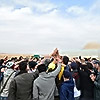 In the spiritual sense, Jerusalem is the point of connection between the souls and the upper system. If we speak of the city itself, it is completely unique and has a special status for Israel, because it is the place where the Temple Mount is located and where the Temple stood; it is the symbol of the connection of this world with the upper world.
Jerusalem is a symbol of unity. And it is known that it is precisely unity that makes the people of Israel special and chosen. Without it, our people would not have attained the degree of Bina, of bestowal, which is symbolized by the number 40 (the forty years of wandering in the desert), and the land of Israel, which means straight to the Creator (Israel, Yashar‑El).
All this became possible thanks to the work they carried out, through their ascents and descents and through overcoming all kinds of obstacles along the way.
When we work against egoism to foster our connection, we attain a desire directed to the Creator; this is a state collectively referred to as the “land of Israel.” Subsequently we arrive at a special, perfect city (Ira Shlema), called Jerusalem (Yerushalaim).
Within this city lies a mountain (Har), that is, a special set of doubts (Hirhurim) through which we acquire the vessel of receiving for the sake of bestowal (the First Temple), followed by the vessel of bestowal for the sake of bestowal (the Second Temple).
All these spiritual states are attained only by unity. We are not speaking about stones or a geographical location, but rather of the Jerusalem within the heart, that is, the process of constructing a relationship defined as perfect awe or the perfect city (Ira Shlema). It is the place of connection between us and the upper force, the Creator.
Everything is expressed through unity. Where there is unity, there is the land of Israel, Jerusalem, the Temple Mount; but where there is no unity, none of these things exists either. Therefore do we truly reside in the land of Israel and in Jerusalem today?
Strictly speaking, no. For now, these are only potential concepts intended to direct us toward attaining their essence, that is, correct connection. Only then will we find ourselves in the land of Israel, in Jerusalem, and upon the Temple Mount.
Baal HaSulam explains that we were granted the land of Israel for a time as an opportunity to realize our unity and attain redemption, that is, the revelation of the upper force. Redemption is freedom from one’s egoism—for each one individually and for all of us together.
Therefore, our primary task lies in working toward unity against egoism. In doing so, we will reveal Jerusalem in our heart along with all the other, deeper, inner qualities that will manifest within it.
“Jerusalem, built like a city which combines in fellowship, the city which confers fellowship on all of Israel” (Rabbi Yehoshua ben Levi ,Jerusalem Talmud, Tractate Chagiga).
This means that if we attain the spiritual state called Jerusalem, we become a single people of Israel, as if one man. In this lies the symbol and the essence of Jerusalem. Nowhere else, in no other nation, is there such an approach. Because in the people of Israel, everything is always revealed only through unity—without which there is no people of Israel, no land of Israel, and no Jerusalem.
[207402]
From the Daily Kabbalah Lesson 5/24/17, “Jerusalem Day”
Related Material:
Building Jerusalem Within The Heart
Jerusalem: Not Stones But The Spirit
Ordinary Stones Of The Holy City
 The greatness of the Creator and His glory—which we constantly talk about in the group, and thereby elevate Him—is in fact a means by which a person, based on constantly turning to his inner self, begins to turn to the Creator.
This can be seen even in simple examples. You came here at three o’clock in the morning, you could care less about anything, and you are still half-asleep. The most that you can think of is feeling better. Let’s say that you are not in a good state, that you feel low, and that you have no interest in anything.
There is nothing you can do; you have already come here, you are listening to the lesson, and you are catching all sorts of words and conversations of your friends. You observe that they think differently, that they are in high spiritus, and this starts to inspire you.
When you are inspired, a certain shift, whether you intend it or not, takes place within you regarding your attitude toward life and the purpose of life; as a result, you become capable of exerting some effort. You can say, “Yes, I am making efforts, but they are all based on the elation that I got from the group. Had I not come here, had I not sat here listening to all kinds of things, I would not be inspired. But now I am in a great mood.”
True. But you have already paid for it by coming here. After all, everyone is just like you, and everyone who comes here affects the others in some way. Then, in fact, if you influence everyone so that everyone influences you in some way, and all the benefits from this will be yours.
You are not running on someone else’s fuel, you are running on your own fuel. Then you fulfill another law, another condition, despite the fact that you do not see the goal or the Creator. However, you already understand that it is good that you do not see Him because it does not tempt you to enjoy seeing the Creator for your own sake.
It is good that the Creator is hidden, and that you can get a push toward Him from the group, rather than from Him directly. After all, had you received an impulse directly from the Creator, you would instantly fall into pleasure for your own sake: “Look who I have a connection with! Look who is giving to me! Look at me!” The fact that I receive a push from the group toward the Creator supposedly frees me from the problem of making the first restriction on my Kelim while still obeying the law.
Therefore this work is called the preparation period. Because I have started work and I have made a certain number of efforts, efforts that I must go through according to the root of my soul, I reach a state where I am given a Masach (screen). Then I merit the revelation of the Creator, and to receive forces from Him.
When I see the Creator, I am able to selectively accept, not pleasure, but only the strength to get closer to Him. From the light that comes from Him, I will take what I need to correct my Kelim, but will not use Him to fill them. After I correct these Kelim, I will fill them in order to get even closer to the Creator, to become even more like Him. This is how a person ascends the spiritual ladder and moves from law to judgment.
[355629]
From the Daily Kabbalah Lesson 4/17/26, Rabash, “What Is the Difference between Law and Judgment in the Work?”
Related Material:
The Creator Is the Goal and the Group Is the Helper
Devote Yourself to the Group
The Importance Of The Creator
 If you make war and do not see that the evil inclination is angry with you, it is a sign that you do not even know what “for the sake of the Creator” means.
…the bad is actually within us, but we do not see it. Only through the dispute does it appear. Hence, if a person is at peace with it, he is hopeless… (Rabash, “Peace After a Dispute Is More Important than Having No Disputes at All”).
What is the difference between peace before a dispute and peace after it? It would seem obvious that the best situation is to have no disagreements at all. Why become enemies, hate one another, quarrel, and then reconcile? Is that really better than always living in peace, love, unity, and friendship?
Why are bad periods necessary? What benefit do they bring to the good periods we later attain? Why is peace after war better than peace without war?
On the corporeal level, this is unclear because everything takes place in vessels of reception that do not change. If they do not change and remain egoistic, then why should I suffer during war if I can make peace before the dispute begins? Then I would live well and calmly, without suffering.
But if I arrive at peace after war, I understand that war is not good. Essentially, it gives me nothing except the understanding that it is better to live in peace. And since I did not have enough wisdom to establish peace before the war and avoid descending into it, now, after the war, I guard the established peace with all my strength, until once again the desire to receive increases and pushes me back into war. In other words, the demand of the will to receive becomes stronger than my ability to restrain myself from war.
And so, it keeps returning, giving me no real possibility to prevent wars.
[355938]
From the Daily Kabbalah Lesson 4/26/26, Rabash, “Peace After a Dispute Is More Important than Having No Disputes at All”
Related Material:
War Will Delay Human Development
War Is A Natural Human State
War Is Great Clarification
 Question: How does the Creator, who is referred to as the “Good that Does Good” differ from the image of the Creator that is revealed while wandering in the desert?
Answer: “Good that Does Good” is not the name of the Creator; it is a supreme primordial concept. It is a designation.
“Good that Does Good” is later subdivided into specific influences, which, in turn, include Taamim (tastes) and names.
“Good that Does Good” is plain good; nothing can be said about it. This can be understood once we have attained all other concepts along all the steps of ascent.
The Creator wants us to know Him as the “Good that Does Good.” To come to understand this, you must ascend all the steps, and at each step, you attain how He relates to you, which is part of the “Good that Does Good” in a certain facet.
[356221]
From the Daily Kabbalah Lesson 5/2/26, Rabash, “What Are Banners in the Work?”
Related Material:
How Can We Feel the Benevolence of the Creator?
How Should I Envision the Creator?
The Creator’s Passion – To Do Good To His Created Beings
 Question: Do you have a fear of suffering? Suppose you get sick or something else happens to you.
Answer: No, there is no fear. It is unpleasant of course, because it involves pain and disagreeable sensations; in other words, the absence of light within me is expressed in the same way as in others. There is nothing to be done about it; like everyone else, I would prefer to avoid it, but I understand where it comes from, and I do not fear it.
A Kabbalist believes that the plan of the Creator must be fulfilled, and I do everything to align myself with that plan. As for what is intended for my soul, whatever metamorphoses it is destined to undergo, it will undergo. The main thing for me is to prepare myself so that I can be with the Creator in all these transformations even if He performs very unpleasant “surgical operations” on me.
Question: Are you talking about the suffering of the physical body or inner suffering?
Answer: By “surgical,” I mean internal operations. Of course, this could include physical and physiological ones here, naturally.
When Baal HaSulam was asked: “Surely you could make it so that you do not have to suffer before death?” He answered: “I would never allow myself that.” And he indeed had a very painful death. He suffered from cancer, heart conditions, and various other ailments. He endured great suffering. He did not pass away at such an old age, he was around 70. What kind of years are those?
If a person truly understood the extent to which even these sufferings, which serve as a vessel for spirituality, move him forward, and realized that he has the capacity to rise above them, he would not remove them, he would rise above them. But what is meant here is not an ordinary person who simply suffers like a small beaten animal, but a Kabbalist.
[356013]
From KabTV’s “I Got A Call. The Sufferings of the Kabbalists.” 10/8/10
Related Material:
What Does A Kabbalist Suffer From?
How Does A Kabbalist Treat Suffering?
Suffering and the Development of the Soul
 We are not capable of beginning spiritual work without that spark that is given to us from above. If billions of people do not have this illumination, then there is nothing for them to do. They are not yet able to develop a spiritual Kli, because they do not have that point from which it begins its existence, what is referred to as a black point or in other words, the point in the heart. That is the spark.
Society offers nothing to my Kli except encouragement and inspiration. How can I receive this inspiration from the group? It is through the system in which we are all included together, within the soul of Adam HaRishon. Because in the aggregate, all of us, all souls, are interconnected in a rigid system. It cannot be broken into separate parts, nor can anything fundamentally new be formed from it.
This structure is called Adam HaRishon (the first man). It has a head, throat, body, legs, and arms, in short, a spiritual Partzuf. We study this in The Study of the Ten Sefirot.
What do we mean when we say that the Partzuf was shattered? The connection between its parts was broken, severed, because previously love prevailed between them, and now hatred has arisen. Consequently, what we call the Temple was destroyed; meaning, this entire Partzuf was destroyed because the mutual connection between its parts vanished.
The very act of striving in whatever way possible, even to a small extent, to re-establish connection between several parts of Adam HaRishon gives me that force of connection that corresponds to the true force that actually exists on the spiritual level, which is where this system is realized fully, in all its strength and power. Therefore, we can receive strength from one another.
By striving to connect with a greater number of friends according to my overcoming of that initial shattering that occurred between us, I as if draw the connecting force of the higher degree. And then, a spiritual force appears at my disposal with the help of which I advance. This is called attaching additional Kelim to myself, additional strength.
[355634]
From the Daily Kabbalah Lesson 4/17/26, Rabash, “What Is the Difference between Law and Judgment in the Work?”
Related Material:
Gather All the Broken Pieces
Soul Connection System
To Gather into The System Of “Adam”
 Question: Must MAN (raising a deficiency, a prayer, a request) be complete, perfect?
Answer: MAN is always perfect. I raise the Reshimo even though I do not know what I am raising. Moreover, according to my development, no greater participation is required of me than what I am capable of. If I feel a lack, I cry out, and that is sufficient.
On a higher level, in addition to the feeling of lack, I need to know to whom I should turn with this Hisaron (deficiency). One level higher still, I need to know why I am doing this. And higher still, know what this will give me and even higher, what this will give the one who bestows to me.
The connection is expressed through a cry! And there is nothing else here. From our side, the connection is only in the cry. And from His side, it is expressed in thousands of ways that we do not know because they are mostly concealed but could be partially revealed.
But even in what is revealed, there is still much more that is hidden, even at the stage of the final correction. After all, this final correction is only relative to our Kli and not to the system that was created by the Creator. We can speak only in relation to the creation.
[355767]
From the Daily Kabbalah Lesson 4/19/26, Rabash, “Moses Went”
Related Material:
MAN—Raising Desires To The Creator
MAN that Contains Everything
What Is MAN?
Preparation to the Lesson
 Video: Play Now | Download Video: Play Now | Download |
 Audio: Play Now | Download Audio: Play Now | Download |
1st part of the Lesson — Writings of Rabash, Article 24 “The Difference between Charity and Gift” (1986) (10.16.2002)
| Video: Play Now | Download |
Audio: Play Now | Download |
2nd part of the Lesson — Studying with Friends
| Video: Play Now | Download |
Audio: Play Now | Download |
3rd part of the Lesson — Writings of Baal HaSulam, “Study of the Ten Sefirot,” Vol. 2, Part 5, Item 28
| Video: Play Now | Download |
Audio: Play Now | Download |
4th part of the Lesson — Conversations with Kabbalist Dr. Michael Laitman – Listening to the Voice of the Creator from the Mutual Silence in the Group
| Video: Play Now | Download |
Audio: Play Now | Download |
 Daily Audio Version-MP3
 Get the Weekly eNewsletter
 Follow on Twitter
