
One’s Path
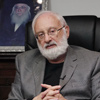 Question: You constantly say that the group is the most important thing we should focus on. But at the same time, you’ve mentioned that you didn’t have a group. How were you able to overcome that and make progress without it?
Answer: Everyone has their own path, and often we don’t even understand why things happen to us the way they do. For each person, it’s very individual both internally and externally. That’s fate. This is how I was led to the study of Kabbalah, and this is how I continue to be guided.
Is it really me doing or creating anything today? Absolutely not. When someone says the name “Michael Laitman,” I don’t associate myself with it at all! It feels like I’m nameless.
When I’m introduced as a doctor, philosopher, Kabbalist, or head of Bnei Baruch, it feels like that’s the title of someone else. It’s as if I put on a robe, sit in an important chair, and lead from there. Then I move over here and sit in my “pajamas.” Because these are completely different people. Completely different!
Comment: But you have only one mind.
My Response: I’m not talking about that, but about the role I have to play. I know that I’m compelled to do it, that I’m being driven to it, it’s necessary, and I do it. I agree with it, I’m grateful for it because I understand its importance and, essentially, I know that I need it.
This is the case for many people in the world who hold significant positions. A person can’t just leave it behind; the role obligates them. Any major leader would probably love to escape to a village somewhere, relax, and just be themselves for a while. And if we’re talking about a mother of a large family, she knows she’s obligated to do what she does for the sake of her children.
I simply feel my duty. And beyond that, I feel an obligation from above, not just on a corporeal level, where someone appoints you and that’s it. In the same way, I was led to Rabash, and that’s exactly how he related to me.
One of my friends who studied with Rabash once recalled going to the sea with him and asking why he treated Laitman the way he did. Rabash replied, “That’s his soul. It makes me relate to him this way.” I didn’t even know or imagine that he would say something like that to others.
So, it’s a role, not some sort of privilege, a role imposed on a person based on the root of their soul so that they fulfill it within the general system. It may be important or not important relative to others, but that doesn’t matter. It’s simply a role.
We can talk about the importance of parents in relation to their children. But fundamentally, their importance lies in the fact that they are obligated to care for their children, not in the fact that they are bigger, stronger, or smarter. On the contrary, they are obliged to do everything to serve their children. The same goes for me.
You might say, “But there’s also vanity and self-importance.” If that’s the case, then a person loses everything. Because when fulfilling a role assigned by the Creator, ultimately doing His work, if a person seeks personal satisfaction, power, or vanity instead of asking for spiritual elevation, the quality of bestowal, they miss the point entirely.
[340055]
From KabTV’s “I Got a Call. Your Way” 5/29/10
Related Material:
Fulfill the Upper Will
Why Me?
My Way




Discussion | Share Feedback | Ask a question