New Life #2 – The Development Of Man And Humanity

New Life #2 – The Development of Man and Humanity
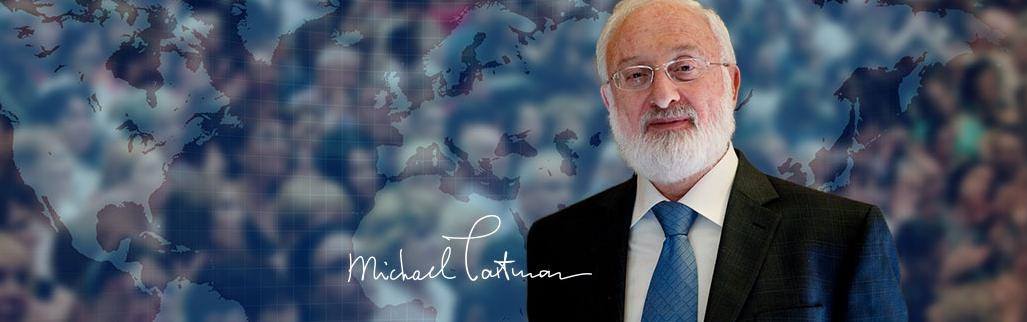
Dr. Michael Laitman in conversation with Oren Levi

The goal of human development is undoubtedly to bring us into a beautiful, healthy, whole, and perfect state. Today, humanity is in crisis as divorce increases, both parents and children suffer, and society is threatened with drugs and terrorism. Where is the joy? What is the purpose of it all? We are like a baby without guidance and don’t know what to do with ourselves. We are evolving toward interdependence and connection, yet something stops us from wanting to unite. When we enter a good environment, we have the opportunity to feel our egoistic natures, that we are lazy and that we don’t want to connect with each other. We need to proactively develop this type of environment that will take care of everyone like a mother caring for her baby. This is the way for humanity to learn how to reach the same power of love that is inherent in nature.
[66723]
From KabTV’s “New Life #2 – The Development of Man and Humanity,” 12/28/11

icon for podpress Audio: Play Now | Download

Daily Kabbalah Lesson – 10/22/19

Lesson Preparation

[media 1] [media 2]

Writings of Baal HaSulam, “The Arvut (Mutual Guarantee)” 

[media 3] [media 4]

Writings of Baal HaSulam, “Preface to the Wisdom of Kabbalah,” Item 82

[media 5] [media 6]

Audio Version Of The Blog – 10/21/19

Listen to an Audio Version of the Blog
Download:MP3 Audio

Virtuous Disturbances

laitman_938.01Question: The Creator creates material and spiritual disturbances for us. Are these disturbances connected with us in any way?

Answer: Yes, they are. There are times when souls are more in need of either material or spiritual disturbances. Moreover, a material disturbance is not just a lack of livelihood. It can be diseases, drugs, problems with ecology, with anything, not to mention money and everything else.

These disturbances are not on the spiritual, but on the physical level, on matter. Therefore, our world is called material. All humanity experiences such disturbances.

Spiritual disturbances are unique and virtuous, when the Creator limits us in rapprochement between us and in rapprochement with Him in our connection. They lead us straight to the goal. Therefore, we need to replace material disturbances with spiritual ones since a person goes from spiritual disturbances directly to the goal.

We must learn to perceive them correctly. We will then have no problems. I will rejoice in constantly arising spiritual problems.

I do not want friends, I reject them, I do not want to get up, to come to the lessons, to smile at someone. All these are spiritual disturbances. This is how the Creator gives me the opportunity to overcome them and connect even more with my friends each time.

Question: What is better: to sit in the group with friends when one of them is in constant spiritual descent and worries, or is it preferable to be closer to the Creator when you are in joy and aspiration? Or these are different revelations?

Answer: These are really different states. You cannot say which one is better and which one is worse. What the Creator gives you at any given moment means that this is what is necessary for your specific correction. You just need to understand how to use any state as productively as possible.
[253305]
From the World Kabbalah Convention in Moldova 9/5/19, Lesson 0

Related Material:
The Beginning Of Serious Spiritual Work
Disturbances Are Blessings From Above
Obstacles Guide Us On The Way

Bricks Of Connection

laitman_942Question: What are the bricks that the Temple (Kli/vessel) is built from?

Answer: They are all the obstacles that are revealed in us, all the rejections, estrangements, and unwillingness to get closer to each other that we overcome and ask for the opposite, to be united.

Any connection between us above any rejections is yet another brick that you add to the Temple, the place where the Creator will be revealed. Just count how many bricks you can lay in one hour, and you will see that you can add more every minute. Even faster.
[253092]
From the World Kabbalah Convention in Moldova 9/5/19, Lesson 0

Related Material:
The Third Temple
Building The Third Temple
The Temple In Our Hearts

The Meaning Of Kabbalistic Books, Part 5

laitman_933Who Wrote the Torah?

Question: Who wrote the Torah? Is it true that Moses wrote it?

Answer: Moses did not write it. It was written by people in the days of Moses and Joshua. It ends like this: a description of Moses’s death and entering the Land of Israel.

Question: So Moses kind of dictated the Torah to people? Or he taught them and from their attainment they later wrote it? In principle, even Kabbalists attribute the authorship of this book to Moses.

Answer: The point is not the authorship. The fact is that a person who is writing the Torah is experiencing these states and describing them with the corresponding letters. Therefore, the people who wrote the Torah in the time of Moses and Joshua depicted the states they experienced in the form of such signs.

Question: Similar to The Book of Zohar that was written by the ten disciples of Rabbi Shimon, the Torah was also written in that way?

Answer: The fact that the method of the Torah was to be implemented in a group is undoubted because it comes from the very nature of creation. When not fewer than ten different, disparate egoistic desires begin to conjugate above their egoism, only then can they describe their above-egoistic state, called spiritual, in the correct letter designations.
[252275]
From KabTV’s “Fundamentals of Kabbalah,” 12/18/18

Related Material:
The Meaning Of Kabbalistic Books, Part 4
The Meaning Of Kabbalistic Books, Part 3
The Meaning Of Kabbalistic Books, Part 2

What Is The Spirit Of The Body?

Laitman_168Question: What is the spirit of the body that brings us into interaction with each other?

Answer: This is a common force that binds everyone together and provides us with eternal existence. We must leave individual existence from the sensation of our personal life, which ends with the death of the body, to the existence of our common life, which we will begin to feel as circulating between us.

For example, in the human body, millions of cells die during a day, and others are born instead. The same way as one cell dies in the body, when we die, we become like this cell in the common body of humanity, which dies and disappears from the body.

In order not to disappear without a trace along with the death of our animal body, we need to connect with the life of a common body, which means to strive through our connection between us to the Creator. This is what the science of Kabbalah does.
[252447]
From KabTV’s “Fundamentals of Kabbalah,” 7/21/19

Related Material:
Me And The General Soul
Soul—One For All?
Who Has A Soul?

Audio Version Of The Blog – 10/20/19

Listen to an Audio Version of the Blog
Download:MP3 Audio

The Meaning Of Kabbalistic Books, Part 4

laitman_587.01The Torah Is the Language of the Program of Humanity

The Book of Zohar,  “BeHaalotecha” [When You Mount the Candles], Item 58:  Woe unto one who says that the Torah comes to tell literal tales and the uneducated words of such as Esau and Laban. If this is so, even today we can turn the words of an uneducated person into a law, and even nicer than theirs. And if the Torah indicates to mundane matters, even the rulers of the world have among them better things, so let us follow them and turn them into a law in the same way. However, all the words of the Torah have the uppermost meaning.

The fact is that you can write more fascinating novels than the Torah. But it presents a completely different story, which is encoded.

Every letter, every word, everything that appears in the Torah from the first letter “Bet – ב” to the last letter “Lamed – ל” is a code. The word “letter” translated from Hebrew means “sign.” That is, they are certain signs that follow each other in a sequence.

The Torah has no division into words. There are no punctuation marks in it: periods, commas, hyphens, etc. It represents one sentence from beginning to end without division into any intervals. In this sense, the language of the Torah is a bit like computer language. It is the language of the program of humanity, which must fulfill it.

Each letter of the Torah is a sign that a person must express in himself, in his properties. What does it mean to read the Torah correctly? I take each sign, each letter and format myself according to it: one format, a second format, a third one.

Afterward, I go through certain states. It is these states that I experience from the beginning of the Torah to its end that from me form an Adam, a human being, who is completely similar to the Creator.

The Torah is a program according to which each person reading it correctly as if chisels each letter in one’s egoistic desire. Then these desires are gradually transformed into altruistic properties, actions, and states, and a person achieves one’s complete similarity to the Creator.
[252195]
From KabTV’s “Fundamentals of Kabbalah,” 12/18/18

Related Material:
The Meaning Of Kabbalistic Books, Part 3
The Meaning Of Kabbalistic Books, Part 2
The Meaning Of Kabbalistic Books, Part 1

Simchat Torah

Dr. Michael LaitmanFrom My Facebook Page Michael Laitman 10/20/19

What is the Essence of Simchat Torah?

While We’re Far from the Real Simchat Torah, Here’s a Good Reason to Celebrate the Joy and Happiness of Simchat Torah Right Now

At its core, the Tishrei holiday cycle expresses our shift as a divided, egoistic society to one of connection, altruism and balance with nature’s quality of giving. Its final day, Simchat Torah, celebrates the favorable outcome of this shift.

Although the basis of Simchat Torah is far from where we see our society heading today, it’s an opportunity for us all to think about where we are as individuals and as a society in relation to this harmonious state. We can rejoice in our recognition of the real cause of all our problems—our egoistic nature—and that we have the means at our disposal to redirect this nature to a positive direction. That’s already a major step towards the reformation the Torah speaks about.

Therefore, we have a very good reason to be happy this Simchat Torah. Let’s use the opportunity to consider how we can train the light’s quality of giving, love and connection among each other, and show that there is indeed a positive alternative to the escalating divisions, struggles and conflicts around the world.

May it be a happy holiday to all!

Learn more here