
Entries in the 'Q&A' Category

“What Should I Do To Stop Feeling Despair?” (Quora)
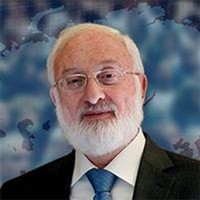
Dr. Michael LaitmanMichael Laitman, On Quora: “What should I do to stop feeling despair?“

If we feel despair, then we should seek the cause of this feeling. We ultimately feel despair because, even if we live to be 200 years old, we will still be unable to fulfill our desire to enjoy.

Our desire to enjoy is our nature. It pushes us to enjoy via our desires for food, sex, family, money, honor, control, knowledge and spirituality. The problem with this desire is that it is aimed at our personal benefit alone, so any enjoyment we receive is short lived, and we end up feeling emptier the more that we develop.

When we reach a state of despair from living, a state that all people will eventually reach, then in order to best deal with this feeling, we should seek a solution.

How can we exit the feeling of despair? We receive this question ultimately from nature. Nature is whole, perfect and eternal, and we too ultimately demand to be whole, perfect and eternal. We each face this eternal dilemma, and find no answer. Some of us might be able to pacify this question with psychological means or by making do with certain enjoyments for the time being.

However, the more we develop, the more we will be unable to pacify our existential questions, and they will pressure us more and more to somehow find their answers. What, then, can be the solution for our entire existence?

The wisdom of Kabbalah is a method that provides the following solution: we need to change the world by changing ourselves. The world is a copy of us. We project our qualities onto whatever is outside of us. Therefore, if we change our qualities into spiritual ones, i.e. to qualities of love, bestowal and positive connection, we will then feel a different world.

In other words, changing the intention upon which we wish to enjoy—from self-benefit to benefiting others and nature—is the key to stopping despair. By doing so, we enter into balance with nature and start feeling its flow of eternity, harmony and perfection.

Based on a talk with Kabbalist Dr. Michael Laitman. Written/edited by students of Kabbalist Dr. Michael Laitman.

“Should We Give Up Our Civil Liberties To Combat Terrorism/Preserve National Security?” (Quora)

Dr. Michael LaitmanMichael Laitman, On Quora: “Should we give up our civil liberties to combat terrorism/preserve national security?“

We need to reach a decision that security should be universal, i.e., all over the world. If we lack security, and find ourselves in war, violence or using forceful methods anywhere in the world instead of cooperation, then the safety of the entire world will suffer.

Safety is respected and valued if it does not come from any egoistic consideration, such as power, force and pride. If we all observe such a condition, then the world and every society needs to accept it as a truly just form of security.

What amount of freedom can we forgo? We must reject our freedom for the needs of security on the condition that in the future we will correct society, having achieved freedom and safety. Otherwise all rejection of freedom for the sake of security is flawed.

Based on a Q&A with Kabbalist Dr. Michael Laitman on September 9, 2006. Written/edited by students of Kabbalist Dr. Michael Laitman.

“Why Are So Many People Who Live In Non-Democratic Countries And Dictatorships Hostile To The Western World?” (Quora)

Dr. Michael LaitmanMichael Laitman, On Quora: “Why are so many people who live in non-democratic countries and dictatorships hostile to the Western world?“

Many people who have been raised outside Western culture feel it as foreign because they see it as artificial and as an accumulation of several illusions. Much of the behavior among Westerners is distant from nature. For instance, Western culture generally pays little attention to human nature, and emphasizes external behaviors like how people should appear in society, and this gives rise to much hypocritical behavior, where we appear to be pleasant and well-mannered on the outside, and on the inside, everything is the opposite.

In other words, many people who were born and raised in non-Western cultures see the extent to which feelings of pride and superiority prevail in Western culture, and it is also the reason for Western democracy appearing to many as a total failure in building a just society.

In addition, Western democracy is based on Christian values, which are unaccepted by cultures that accord to different philosophies and religions, such as Islam, Judaism, Confucianism, Buddhism, Hinduism, among others. As a result, they do not accept Western culture and Christian values, and they feel the degree to which such values place society into narrow confines. Therefore, even when people emigrate to the West in order to lead easier and more developed lives, many of them end up hating Western culture and develop certain boundaries so that they can live according to their own cultures.

Based on a Q&A with Kabbalist Dr. Michael Laitman on September 9, 2006. Written/edited by students of Kabbalist Dr. Michael Laitman.

How To Love Others If You Don’t Know How To Love Yourself?

531.02Question from Facebook: How can you love others if you don’t know how to love yourself?

Answer: You love yourself too much, and if you want to begin to feel the world that is external to you, you need practice loving others.

When you love others, you develop the attribute of bestowal, the attribute of true love, and you switch from self love to the love of others and thus begin to feel what is really outside of you. Outside yourself is immense light, the upper world, an eternal state that you are being led to.
[249681]
From KabTV’s “ Questions And Answer on Facebook” 3/10/19

Related Material:
Comprehend Love Of Others Through Love Of Oneself
See The World Through Others
Love Of Others —Protection From Misfortunes

“Should We Have The Right To Choose Where We Want To Live?” (Quora)

Dr. Michael LaitmanMichael Laitman, On Quora: “Should we have the right to choose where we want to live?“

According to the way in which nature develops us, we need to reach a state where we realize ourselves for human society’s maximal benefit, and with maximal effectiveness. As such, if we thoroughly research our options and find that we can realize ourselves more beneficially for humanity in a specific location, then of course we should have the right to move to that place where we can be of more benefit to humanity.

However, I emphasize that such a move should take place only after we find that we can truly be of more benefit to humanity in the target location. It means that we refrain from moving simply because we feel like it or that it “seems right” at a certain moment. Instead, we make our decision to move according to our awareness of the general law of nature, and how nature develops us. Also, as explained by Kabbalist Yehuda Ashlag (Baal HaSulam), we might need to receive special permission from the people who understand where we can best realize ourselves. We can then be certain that where we wish to move is where we need to be and act.

If we move simply because we are bored in one place, and think that we can reap more egoistic fulfillment somewhere else, i.e. aim to move is simply in order to egoistically absorb what others have prepared in the other location, then by doing so, of course we do not become useful to society and I do not think that such a move is justified.

Based on a Q&A with Kabbalist Dr. Michael Laitman on September 9, 2006. Written/edited by students of Kabbalist Dr. Michael Laitman.

“How Would The World Be Different If Africans Were Never Brought To The Americas At All, As Slaves Or Otherwise?” (Quora)

Dr. Michael LaitmanMichael Laitman, On Quora: “How would the world be different if Africans were never brought to the Americas at all, as slaves or otherwise?“

The world would be nearly the same, other than America of course, which would look and feel completely different. America would be more like a Western European nation, such as France, Germany and England.

On one hand, America would be more closed off than it is today. On the other hand, we need to understand that nature unfolds according to a set plan, and it advances the world to a state of equilibrium. There is thus no point in discussing history in a subjunctive fashion, because the development we have undergone is absolute. We need to say that what happened yesterday had to have happened, and it could not have happened in any other way. Also, we should never regret the past, but on the contrary, we should always think and act with the present and the future in mind.

Regretting a particular course of historical events is an unhealthy, ineffective and detrimental approach to life. Why? It is because the unfolding of history is set in stone, and everything that has happened was for a very specific purpose—to guide us to a final state of balance with nature. Therefore, we would be much better off if, from this moment on, we adjust ourselves in a manner of “If I am not for myself, then who is for me?” and say in relation to the past that, “There is none else besides Him,” i.e. that nature enacted everything exactly as it needed to. We cannot change the way we have developed to this current point, and we should thus not focus on it.

Therefore, we have nothing to regret about the past. If we look back into the past with such an approach, then we become like the wife of Lot, who turned into a pillar of salt, having gained absolutely nothing by doing so.

We should thus focus on our future. What does a positive future for humanity look like? If we concentrate on building a positive future for ourselves and nature, then we will reach the conclusion that only by reaching the understanding of the laws of nature, knowing how nature works, and observing these laws, then we will be on course to realizing a much better future for all.

Based on a Q&A with Kabbalist Dr. Michael Laitman on September 9, 2006. Written/edited by students of Kabbalist Dr. Michael Laitman.

“What Is The Relationship Between Individual Freedom And Social Responsibility?” (Quora)

Dr. Michael LaitmanMichael Laitman, On Quora: “What is the relationship between individual freedom and social responsibility?“

Society should feel, understand and decide on the boundary between the individual’s freedom and social responsibility, and not the individual.

The person mostly lives within society, and the life of a person should ultimately be for the benefit of society. This is why a major problem is to provide the knowledge that will let us feel social good as equivalent to the good of each individual. In other words, the goals of an individual and of human society as a whole should be the same: to reach a state of mutual benefit of each person to the greater circle of human society. We will then each live according to our loyalty to society.

In addition, society should influence every individual by raising the value of social responsibility and benefit to top priority, and rewarding every individual who acts to benefit society with respect, merits and appreciation.

We should thus understand the extent to which we are all influenced by society. Whatever society wants is what every individual wants, since everyone needs support from society. Our self, i.e. our ego, is activated by the values we receive from society.

If society pays no attention to egoistic acts that benefit individuals at the expense of society, and respects altruistic acts that benefit society, then everyone will strive to conduct altruistic acts in order to become respected, and feel that they are important and beneficial to society. We want others to support us, and to speak favorably about us. If we manage to instill an altruistic social influence, then we will all start realizing ourselves to our maximum in order to benefit society.

This is why society needs to be the factor that establishes the boundary between individual freedom and social responsibility.

Based on a Q&A with Kabbalist Dr. Michael Laitman on September 9, 2006. Written/edited by students of Kabbalist Dr. Michael Laitman.

“Does Freedom Depend On Where You Live?” (Quora)

Dr. Michael LaitmanMichael Laitman, On Quora: “Does freedom depend on where you live?“

Freedom does not depend on where you live.

The environment you live in is given to you from nature, i.e., from forces outside of your control. You do not choose your environment, just as you do not choose the society you are born into, the upbringing you receive, and the values you grow up with.

We can realize our freedom according to a single condition: freedom from our egoistic human nature. We can free ourselves from nothing else.

Freedom from our egoistic nature means living outside the laws and constraints that our egoism dictates to us at every moment, i.e., the urges of human nature from within. It is possible to realize such freedom if we prioritize benefiting human society over self-benefit. In other words, freedom comes from rising above our egoistic nature that automatically and constantly functions in the direction of self-benefit, in order to benefit others.

When we live in the desire to benefit others, we rise from the egoistic level of life to the altruistic one, and then we gain access to the flow of nature in its perfection and eternity. We thus also feel ourselves as perfect, eternal, and free.

Realizing this shift in consciousness depends not on where we live, our nationality or gender. It depends on how we each organize ourselves to rise above our inborn egoistic nature.

Based on a Q&A with Kabbalist Dr. Michael Laitman on September 9, 2006. Written/edited by students of Kabbalist Dr. Michael Laitman.

“What Is A More Effective Form Of Resistance: Non-Violent Resistance Or Armed Struggle?” (Quora)

Dr. Michael LaitmanMichael Laitman, On Quora: “What is a more effective form of resistance: non-violent resistance or armed struggle?“

Neither non-violent resistance nor armed struggle will lead to any positive results. We cannot reach any lasting success by the force of the fist or by other forms of resistance. The world abounds with such examples. Resistance by force or by other means fails to bring peace, balance, understanding, unity and harmony in the world.

If we wish to change the savage, egoistic, hateful and arrogant oppressor who has the ability to exploit others, to a thinking, understanding and considerate being, then we should act solely by means of connection-enhancing education. By learning how nature works, and how the world should appear according to its nature, and ultimately, how to change our egoistic and divisive relations to altruistic and positively-connected ones, we will then reach a state where human society will become balanced with nature, and will then experience newfound harmony, happiness, confidence, safety and equality.

No egoistic forms will ever lead us to a lasting victory. Egoism will always lead us to defeat. This is why both non-violent resistance and armed resistance will ultimately lead to failure.

If we wish for success, then we need to expand our vision to take a long-term perspective, and then we will see that by bringing connection-enriching education to humanity, and especially to the young generation, where everyone will learn how nature works according to altruistic laws of interdependence and interconnectedness, we will then organize our lives in accordance with this law of nature and realize a harmonious existence for all.

The positive aspect in this situation is that humanity has all the necessary mechanisms in place for realizing connection-enriching connection. No one wishes to admit that they are egoistic and that they hate other people. Instead, people mostly like to perceive themselves as just and fair people, even altruistic. We can thus use this inner respect for altruism, and expand it to respect altruism and positive connections in human society at large.

If we setup our education and social influences such that we respect altruism and positive connection, then we will value each other, countries, governments and organizations only according to their altruistic contributions, and to the extent that they act for the sake of positively connecting human society.

In short, by valuing altruism and positive connection in society at large, with the aid of connection-enriching education and positive examples of altruism and connection in our social and media influences, we will build a better world.

Based on a Q&A with Kabbalist Dr. Michael Laitman on September 9, 2006. Written/edited by students of Kabbalist Dr. Michael Laitman.

Before You Speak

600.01Question: It is not a secret that a person talks a lot, both with and without a reason. Does it affect others, society, and himself?

Answer: Of course, it does. This is why silence is golden.

Question: Does a person have to make some kind of calculation in relation to what he says?

Answer: Naturally! After all, many problems arise because people chat incessantly.

It is said that “The wise sees the future.” Therefore, we must understand what consequences will result from opening our mouths. First, we should analyze and anticipate the consequences in advance, and then speak.

Question: How can we learn to foresee this? Often, a person seems to see what the consequences may be, but he makes mistakes in his evaluations. How can we approach this correctly?

Answer: In Kabbalah, this is solved with the help of the environment. I have to create the right environment around me, preferably of ten people. If I annul myself before them and act in accordance with the opinion of the ten, then what I do is usually positive.
[284207]
From KabTV’s “Kabbalah Express” 6/13/21

Related Material:
The Benefits Of Silence
The Power Of Silence
Women—Appeal To The Creator