Audio Version Of The Blog – 5/8/25
Posted on May 8th, 2025
Listen to an Audio Version of the Blog
Download:MP3Audio

Listen to an Audio Version of the Blog
Download:MP3Audio
 Question: Why is it that when different people ask you the same question, you give different answers?
Answer: I give one answer, but on different levels. I am not a two-faced Janus, and I am not lying. It depends on who is asking the question and to whom the answer is given: a small child, an adult, a man or a woman, and so on.
That is, there are different versions of the answer. In principle, the answer is one, but its external expressions may vary.
[343484]
From KabTV’s “I Got a Call. One Question and Many Answers to It” 9/7/10
Related Material:
Each Question in Its Own Time
One Question Two Answers
A Crucial Question
 Question: You say that in Kabbalah all your feelings are in Hebrew. When you read Kabbalistic texts in this language or listen to them, how do you perceive them?
Answer: When I read a Kabbalistic text in Hebrew, I perceive it within myself. Just like when you read a text about some situation in our world in Russian, it creates a certain inner picture within you.
It is the same for me when I read a Kabbalistic text. It creates an inner picture in me because I already possess a certain set of qualities that correspond to these words, terms, sentences, and connections.
Therefore, while reading, I assemble this picture inside myself like a mosaic, and it begins to live within me. As I continue through the text, it all shimmers, rotates, connects, and separates within me. The text lives in me and carries out its actions. I feel it as my life experienced in that very moment.
It is similar to when you read fiction and become immersed in the story.
[343519]
From KabTV’s “I Got a Call. Kabbalistic Language” 8/25/10
Related Material:
Spiritual Harmony Of The Hebrew Language
Written Hebrew – Expression of Feelings
Choose Essence, Not Form
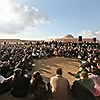 Six days may you work, and perform all your labor, but the seventh day is a Sabbath to the Lord your God; you shall perform no labor, neither you, your son, your daughter, your manservant, your maidservant, your ox, your donkey, any of your livestock, nor the stranger who is within your cities, in order that your manservant and your maidservant may rest like you (Torah, Devarim, Chapter 5, 13-14).
Question: Does the Sabbath day apply to non-Jews?
Answer: No, it refers only to Jews, i.e., to those who are approaching correction.
All spiritual laws began with Abraham and his group began to penetrate into the property of upper nature and to tune themselves to exit from the egoistic crisis that engulfed Ancient Babylon.
Therefore, Kabbalah and Judaism—not earthly, but real, spiritual—are built on the fact that we rise above egoism, where our animalistic part is immersed.
To do this, it is necessary to build ourselves above our ego in order to exist at the level of “Love will cover all crimes (egoism).”
As soon as Abraham and his group began to unite and rise above the ego, they began to feel in their unity the properties of the spiritual nature: bestowal, love, interdependence, adhesion, connection, etc. And completely different laws operate in them. The description of these properties is the topic of all Kabbalistic books.
Abraham’s group sought to use this very system of interconnection among themselves, these laws, according to which they began to live.
The relationships that existed on a spiritual level between a man, a woman, children, between friends, the behavior of a person in relation to animals, in relation to plant life on earth, and the earth itself, they began to relate to everything around them. Therefore, all the laws of behavior come from the laws of the higher commutation of people among themselves.
When we begin to live by these laws, we gradually enter into them. There are personal laws according to which an individual fluctuates every second in his various changing properties. And there are laws in which we flow together in our society.
At the same time, we notice that one state is replaced by another, a third, a fourth, a fifth, a sixth and a seventh. And then the first state repeats again, the second, the third, the fourth, the fifth, the sixth, the seventh. And then again. But they are completely unrelated to natural cycles and do not relate to the sun, moon, or earth.
These are purely spiritual states that take place only between people. Therefore, at first the people of Israel performed them only between themselves, and then gradually they began to transfer them to phenomena and objects of material life.
In the spiritual world, there are forces that govern the sun, moon, and earth, and form certain relationships between them: the moon revolves around the earth for a month, the earth revolves around the sun for a year, and so on. Gradually, all this began to enter into one unified system for people.
They began to execute the first, second, third, fourth, fifth, sixth, and seventh day on the earthly level. Hence, there were six days of the spiritual week, which correspond to the properties of Hesed, Gevura, Tiferet, Netzach, Hod, and Yesod. And the seventh day, Saturday, Shabbat, the Sabbath, is a day of rest when they do nothing, because this quality is similar to final correction.
Since they were on the spiritual level, they began to automatically fulfill these laws on the material level. For them, both worlds were one common whole. And when, at the time of the destruction of the Second Temple, the people fell from the spiritual level, only the earthly remained. We are still fulfilling them today, although it has nothing to do with anything spiritual.
[188802]
From KabTV’s “Secrets of the Eternal Book” 3/9/16
Related Material:
The Holiday We Do Not Notice
Spiritual Sabbath
The Correction Of The Sabbath
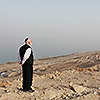 Question: A person who feels dissatisfied with their life runs into the desert in search of themselves. After all, the desert is silence, a sense of eternity, something primordial, completely different from the endless cycle of daily life we constantly spin in.
Why is it that people seek inner fulfillment specifically in the desert?
Answer: I would not advise not to get too fixated on the external image of the desert. When the Torah mentions the desert, it refers to an inner state of a person. The inner desert is a search within a dried-out life that bears no fruit.
Egoism has completely drained the person and gives no answer to the question about the meaning and purpose of life. That is why they feel as though they are in an internal desert. This is precisely where one needs to find a well of living water, meaning, the upper light that is revealed specifically in dryness, in the desert.
Question: How does one dig a well in the desert?
Answer: A well emerges through questions. A well is always initially covered with a stone, and then the stone is rolled away, revealing the well. There are always disputes surrounding a well.
Question: What kind of questions are these that bore through the earth?
Answer: A person wants to reach the source of life. One constantly examines oneself and investigates reality. Where can they find the source of their own life? They search precisely in the middle of the dryness of the desert; they do not flee from this question, but dig deeper into their life.
Those people need to find their source and understand why they live, for what purpose, and what is the outcome of this short, painful life. Through this kind of digging, a person ultimately reaches the source.
[217588]
From KabTV’s “New Life – 924,” 11/28/2017
Related Material:
The Desert, Part 3
The Desert, Part 2
The Desert, Part 1
Preparation to the Lesson
 Video: Play Now | Download Video: Play Now | Download |
 Audio: Play Now | Download Audio: Play Now | Download |
1st part of the Lesson — Writings of Baal HaSulam, “The Arvut (Mutual Guarantee),” (11.11.2003)
| Video: Play Now | Download |
Audio: Play Now | Download |
2nd part of the Lesson — Lesson on the Topic “Preparation for the Convention,” Lesson 1: “There’s None Else Besides HIm”
| Video: Play Now | Download |
Audio: Play Now | Download |
3rd part of the Lesson — Writings of Baal HaSulam, “Study of the Ten Sefirot,” Vol. 1, Part 2, “Inner Observation,” Chapter 9, Item 110
| Video: Play Now | Download |
Audio: Play Now | Download |
Selected Highlights
| Video: Play Now | Download |
Audio: Play Now | Download |
 Daily Audio Version-MP3
 Get the Weekly eNewsletter
 Follow on Twitter
