Entries in the 'Children' Category

“Study: Spanking May Lead to Mental Illness”

Dr. Michael LaitmanIn the News (from The Slatest): “Being spanked, slapped, pushed, or hit as a child, even when these punishments are not a part of full-scale maltreatment, are linked to an increased risk of mental illness in adulthood in a new study published in Pediatrics. …

“Lead author Tracie Afifi recommends that physical punishment not be used on children of any age, and that positive parenting strategies be employed instead. Spanking, and other forms of physical punishment on children, is illegal in 32 countries, not including the United States. The American Academy of Pediatrics, however, officially discourages it. …

“Close to 80 percent of American preschool children are spanked, according to a 2010 University of North Carolina study.”

My Comment: There is no other method of education, except an example, especially when it comes not from adults, but from peers. The environment is always the only effective and positive means of upbringing. Nothing can replace a good example of friends.
[82411]

Related Material:
Integral Upbringing, Talk 2
Talks About A New Life, Episode 3
This Is All We Need!

“Respect Matters More Than Money”

Dr. Michael LaitmanIn the News (from the Association for Psychological Science): “New research suggests that overall happiness in life is more related to how much you are respected and admired by those around you, not to the status that comes from how much money you have stashed in your bank account.

“Psychological scientist Cameron Anderson of the Haas School of Business at the University of California, Berkeley, and his co-authors explore the relationship between different types of status and well-being in a new article published in Psychological Science, a journal of the Association for Psychological Science.

“‘We got interested in this idea because there is abundant evidence that higher socioeconomic status – higher income or wealth, higher education – does not boost subjective well-being (or happiness) much at all. Yet at the same time, many theories suggest that higher status should boost happiness,’ said Anderson.

“So if higher socioeconomic status doesn’t equate with a greater sense of well-being, then what does? Anderson and his colleagues hypothesized that higher sociometric status – respect and admiration in your face-to-face groups, such as your friendship network, your neighborhood, or your athletic team – might make a difference in your overall happiness. ‘Having high standing in your local ladder leads to receiving more respect, having more influence, and being more integrated into the group’s social fabric,’ Anderson said.”

My Comment: Kabbalah says that the desire to receive constitutes the matter of the world. In general, it can be divided into four groups: still, vegetative, animate, and speaking. In the human being, it is divided into bodily (food, sex, and family) and social (wealth, respect, and knowledge) desires. Thus, psychologists concluded that the most important thing, besides satisfying the desires of the body, is how a person feels himself in society. That is why Kabbalah believes that after satisfying the basic needs of the body, if integral education gives people the correct skills in social relations, everyone will be happy in the end, and humanity will come into balance with each other and with nature.
[81719]

Related Material:
If You Want To Be Happy, Then Just Let It Be!
How To Change Society’s Values
It’s All A Factor Of Society’s Appreciation

Preventing The Impending Threat

Dr. Michael LaitmanQuestion: Suppose we have information about future threats that worry us. We hear it and we agree with it. What can we do in order to prevent it?

Answer: We have many options, and many ways to disseminate. First we have to use all the different protest movements, since they are actually an internal protest against everything that is happening in the world these days: against the rising prices, the uneven share of the wealth, and other such phenomena. This protest is against the current state of society. We can use the protest actions successfully in order to convey the massage to the masses. We can use the concern a person has for children. We see the ugly way children are being educated these days. They don’t receive any form of education but merely information, and they don’t want that either. There is violence in schools, drug problems, sexual abuse, etc., families are falling apart and few want to preserve the family.

We must somehow try to show a person that it is certainly possible to live differently, although he has grown tired of all the attempts to do something. It all so simple: He simply needs to surf the net and to reach the course of integral education.

Working with school children, we use a very interesting method: First, the teachers are trained and then they use the integral method in the classroom. We can see the results within several weeks as the children change. Parents suddenly see totally different children who have become better, more pleasant, obedient, and so on. Then there is the need to change the parents, since the environment influences the children. This means that they, too, have to participate in a course of integral education. There is no need to tell them about the future changes, since the moment they begin the course and participate in the workshops, they suddenly discover a totally different existence, a different way of communicating, another life.

Today we are actively and intensively preparing a whole team of lecturers, teachers, educators, and organizers who will be dealing with this. But in the meantime, it is just a drop in the ocean.
[80445]
From a “Talk on Integral Upbringing” 6/13/12

Related Material:
Our Fear Of The Future Is Our Helper
The World Must Know The Truth!
Shifting The Bifurcation Point

Massive Attack

Dr. Michael LaitmanQuestion: People are generally not interested in receiving information about forms of interaction, introspection, and development in self-actualization until their life becomes unbearable. Only then do they come to specialists and are willing to engage in internal work.

Does it mean that without the “I can’t live like this” scenario, it’s impossible to convey to people information about the integral method?

Answer: I believe that we must first do massive work with the people through different cinematographic, theatrical, and Internet-based campaigns, which would clearly demonstrate to people those events that, like in the movie, are happening to others, and how they can be solved.

We must show them examples, involve them in this, and through such productions, make them active participants, sympathetic and really involved in these transformations. We need to show them how all of this transpires through the example of the hero of some production, movie, or novel. But they must be serious works, such as Pelevin’s. I think that in this manner, we can create a demand for the integral method. It seems to me that this should precede everything else when it comes to the general population.

If we’re talking about specific people, representatives of culture and science, then we need to try to clothe it in the format and knowledge of whatever they are doing. For people like that, we need to disseminate materials about connection, the human influence on the world, and how it is realized linearly and globally, integrally, what the difference between the two is, and so on. We also have a big problem with children. If we show how integral upbringing transforms a child, we, in fact, create a human being of him or her, and then it would be a shining example for the parents.

There’s a very good example of that in our country. Here in Israel, by the way, a principal can do whatever they want within the framework of the school. He or she is given unlimited power, and they can introduce new disciplines. When school principals learn about our methodology, they agree to implement it because they feel and understand that it should give positive results, at the very least with regard to discipline in the classroom, reduction of violence, and various problems among children.

If they agree, then we put forth a condition that first, the teachers need to master the integral method. We come to the school one or two times a week and conduct courses on integral education and upbringing. Thus, before educating the children, the teachers themselves learn this methodology, and on themselves experience this whole transformation.

Gradually, teachers become our associates, colleagues, and partners, although in general, they are always characterized by conservatism and initially don’t understand the essence of integral methodology. But when they gradually become imbued with it, then they feel how much they benefit from the fact that they can enter a classroom without fear, that a friendly atmosphere during the lesson becomes a normal phenomenon, that academic achievement increases, and children listen to and receive from each other since a lesson is carried out as a conversation between them.

When children share their knowledge with each other, they absorb it much better than when receiving information from the teachers. This, essentially, is how old schools were arranged; children simply discussed all the problems amongst themselves and through that revealed and enriched knowledge.

A very interesting thing happens here. Once you attract the teachers to our side and work with them for some time on integral upbringing, like with children in a circle, they begin to feel for themselves how much the teaching staff has changed, how different the atmosphere in the staff room is, as well as their relationship with the management of the school. They begin to feel that there really is something revolutionary here, something completely new. And then we tell them that it isn’t enough to work with children on this methodology only in the school, they need to feel the same environment at home, that is, we need to work with the parents as well.

Then, during meetings with parents, the teachers start to convince parents that the new methodology is needed to ensure that their children, the most precious thing they have, would become real, new people, good and kind, able to understand the world correctly, interactive in the classroom completing school successfully, receiving good grades, and there wouldn’t be violence, drugs, and all else that unfortunately goes on in schools.  Horrible things occur there, and we only know a small part of it. That pressure, that environment to which our kids are subjected, this is the most salient and vivid manifestation of the most negative human traits.

When we tell parents that for this purpose it’s necessary to create a slightly different atmosphere at home, they agree immediately, especially women. This is enough because a woman “presides” over the household, while a man, as we all know, exerts very little influence on everything that happens in a family. In this manner, we begin to attract mothers to the integral methodology, and eventually encompass essentially the whole population.

Through women, through children’s success, this spreads as if in an open field. Everyone else immediately begins to see, hear, and feel. The chain from a school principal to the parents—this already is an enormous amount of people who become included in re-education.

This should definitely be taken into account.
[79986]
From a “Talk on Integral Upbringing” 5/20/12

Related Material:
In A Friendly Atmosphere
First Phase Completed: What’s Next?
The Fashion For Integral Transformation

Altruism In Children

Opinion (from Psy-Factor): “Three to four-year old children behave as absolute egoists; by the age of seven-eight, they start thinking about others. In children, care for the others is based on the pursuit of equality. At the same time, they develop a preferential concern for the members of their social group.”
[80013]

Related Material:
The Phases Of The Great Path
Do Children Have A Connection With The Creator?
A New Type Of Humanity In Only 15 Years

A Mandatory Subject

Dr. Michael LaitmanQuestion: If a town that is introducing integral education has a university, can it be used as an element of the infrastructure for this process?

Answer: I think that here, of course, we need to act through the federal departments in order to receive permission to add integral education as a required subject in institutions of higher learning. Otherwise it would be impossible to enter into any educational system. And when such a directive is received, then accordingly there will be allocated, say, an hour a day during which each student will be required to study this methodology, to take part in it.

This is sufficient for students. I think there won’t be any problems: They absorb everything very quickly and work with books easily. In this manner, integral education will become a mandatory subject.

Question: And for how many hours a day should school age children be engaged in the integral methodology?

Answer: We have extensive experience with schoolchildren. After school, the kids come to our integral upbringing center and spend a few hours there. The atmosphere in the center differs greatly from the one in the school where all the kids have “daggers drawn.” Therefore, a child needs an hour in order to gradually switch from one environment to another. For them, it is a transition from one world to another.

The learning takes place in the form of lessons with games and discussions. I think that children, educators, and the entire school system will be very happy about this because our method radically softens the criminal atmosphere.
[78462]
From the “Talk on Integral Education” #23, 3/3/12

Related Material:
Retirees Forward!
Education: The Main Law Of Modern Times
Growing In A Circle Of Friends

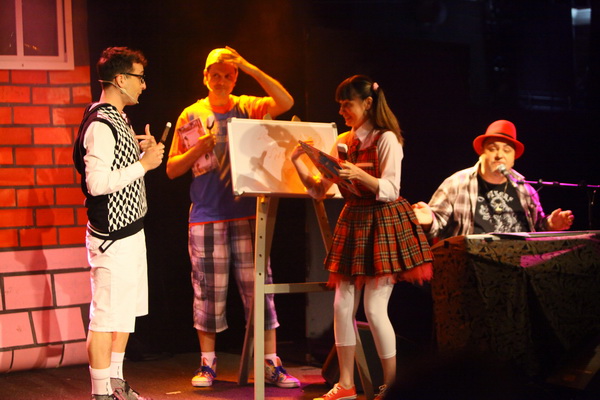
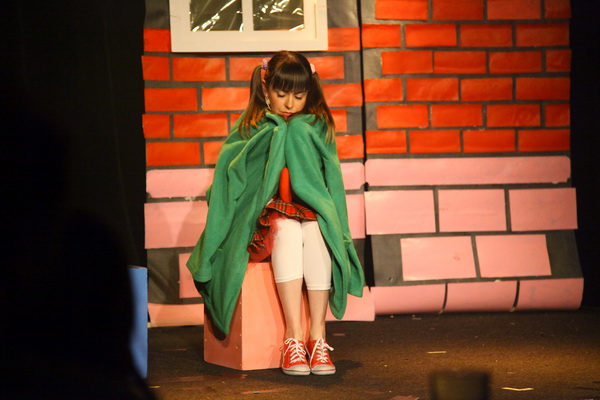
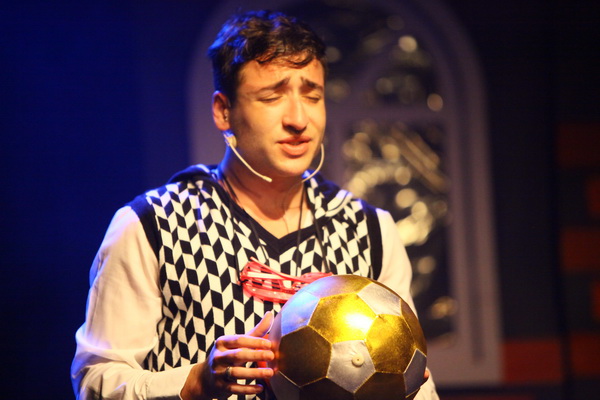
The Premiere Of Children’s Musical “In The Class With Marshmallow”

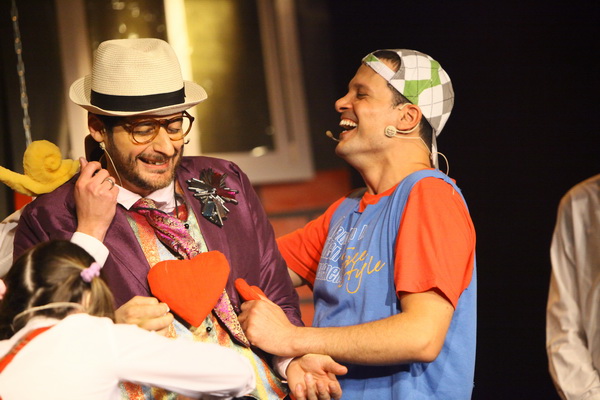
On May 20, 2012, the club “Zappa” in Tel-Aviv held the premiere of the children’s musical “In The Class with Marshmallow,” created by our friends, played by our actors, to the music of my student Arkadi Duchin.

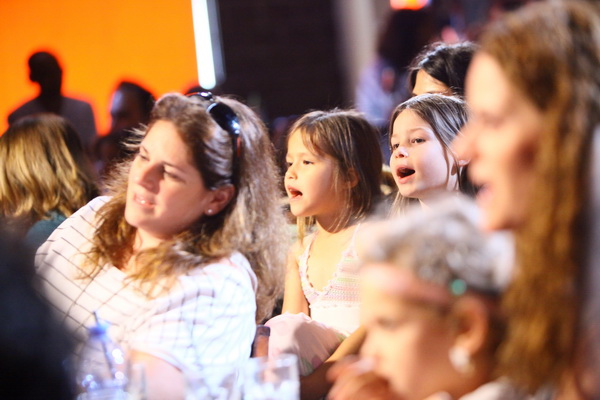
More than 300 people laughed, sympathized, sang songs together with the actors, and most importantly, became closer to each other. We hope these performances will become a good tradition, carrying the spirit of unity to children and grown-ups.

[78588]

A Look At The Family From The Height Of Global Nature

Dr. Michael LaitmanToday, the happiness of man depends on his relationship with the environment, on whether he finds his proper place in society. And so we see that gradually a person leaves the little family unit.

At first all of life was connected with family, not only women, but men as well. The husband would leave to some factory in the morning to return in the evening to his wife, children, and the household, and all of life was revolved around it.

But this pastoral idyll ended. We left our homes for the wide world, began travelling and experiencing the world. On the other hand, thanks to modern means of communication, this world has begun entering our homes. As a result, we all ended up being interconnected through industrial, economic, and financial relationships. The circle closed, and all of us, both men and women who want to connect, must unite and through this connection, return to the familial connection, but on a new level.

For this to happen, everyone should examine: where we live, in what state, in what kind of world do we find ourselves, why do certain processes take place in the world, and what do we need to do? In what way does nature move us forward, giving us no opportunity to resist? Then, we will see that we need to establish tighter connections through media and specialized education.

In the end, we who once headed for the world, freed from home and family ties, will return back home free and independent. Once again, we return to a more quiet and slower-paced life, in connection with each other, but in a different form. Each of us will remain free, and based on this freedom, understanding, and vision of the future, we will establish for ourselves a connection between all people around the Earth and within each family.

Man suddenly sees that family offers meaning; there are great benefits and a better life in a family. Then, he will find a partner close to him in this new spirit that he has acquired based on integral education, and he will re-build the family. [Read more →]

Who Are We Raising: “Masters” Or Workers?

Dr. Michael LaitmanA person should be constantly careful because at any moment, as the sages say, he can tip the scale not only in his favor but also in favor of the whole world. But this doesn’t mean that we can’t make mistakes. Today we go through the phase of preparation and of course we may make mistakes.

If you make efforts and make mistakes, it is normal. During the preparation period a person doesn’t correct anything yet, but only prepares his desires for correction. This is also what we teach children. We don’t demand any real work from them, which they are unable to do yet. We don’t assess them according to the results, but according to what they have learned. For example, if we give a child a toy and he takes it apart and breaks it, it is natural for him, and although the toy is broken he still learned something from it. He may discover that there is nothing inside it, or that there is a spring; the child has learned something and this is the main gain.

You don’t even punish a ten-year-old for things that a grown-up may go to jail for. During the phase of preparation a person is not expected to reach any real results. The main thing is to prepare oneself for correction and to advance, even by the corruptions that you summon and discover. This is the principle of learning. This is why traditional teaching in our schools and universities is futile; a person is not allowed to make mistakes. Good grades and high achievements are expected of him and he doesn’t think about the essence of the material, about how to put together the materials that are presented to him ready made. No, he has to get a grade and all the rest doesn’t interest him.

So it isn’t a preparation for something greater any more. The education system produces people who don’t know how to think.

Actually in the preparation phase, in the process of learning, one thing should be expected from a person: to absorb as many good and bad things as possible, to constantly rise and fall. His level of preparations should be assessed and not how much he knows. It doesn’t matter if he breaks something on the way. A person counting on a lucrative profession is not a master of anything. A real master works only for the “sake of art.” The pay doesn’t interest him. A person who really wants to become an expert in a certain field should only connect with the material he will work with, study it, and penetrate it. In order to do this, he has to break the raw materials and sink into this breaking himself, into the depth of the raw material.

This is a totally different method of teaching and educating, a method that is opposite from the current method. There are no grades, because during the preparation there is nothing to give grades for. There is also no reward for the future results because otherwise a person desires the reward.

In the world, however, people prefer something that promises a reward. In the last 30-40 years people have become very limited and cannot find solutions even to small crises. This is because they don’t have a creative approach to learning. The person was not built from the shattering so that he can really be complex and multifaceted.
[73079]
From the 3rd part of the Daily Kabbalah Lesson 3/19/12, The Study of the Ten Sefirot

Related Material:
Bringing The Light To The Education System
In Addition To The Right Words There Must Be The Right Intentions
The Solution To The Problems Is Transforming The Schools

Generation Net: The Youngsters Prefer Their Virtual Lives To The Real World

Dr. Michael LaitmanIn the News (from Daily Mail): “Children are often happier with their online lives than they are with reality, a survey has revealed.

“They say they can be exactly who they want to be – and as soon as something is no longer fun they can simply hit the quit button.

“Around 47 per cent of children said they behaved differently online than they did in their normal lives with many claiming it made them feel more powerful and confident.

“[Psychotherapist Peter Bradley said:] ‘These findings suggest that children see cyberspace as detachable from the real world and a place where they explore parts of their behaviour and personality that they possibly would not show in real life. We can’t allow cyberworlds to be happier places than our real communities, otherwise we are creating a generation of young people not functioning adequately in our society.’

“‘We were alarmed by the number of risks being taken by teenagers whilst online,’ he said. ‘Safe online behaviour is taught in schools, but teenagers seem to be unable to relate the risks to themselves.’”

My Comment: Development cannot be stopped, and thus only by correcting a person can we make cyberspace useful. Everything rests on the integral upbringing.

In general, humanity is in transition to virtual space. It is moving away from the carriers of physical sensations, energy, and information and entering the space of forces and qualities. Matter will gradually lose its firmness in our sensations until it disappears as an illusion.
[72988] 

Related Material:
Teenage Problems
Lie On The Outside Or Truth On The Inside
The Virtual Space For The Inner Connection