
Entries in the 'Torah' Category

There Are No Family Dynasties In Kabbalah

There Are No Family Dynasties In KabbalahQuestions I received on Rav Ashlag’s descendants and how to get one’s family involved in Kabbalah studies:
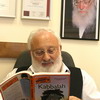
Question: Are Rav Ashlag’s descendants involved with your center?

My Answer: No.

Question: Where do they live?

My Answer: Mostly in Bnei Brak.

Question: Do they carry on their father and grandfather’s teachings in their own way?

My Answer: No.

Question: What do they think of you carrying on their father’s teachings?

My Answer: I’m not interested in what they think, because I received instructions from my Teacher.

Question: Are your wife and children involved?

My Answer: Yes. My son is in charge of book publication and distribution around the world (with the exception of Israel and Russia). My eldest daughter has a PhD in biology and is married to the manager of our Russian dissemination department. My youngest daughter is doing her dissertation in Kabbalah and is about to be married to my student. I am sure that my grandchildren will also follow this path because they live in this environment at home. My grandson watches lessons together with my son every day. Besides, their time will be the time of humanity’s spiritual development.

Question: How do we involve our spouses and children?

My Answer: Lovingly. “There is no coercion in spirituality.” Kabbalah is not a religion – there is no persuasion, intimidation, or convincing. Love is the only means to show them that the correction of the soul is the best possible thing and it’s necessary to all.

It is written, “The Torah is not inherited.” Every person realizes it within to the extent of his desire and efforts. This is how one reveals the Torah, the Upper Light, or the Creator within. Moreover, history shows that the spiritual heirs of the great Kabbalists were usually not their physical heirs.

Related Material:
Laitman.com Post: You Can’t Teach Anyone Through Force
Laitman.com Post: To Be Born a Kabbalist
Laitman.com Post: Connected Through the Worlds
Shamati #145: “What Is Will Give Wisdom Specifically to the Wise”

You Are Welcome to Help Yourself

You Are Welcome to Help YourselfQuestions I received on different projects people would like to see completed by our Kabbalah Academy:

Question: Why doesn’t your website have all the chapters of the Talmud Eser Sefirot, and where can I find the entire Talmud Eser Sefirot in English?

My Answer: All of the translations are done by our friends. This is an enormous job, and in order to accomplish it we would need a whole group of people to work on it full time. We just don’t have the funds to make this happen. Whoever considers this project a priority is welcome to finance it, and we can provide the workers who can complete this project.

Question: Is it possible for your site to display a map of the world showing all the participants of the virtual friends’ gatherings in real time, represented by blinking dots on the map?

My Answer: If someone can create this map, then we will be happy to display it on our site. There are many good projects, but there aren’t enough funds from the Maaser nor people who can work to complete all the projects. You’re welcome to help us in both ways, or try to do it on your own.

Question: The books that help correct us are the books of Ari, Baal HaSulam, and Rabash. When will these books be available in English?

My Answer: When we have the people and the funds for it. You’re welcome to help (yourself)!

Related Material:
Laitman.com Post: Whose Money Supports the Existence of the Kabbalah Academy?
Laitman.com Post: The Cycle of Descents and Ascents, and the Correction of the Maaser (Advanced)
Laitman.com Post: Life Goes On and It’s In Our Favor
Laitman.com Post: Hello from the Black Sea Resorts
Laitman.com Post: Worldwide Map of Bnei Baruch
Help Share Kabbalah
Spreading The Wisdom of Kabbalah

On the Men and Women Inside Us

On the Men and Women Inside UsWhen it comes to being persistent, the men have something to learn from the women. Women never cease asking – how can they be equal to men? The sensation of inferiority subconsciously weighs down on them. It comes from the “Creator’s curse” described in the Torah. Hence, it is present in every woman and she feels it in everything.

In spiritual work, our desires are “the woman within us,” whereas the intentions of bestowal that we have to acquire over these desires are “the men within us.” Our “inner women” have to desire to acquire their “inner men,” to unite with them and give birth to sons – the corrected souls filled with Light!

Related Material:
Laitman.com Post: Men, Women, and the Soul’s Correction
Laitman.com Post: Spiritual Labor Pains and the Future of Kabbalah (Advanced)
Laitman.com Post: Woman = Desire
Kabbalah & Relationships – Equality Between Men and Women: Good or Bad?
Kabbalah & Relationships – Kabbalistic Texts Contain a Unique Quality that Ensures a Successful Partnership

The Book of Zohar. Chapter “Who Is This?”


The Book of Zohar. Chapter “Who Is This?” (abridged)

169. Rabbi Elazar opened (the way for the Light into his Kli) and said (revealed what was discovered), “Who is this coming up from the wasteland?” WHO IS THIS (MI ZOT) is the common ground of the two worlds, Bina and Malchut, which are bound together. COMING UP – coming up to become the “Holy of Holies.” For MI is Bina, called the “Holy of Holies.” And she joins with ZOT (Malchut), so that Malchut could come up and inherit THIS, to become a bride (of the Creator) and enter (together with Him) the bridal canopy (the common Screen).

170. She comes up from the wasteland (exile, the darkness of this world) of the soft utterance of lips, as it is written in Song of Songs, “And your mouth is comely.” This is because the Hebrew word MIDBAR (desert/wasteland) is derived from DIBUR (speech). It is written that the mighty forces strike Egypt (man’s egoism) with all the plagues of the wasteland (lack of fulfillment), for the Creator did not create souls in the wasteland (emptiness and darkness), but in settlements (opportunities to fulfill themselves).

171. He asks: “How does Malchut ascend in speech?” And he replies: “When man first awakens in the morning (when the Upper Light begins to shine from the darkness), and opens his eyes (becomes aware of the world, the goal, and the path), he must bless his Creator (for the property of bestowal that he has received, for acquiring a soul). How is he to bless Him? The way it was done by the first (those who have acquired souls) Hassidim (those who have acquired the Light of Hassadim – the property of bestowal): they would prepare a vessel of water (the property of bestowal, Bina) beside them (with their uncorrected desires) from evening (in spiritual darkness), so that when they woke at night (due to the Upper Light that came to them), they would wash their hands at once (correct their desires “to receive” to desires of bestowal), and would rise (in all the thirty Sefirot of the soul’s height) to study the Torah (to correct their desires), having blessed it (for this property of correction).

When the rooster (the desire for the Light, for the property of bestowal) crowed, precisely heralding midnight (the initial point of correcting one’s desires), the Creator was with the righteous (those who desire to correct themselves) in the Garden of Eden (Malchut that rose to Bina). And in the morning (the Light shines, and hence) it is forbidden to perform a blessing with unclean hands (with the desires to receive).”

172. For when man is asleep (when spirituality is concealed), his soul leaves him (he cannot feel it). And as soon as his soul (the property of bestowal) departs from him, the impure spirit (the property of reception) replaces it at once, and it fills his hands (desires) and defiles them (with egoism), and hence it is forbidden to utter a blessing without washing one’s hands (correcting one’s desires).

173. But woe unto those who do not beware and do not guard the Creator’s glory, for they do not know the foundation of the world.

Related Material:
Baal HaSulam Article: “A Speech for the Completion of the Zohar”

The Book of Zohar. Chapter “Among All the Sages of the Nations of the World, There Are None Like You”


The Book of Zohar. Chapter “Among All the Sages of the Nations of the World, There Are None Like You” (abridged)

161. Rabbi Elazar said, “It is written: ‘Who would not fear the King of the nations of the world!’ What kind of praise is this?” Rabbi Shimon replied: “This has been said, but one should not understand the verse, ‘For among all the sages of the nations of the world, and in all their kingdoms, there are none like You,’ in its simple, literal interpretation. This is because it naturally gives rise to evil intentions of sinners. Therefore, their folly must be clarified.

A philosopher came to me and said, “You say that your Creator governs the entire Heavens, and that all the Heavenly hosts are unable to attain Him, nor come to know His dwelling place. However, this does not add to His greatness, as it is written, ‘among all the sages of the nations of the world, and in all their kingdoms, there is none like You.’ What kind of a comparison is this when the Creator is compared to man, who is nothing?’”

162. Furthermore, you claim, as your Torah says, that “There had not risen a prophet since in Israel like Moshe.” There are none in Israel, but there is one among the nations of the world! So I claim the same: there is none like You among all the sages of the nations of the world, but among the sages of Israel there is one like You. However, if there is one like Him among the sages of Israel, then He cannot be the Supreme Ruler.

163. Rabbi Shimon said to him, “You object correctly that there are those among the sages of Israel who are similar to the Creator. For the Creator resurrects the dead back to life, yet Eliyahu and Elisha came and resurrected the dead back to life! The Creator causes rains to fall, yet Eliyahu came and abolished rains! The Creator created the Heavens and the earth, yet for Avraham the Heavens and the earth were revived.”

164. “The Creator governs the sun, yet Yehoshua came and stopped it. The Creator issues His decree, yet Moshe immediately issues a decree of his own, and it is carried out. The Creator wishes to punish, and the righteous of Israel annul His verdict. Moreover, He bid us to closely follow His ways and to be like Him in every way.” The philosopher then went and became Israel, and lived in the village of Shachalayim, and they called him Yosi HaKatan (Little Yosi). He studied the Torah a great deal, and was among the sages and the righteous of that village.

165. And now the time has come to take a closer look at this verse (to understand the inner essence of it). It is written that all the nations of the world are nothing before the Creator. Yet, how does this exalt Him? Hence, it is written: “Who sees the King of the nations of the world?” Yet, is the King of the nations of the world also not the King of Israel? The Creator wishes to elevate Israel (the property of love and bestowal toward others, similarity to Himself); this is why He is called everywhere “the King of Israel” (in accordance with man’s intention towards the Creator: Israel = Isra-El = straight to the Creator). The other nations of the world (egoistic intentions) say (about man) that they have another King up in the Heavens (egoistic goals), for it seems to them that He governs only them, and not us (they claim that the governance over the property of reception and the property of bestowal, seeing as they are opposite, does not descend from a single Upper Force).

166. It is written: “Who would not fear the King of the nations of the world?” That is, their Supernal King is there to threaten and persecute them, and do with them as He pleases (so strictly does the Creator manifest in egoistic desires). Hence, He should be feared. And all fear Him, Above and below. For it is written that among all the sages of the nations of the world (the angels that rule over these nations) and in their Kingdoms (Above) there is none like You. There are four Kingdoms Above that rule over all the nations of the world (the universal egoism, so as to bring it to correction) according to the Creator’s will. And there is no one who can do even the smallest action without His personal instruction (because the end goal determines every action). The sages of the nations of the world are the forces that rule them from Above, and all the wisdom of the nations of the world comes from these rulers. “In all their Kingdoms” means that the Creator’s will rules over them.

167. Yet, among all the sages of the nations of the world and in all their kingdoms, who among them can do it if not You, who will do it better than You! For You excel over them all in both properties and deeds. Hence, it is written: “There is none like You.”

168. Rabbi Shimon (joyous over the revelation that everything stems from the Creator) said to his friends: “This wedding (unification of souls with the Creator) must be a wedding for all of you, and each of you should bring a gift (his own part in the common Malchut) to the Bride.” He said to Rabbi Elazar, his son: “Present the Bride (Malchut) with a gift, for on the following day Zeir Anpin will look as he enters the wedding canopy (the common Screen with Ohr Hozer) at the sound of these songs and praises of the sons of the wedding canopy (the souls exiting exile into adhesion), who stand before the Creator.”

Related Material:
Shamati 171: “Zohar, Amor”

Spiritual Sex


A question I received: Originally Adam had only one woman, Eve. Will we return to monogamy when corrected? Or will we not care when we are corrected?

My Answer: Sexual union in our world comes from the spiritual union between the Upper Light and the soul, called “Zivug de Hakaa” by means of a screen. In this spiritual union between the soul and the Creator (the Kli and the Light), the Creator or the Light is the male part which bestows, and the soul or Kli is the female part which receives. In the process of correction the soul (Kli) acquires the property of bestowal, and then it is ready to accept the Light in order to satisfy the Creator’s (the Light’s) desire “to bestow.”

The process of union (merging, Zivug – spiritual coupling) happens in the common desires of both “to fulfill the other with pleasure,” to feel pleasure only to the extent that will give pleasure to the other partner. Hence, what happens is a constant comparison of common desires and intentions (in the Rosh of the Partzuf, before reception inside its Toch), which becomes expressed in our physiology as the movements of sexual intercourse, preceding the outpouring of the Light of Hochma (Ohr Pnimi, semen) into the soul (into the Kli, from the Rosh into the Toch of the Partzuf).

These alternating and progressive mutual movements are meant to create a complete desire in each spiritual partner, by way of interrupting and resuming contact. This creates the possibility of wholesome pleasure: when this level is attained, the Light passes from Peh to Toch – the pleasure enters the desire, as written in the Torah: “As an arrow hits the desired target at the desired time, in the desired woman, and in the desired place.”

Thus, when one’s soul attains full correction, one views sex as the physiological expression of the spiritual connection. And if there is no spiritual connection, then there is no incentive or reason for a bodily connection.

Related Material:
Laitman.com Post: There’s no sex here!
Laitman.com Post: Concentrate on Intentions, Not on Physical Actions
Talks: Kabbalah About Sex
Kabbalah & Relationships – “Why Are We So Preoccupied With Sex?”

The Book of Zohar. Chapter “The Night of the Bride,” Part 2


The Book of Zohar. Chapter “The Night of the Bride,” Part 2 (abridged)

139. Thus, “the Heavens declare the work of His hands.” These are the friends who have united in the bride (Malchut) by studying the Torah on the night of the holiday of Shavuot. They are all participants of the covenant with her, and are called “the work of His hands.” And she praises and notes each and every one of them. What is Heaven, firmament? It is the firmament, where the sun, the moon, the stars, and the signs of fortune (zodiac) are located. This firmament is called the Book of Remembrance, and it declares and records them, so they shall become the sons of His palace, and He will fulfill all their desires.

140. Day after day brings Omer – a sheaf. The holy day out of those days (Sefirot) of the King (Zeir Anpin) praises the friends, who study the Torah on the night of Shavuot. They say to each other, “Day after day shall bring a sheaf,” and praise it. And the words “night after night” refer to all the degrees, Sefirot of Malchut, that reign in the night, praise one another by each receiving from a friend, from another Sefira. And the state of complete perfection makes them beloved friends.

141. Does he speak of the others in the world who do not obey the Creator, and whom He does not wish to hear? But they made lines through all the earth, that is, these things make a line out of those that reside Above and out of those that reside below. From the first – firmaments are made, and from the second, from their return – earth. And should you say that they revolve around the earth in one place, it is said that they are also at the end of the world.

142. And since out of them Heavens were created, who resides there? He returned and said, “There is a shelter for the sun in them. This is the holy sun, called Zeir Anpin, and it dwells and resides there, and adorns itself with them.”

143. Since Zeir Anpin resides in those firmaments and clothes in them, he emerges like a bridegroom out of his wedding canopy, and rejoices and races along these firmaments, and exits them and enters, and races toward a tower in a different place. He emerges from one end of Heaven, from the Upper World, from the Highest place, from Bina. And his season – where is it? It is the opposite place below, i.e., Malchut, which is the year’s season that forms all the ends and binds everything – from Heaven to this firmament.

144. There is nothing hidden on account of the year’s season and the phase of the sun that revolves in all directions. And there is no concealment, i.e., not a single Supernal Degree is hidden from him, for all were bound together and everyone appeared before him, and none could be concealed from him. Thanks to him and thanks to them he returned to them, to the friends, in the phase of complete return and correction. All this year and all this time is for the Torah (to study it), as it is written: “The Creator’s Torah is perfect.”

145. The word HaVaYaH is written six times, and there are six verses from “the Heavens declare” and until “The Creator’s Torah is perfect.” And this is the secret of the word BERESHEET, which consists of six letters: “THE CREATOR CREATED ET (THE) HEAVENS AND THE EARTH,” six words in all. The other sources of the verse from “The Creator’s Torah is perfect” and until “they are better than gold” correspond to the six utterances of the name HaVaYaH in them. The sources from “the Heavens declare” through “The Creator’s Torah is perfect” are for the six letters in the word BERESHEET, whereas the six names are for the six words from “the Creator created” through “the Heavens and the earth.”

146. As they were sitting and talking, Rabbi Elazar, the son of Rabbi Shimon, entered. He said to them: “Certainly, the face of the Shechina has come, hence I called you Pniel (Pnei–face + El–Creator = the Creator’s face),” for you have seen the Shechina face to face. And now that you have attained Benayahu Ben-Yehoyada, it certainly refers to Atik, the Sefira of Keter, just as everything else that occurred afterwards, as it is written in the Torah: “And he slew the Egyptian.” And he who is concealed from all – is Atik.

147. The words, “He slew the Egyptian” are explained in another place, i.e., at a different degree, in a different way. He opened and said, “He slew the Egyptian, a man of good stature, five cubits high.” All of this refers to the same secret. This Egyptian is the one who is well-known and is described as “very great in the land of Egypt in the eyes of the Jew,” for he is great and honored, as that old man had already explained.

148. This case was examined at the Divine Assembly. “A prominent man” and “a man of good stature” are the same, as they constitute Shabbat and the bounds of Shabbat. As it is written: “You shall measure it from outside the city.” It is also written, “You shall not impede limitations in measure.” Hence, he was a man of good stature. Precisely such, from one end of the world to the other. Such is he, Adam, the first man. And should you disagree, referring to the written “five cubits,” know that these five cubits extend from one end of the world to the other.

149. It is, as is written, “like a weaver’s beam,” as the Divine staff that was in his hand, which reveals by the secret name, confirmed in it by the light of the letter combinations that Betzalel and his disciples engraved, called “weaving,” as is written, “He filled them and others, and BOUND them.” And that staff – within it shone a secret name, inscribed on all its sides by the Light of the sages, who confirmed the secret name in forty-two properties. And the rest of what is written from here onward is similar to what the old man had already explained. Happy is his lot!

150. Be seated, dear friends. Be seated and let us renew the correction of the Bride on this night, for whomever joins her on this night shall be guarded Above and below in the coming year. And this year shall pass over him in peace. Such people are described in the verse: “The angel of the Lord stands round those that fear Him, and delivers them. O taste and see that the Creator is good.”

The Night of the Bride” – full commentary

Related Material:
Shamati #89: “To Understand the Words of the Holy Zohar”

The Book of Zohar. Chapter “The Night of the Bride,” Part 1


The Book of Zohar. Chapter “The Night of the Bride,” part 1 (abridged)

125. Rabbi Shimon was sitting (Katnut) and studying the Torah on the night (absence of the spiritual Light, Galut – exile from spirituality) when the Bride, Malchut, unites with her husband, Zeir Anpin (precisely in Galut). And all the friends (the souls, parts of Malchut) present in the bridal chamber (Malchut of the world of Atzilut) on that night, the eve of the holiday of Shavuot (Pentecost, the end of Galut), must stand together with the bridegroom (ZA, the Creator) under the Huppah (wedding canopy), and be with him this whole night, and rejoice (over being filled with Light) with him in the corrections of the Bride (the common soul), i.e., study the Torah, then Prophets, then Holy Scriptures, and finally the wisdom, for these corrections are the Bride’s adornments (the Light of Hassadim, into which the Light of Hochma clothes). And the Bride (all the joined souls) receives corrections (in the property of bestowal), adorns herself with them (obtains the Light of Hochma), and rejoices with them all of that night (the end of spiritual exile). And on the next day, on the holiday of Shavuot (the receiving of Light), she only comes to the Huppah (Ohr Hozer, Hassadim) together with them (the souls of those who participated in her correction). And her friends, who studied the Torah (their correction) the whole night (of the exile), are called the sons of the Huppah. And as she approaches the Huppah, the Creator asks about them, blesses and adorns them with the Bride’s adornments (the corrections of the Light of Hassadim). Happy are those who merit this!

126. This is why Rabbi Shimon and all of his friends stayed up that night, and each of them renewed the Torah again and again. Rabbi Shimon was joyous, and so were his friends. Rabbi Shimon said to them: “My sons, how blessed is your lot, for it is you who shall accompany the Bride tomorrow to the Huppah, for all those who correct Her and rejoice in Her this night shall have their names recorded in the Book of Remembrance. And the Creator shall bless them with seventy blessings and adornments of crowns of the Upper World.”

127. Rabbi Shimon opened and said, “The Heavens declare the Creator’s greatness. I have already explained this, but when the bride awakens to enter the Huppah on the following day, with all the friends who rejoiced with her through that night, she rejoices with them, corrects herself and shines with her adornments.”

128. And on the following day, a multitude of masses, hosts, and legions join her. And she, together with all these masses, hosts and legions, awaits all those who corrected her by studying the Torah on that night. This is so because Zeir Anpin unites with Malchut, and she sees her husband, and it is said: “The Heavens declare the Creator’s greatness.” “The Heavens” alludes to the Bridegroom (ZA), who enters the Huppah. “The Heavens declare,” i.e., shine, like the luminescence of a sapphire, upon the entire Malchut, from end to end.

129. The Creator’s glory = EL – is the bride, Malchut, called EL, as it is written: “EL rages each day.” She is called EL on all the days of the year. And now, on the holiday of Shavuot, when she already entered the Huppah, she is called GREATNESS and she is called EL, greatest of the great, luminescent out of the luminescent, dominion over dominions.

130. The hour when the Heaven (ZA) enters the Huppah and shines upon Malchut, all of her friends, who corrected her by studying the Torah, are known by their names, as it is said: “The Heavens declare the work of His hands.” “The work of His hands” refers to the members of this covenant, called “the work of His hands.” As you say: “Confirm for us the work of our hands,” which is the mark of the covenant, imprinted on man’s body.

131. Rabbi Hamnuna-Saba then said as follows: “Do not let your mouth cause your body to sin,” i.e., one must not allow his mouth to get close to evil and be the cause of sin for the sacred flesh, which bears the mark of the holy covenant with the Creator. If he does so, he shall be dragged to hell. And the ruler of hell, called Domeh, stands at the gates of hell with hundreds of thousands of angels, but he is forbidden to approach those who have kept the holy covenant in this world.

132. When this happened to King David, fear enveloped him. Right then, Domeh ascended before the Creator, and said: “Master of the world, it says in the Torah: ‘And the man that commits adultery with another man’s wife…’ David broke his covenant, is it not so?” The Creator replied to him: “David is righteous, and his holy covenant remains pure, for it is known to Me that Bat Sheva was destined for him since the creation of the world.”

133. Domeh said to Him: “Master of the World, what is revealed to You is concealed from him.” The Creator answered: “Whatever David did was done with My permission. For no man goes to war without first giving his wife a Get (document of divorce).” Domeh then said: “But if this is so, David should have waited three months, which he did not.” The Creator replied: “This extension is only necessary to make certain that the woman is not pregnant from her previous husband. But it is known to Me that Uriah never went near her, for My Name is imprinted in him as testimony. Indeed, Uriah is OhrIah, the Creator’s Light, though it is written Uriahu = Ohr + i + a + hu (Yod-Hey-Vav), without the last Hey, Malchut, which proves that he did not use Malchut.”

134. Domeh said to Him: “Master of the World, this is exactly what I have said: if You knew that Uriah had never laid with her, then who revealed it to David? He should have waited three months. And if You will say that David knew that Uriah had never laid with her, why did he send Uriah to his wife, saying: ‘Go down to your house, and wash your feet?’”

135. He replied to him: “Of course, David did not know, but he waited more than three months, as four months had passed. As we have learned, on the 15th day of Nissan, David ordered all the people of Israel to prepare for war, Yoav – on the seventh day of Nissan. They conquered the lands of Moav and remained there for four months, until he went to Bat Sheva in the month of Elul. And on Yom Kippur (Day of Atonement), the Creator forgave him his sin. But there are those who say that David dispatched his orders on the seventh day of Adar, the troops assembled on the 15th day of Iyar, he went to Bat Sheva on the 15th day of Elul, and on Yom Kippur the Creator forgave him and spared him from death at the hands of the angel Domeh.

136. Domeh said: “Master of the World, I have nonetheless one claim against him: why did he open his mouth and say: ‘The Lord is righteous, for a mortal does so,’ thus condemning himself to death. Hence, I have the power to bring death upon him.” The Creator replied to him: “You are not allowed to bring death upon him, for he has repented and confessed: ‘I have sinned before the Creator,’ even though he did not sin. But he did sin in one matter – the killing of Uriah. I have recorded his punishment, and he had received it.” Then Domeh immediately gave up his complaints, and returned, despondent, to his place.

137. And David said to this: “Were it not for the Creator’s help, Domeh had nearly claimed my soul.” “Were it not for the Creator’s help” means “had the Creator not been my guard and guide against the angel Domeh.” “Nearly” means that only the distance as thin as a thread separated me from the other, impure side, so close was I from Domeh dragging my soul to hell.

138. Therefore, man should be careful not to say what David said, for one cannot say to the angel Domeh that “It was an error,” as it was with David, when the Creator won the dispute against Domeh. “Why should the Creator be angry over your word,” i.e., for what you have said. “Destroyed the work of your hands,” i.e., the sacred flesh, the holy covenant, which you have broken, and are therefore to be dragged to hell by the angel Domeh.

The Night of the Bride” – full commentary

Related Material:
Shamati Article #163: “What the Authors of the Zohar Said”

What Came First, Religion Or Kabbalah?

What Came First, Religion or Kabbalah?A question I received: I strongly believe in the methods and wisdom of Kabbalah, especially after struggling with my old faith and then struggling with atheism and other beliefs. I can’t explain it – there is something in me that’s 100% sure that Kabbalah is the right way. Still, I have doubts, not about Kabbalah itself, but about its relation with our corporeal world.

For example, if Kabbalah came before all religions and religions are inspired by Kabbalah, and this is why we find some similarities between them, then why do historians say that Hinduism was founded before the birth of Abraham, historically speaking? Can you explain this please?

My Answer: There are only three religions: Judaism, Christianity and Islam, and they all appeared after “the destruction of the Temple” – after Israel fell from “love for one’s neighbor” to “unfounded hatred.” First Judaism emerged, then Christianity, and then Islam.

Of course, different beliefs existed even before that period, and even before Abraham, as well as before Adam. Abraham himself, as well as his father Terach, were priests in Babylon. And various beliefs existed not only in Babylon, but all over the world.

The Torah, on the other hand, only talks about the spiritual aspect of the world. For example, it talks about the Great Flood, but this flood didn’t happen in the entire world. Likewise, there were people who lived before Adam and believed in different forces and images. The Earth has been around for billions of years, and humans appeared hundreds of thousands of years ago. However, the Torah talks only about humanity’s spiritual development – about 6000 years, starting with the first correction (starting with Adam – one who is similar to the Creator) and until the last one.

Related Material:
Laitman.com Post: How Can Religion Come Out of the Crisis It’s In?
Lesson: The Difference between Kabbalah and Religion
Baal HaSulam Article : “The Essence of Religion and Its Purpose” – Selected Lessons
Kabbalah Today Article: “Love Is the Way”

There Is No Time In the Torah


A question I received: I don’t understand where we are in the Torah at the moment. We know that it speaks only about ourselves, and that the historical path is really a spiritual one that we all must go through. At different times you say that we are in different time periods of the Torah:

  • In this entry we are Noah before the flood;
  • In entries like this you talk about how we are at the foot of Mt. Sinai and we must come together to rise above it, which happens years after the Flood;
  • And Mt. Sinai is after the Exodus from Egypt (or our egoism), so shouldn’t we have to do that first, before climbing the mountain?

So where are we exactly?

My Answer: Everywhere. You’ll find confirmation of this in Baal HaSulam’s and Rabash’s articles, because there is no time in the Torah – it talks about all of man’s states. We perceive our world within the framework of place-time-movement, but these three coordinates do not exist in the spiritual world!

This is why Kabbalah calls our world unreal or a dream. We perceive it through the part of Malchut that’s most detached from the Creator and has opposite qualities to Him. Each of our states may include several states described in the Torah, from different sections (times).

Related Material:
Laitman.com Post: Time – Illusion or Reality?
Laitman.com Post: The Machsom Can Be Crossed Individually and As a Group
Shamati Article #50: “Two States”