
Entries in the 'Q&A' Category

“How Is The New COVID-19 Disease Going To Affect The World?” (Quora)
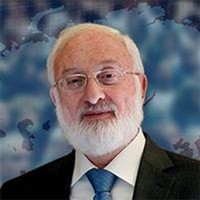
Dr. Michael LaitmanMichael Laitman, On Quora: “How is the new COVID-19 disease going to affect the world?“

Before we discuss how the COVID-19 disease is going to affect the world, it helps to be aware of the deeper causes behind its appearance, and then to understand how we can best use this period of social distancing we have been placed in to impact a positive shift in society.

While there are many theories as to what caused the coronavirus, the deeper cause was our imbalance with nature. We were in an egoistic-competitive rat race, where we each sought self-benefit at the expense of others, and it was getting out of hand.

If the coronavirus would not have arisen, then we would have led ourselves to a man-made crisis. I think another world war would not have been out of the question.

Therefore, the coronavirus crisis emerged to save us from a much more severe crisis. As strange as it might sound, it came mercifully from nature in order to isolate us from the exploitative and manipulative world we created, as it washes away the waste from that world. Similar to how we had been dumping plastic and radioactive waste into our oceans, we had also been polluting human society.

Photo by Tj Holowaychuk on Unsplash

Now, while we are in this unique era brought about by the pandemic, we have an opportunity to create a new and upgraded world, one where positive human connections become the leading value.

While under stay-at-home orders, we have time and space to review the way we live our lives. Reviewing the way we used to live our lives, if the coronavirus would not have struck us, we would have been driving ourselves faster and faster toward an oncoming wall.

Therefore, what should we be looking forward to when we exit this era?

Should we be waiting to head back to our 10-to-12 hour work days, traffic jams, pollution, debt, and myriad other personal, social and ecological problems?

Or would we be wiser to use this transitional era in order to help each other make a big step into a new world: to think about how we can improve human connections, replacing our past egoistic and exploitative relationships with altruistic and mutually considerate ones?

Without philosophizing too much about how the coronavirus will affect the world, we would use our current physical detachment from each other more beneficially if we would first internalize how to stop relating negatively to each other. We have been given time and space to achieve this.

Afterward, gradually, new situations will emerge where we will be able to connect more intensively in positive, supportive, encouraging and considerate ways.

If we succeed in upgrading our connections during this period, then when the stay-at-home orders will be lifted and the coronavirus is under control, we would also continue what we now begin: to appreciate positive human connections benefiting everyone over self-benefit.

We would then enter into balance with nature—the discovery of a harmonious world filled with delight, peace and happiness, and we would be guarded from any kinds of future pandemics and other crises.

“How Did The COVID-19 Virus Appear?” (Quora)

Dr. Michael LaitmanMichael Laitman, On Quora: “How did the COVID-19 virus appear?“

There is a deeper reason for the appearance of the COVID-19 virus than the theories currently on offer. Whether it emerged from bats, pangolins, or whether it was lab-produced, essentially any of these or other stated reasons for the revelations of the virus would still merely be consequences of a deeper causal factor: human imbalance with nature.

Nature functions as an interconnected and interdependent system that constantly guides its parts to reach the same level of interconnectedness and interdependence. It operates as a whole integrated system, considering each and every one of its details with utmost precision and care.

The still, vegetative and animate levels of nature are sustained in an instinctive and involuntary balance with nature.

The human level of nature is fundamentally opposed to nature in that it is egoistic, operating out of self-interest at the expense of other people and parts of nature.

Moreover, the more we humans have developed, the more this egoistic quality has grown, and in recent times it has reached unprecedented excesses. We developed a consumeristic, individualistic and materialistic rat-race society where we each tried to build our successes on the ruin of others.

Before the coronavirus, our overblown egoism was leading human society to states that could have been far worse than the pandemic if it had continued to be left to its own devices. The increasing tension in international relations, for instance, could have well led to a world war.

Therefore, in terms of how COVID-19 appeared, it would be wise to view it from its deeper cause: our imbalance with nature.

Also, in the social distancing conditions we find ourselves in, we would do wisely if we started learning more about how nature’s wholeness, and how we could use this unique period we are in for an upgrade of human consciousness: to become more considerate in our relationships and connections, and thus, to bring ourselves closer to nature.

Doing so would have far-reaching implications in terms of our general happiness and well-being, as we would then no longer awaken all kinds of blows that affect us on personal, social, ecological and global scales, but the contrary, we would draw nature’s positive unifying force in the new positive relationships we build with each other.

“What Does The Average Person Not Understand About The Coronavirus Pandemic?” (Quora)

Dr. Michael LaitmanMichael Laitman, On Quora: “What does the average person not understand about the coronavirus pandemic?“

Whether or not the average person understands write I will write below, here’s what I think every person needs to take away from this coronavirus pandemic:

The pandemic won’t be over with anytime soon, despite the easing of stay-at-home orders starting to take effect.
Curing the coronavirus requires a step toward more mutual consideration and responsibility among us all, from the average person to world leaders.
The coronavirus struck a blow to the egoistic-competitive rat race we were running, and over time we have calmed down our consumerist lifestyles, where it was a norm to exploit others for personal profit purposes.
I think that we can look forward to a positive future, which will be calmer than how we used to live, with more balance among each other and with nature.

Weeks and months of isolation will play their role in transforming us.

Do we really think that the moment all the restrictions are lifted, we’ll be running back to malls, filling our bags with piles of extra clothes and plastic goods, and flying to tourist destinations left, right and center again?

I think not.

One of the major takeaways from this pandemic is that we have cooled off our approaches to each other where we each aimed to self-benefit at the expense of others, and that we see a clear example of nature treating all people equally—which we would be wise to apply to each other.

Nature is working with us, trying to wake us up to the fact that we are all in the same boat, and I expect that we will come out of this pandemic with more awareness of our common status in the wider perspective of nature as a whole.

“How Will The World Be Different When COVID 19 Is Cured?” (Quora)

Dr. Michael LaitmanMichael Laitman, On Quora: “How will the world be different when covid 19 is cured?“

The coronavirus’ stubborn spread is changing the face of the planet, trampling our routines, and weaving a new picture from depths that we have yet to fully realize.

We still have our pre-coronavirus lifestyle in the back of our minds—that we will wake up in the morning, get dressed, taste our usual morning beverage, and take those same steps through our familiar urban terrain, our recognizable world of malls, stores, cafés, and restaurants.

However, we have begun to realize that perhaps we exaggerated the importance of materialistic consumption in our pre-coronavirus lives.

Now that we’ve been “sentenced” to life’s essentials, we start questioning the necessity of the excesses we were engaged in:

  • Will our lives return to the “normal” that we knew before the coronavirus, or will they assume a new form?
  • Will the close of the coronavirus era open a Pandora’s Box of long-awaited shopping and travel that we thirsted for during this period, or will we find ourselves freed from old burdens and welcome a new beginning?

Photo by Ross Findon on Unsplash

We now have time to take a deep breath in, and ponder these questions.

One way or another, we will have to get used to sitting in our homes, perhaps even working from home, and settling for little.

Also, maybe we will come out of this period with an upgrade in our attitudes to each other. For instance, maybe we would take away from the coronavirus, that as it doesn’t discriminate between people of different status, so we should also make no such discriminations.

However, coming to terms with the implications for our lives and the many mental and emotional changes will require time.

On one hand, we have a chance to decide whether the way we were living our lives should be revised in order to be better balanced with nature, while on the other hand, even if we reach such a decision, the way to do so is unclear.

At this juncture, we can make optimal use of this unique period by learning the principles of the interconnected and interdependent world we live in.

We would be wise to use this time to sharpen our awareness that we live in a single system, an integral universe, where we humans are intertwined with the inanimate, vegetative and animate life that surrounds us.

While we are interdependent parts of nature, our own nature—human nature—is self-centered, wanting to enjoy individually at the expense of anyone and anything it can get its hands on.

While we each try to serve our self-interests in an interdependent system, we look like we each pull on the same rope that connects between us all in a game of tug-of-war, and by doing so, we all end up eventually tumbling down.

Interdependence closes us in from the outside, and our self-centeredness presses up against the interdependence from the inside, and thus crisis erupts in between them.

The crisis we now experience is not due to the coronavirus but to our imbalance with nature, our lack of positive connection with each other.

In our connections with others, our egoistic nature constantly tries to serve its personal benefit over benefiting others. In order to reach balance with nature, overcome the coronavirus, and protect ourselves from future pandemics and other crises, we need to learn how to develop positive connections above our innate egos that constantly try to receive everything desirable for self-benefit alone.

Today, while we are isolated from each other under the social distancing and stay-at-home constraints, we have an opportunity to learn the principles of what it means to live in an interconnected and interdependent world.

We should thus be concerned about how to use this period in order to realize positive, considerate and healthy relationships, and how to develop an atmosphere that inspires us to give to others, benefit them, and think about them more than we consider ourselves.

Although it might seem frightening to take hold of the other end of the stick and think about others more than about ourselves, if mutual consideration and responsibility was a leading value in our society, then we would all receive a whole new sense of security, confidence and happiness likes of which we have never experienced before.

Nature is encouraging us to rise in our awareness and become integral like it is. We need only change our egoistic relations to altruistic ones, shifting our modus operandi from one of self-concern to one of concern for others.

We would then not only exit the coronavirus, but would enter a new world free from the problems of this life. We would be enveloped by a new supportive and protective force—nature’s own quality of connection, bestowal and love—and would be guided by this quality to build a perfect world.

“How Will The Coronavirus Affect The World Economy?” (Quora)

Dr. Michael LaitmanMichael Laitman, On Quora: “How will the coronavirus affect the world economy?“

To start with, after this prolonged period of the conditions that the coronavirus has placed us into, our attitude to the world will become different and there will be major changes.

We will change psychologically, and accordingly, our systems, connections and perceptions will change such that there will be no return to the pre-coronavirus world.

The post-coronavirus world will be new. Our behaviors and connections will be different to what they were before the coronavirus.

I think that we will have a better feel of what is and isn’t essential in life, and that we will value a more internal definition of connection and closeness to each other. The extent of our psychological change will determine the extent of change in our systems, the economy included.

During the coronavirus period, while we are in prolonged social distancing and stay-at-home conditions, I think that the economy should operate in an emergency-like manner: that the government provides life’s essentials to every person—food, housing, water, electricity, and various municipal services per capita. I also think that our increased focus on life’s essentials will see the fall of a lot of businesses that we have no real need for.

The more that we endure this period, the more our awareness of what is most important in life will increase. In turn, this will calm us down from our egoistic-competitive rat race that we used to run.

In terms of how the world economy will actually look at the end of the coronavirus period, I don’t think we can depict the changes in the meantime, because time has to play its role. We have been in these conditions for a little over a month. Let’s say we will be in these conditions for another six months. We cannot yet imagine the changes we would have gone through at the end of such a period.

Ideally, we would operate in more balance with nature, i.e., with more mutual consideration and responsibility. It means acting like one big family that looks at the means it has at its disposal, and how it can best allocate what it has to every member in a mutually beneficial way.

Accordingly, situations we currently see, where for instance one family member cannot afford to pay rent and another receives millions to support a personal stash of mansions and yachts would no longer make sense to us, and we would thus find ways to iron out these situations for everyone’s common benefit.

Such logic is neither socialistic, capitalistic or communistic. It is based on an understanding of nature’s laws and what nature requires of us in order for us to balance with it.

However, in order to reach that kind of economy, we would need to undergo a major change in our attitudes to each other—a shift in our priorities from self-benefit to benefiting others.

Likewise, if we make no strides in this attitude shift, we can expect no such motions to make our economy more balanced with nature.

That is why I think it is still too early to say how the economy and world will look at the end of the coronavirus period. It is like we are in a train that left its previous stop, and we’re headed to the next stop, which we’ve never visited before.

Reaching such changes requires connection-enriching learning.

Connection-enriching learning aims to improve our understanding of the interdependent world we find ourselves in today, and how today’s interdependence requires mutual consideration, responsibility, support and encouragement among all of us in order for us to survive and live satisfying lives.

Moreover, the more unemployment increases due to many unessential businesses falling, on one hand, and also due to technological means replacing human resources, on the other hand, the more we will become ready for a different economic solution to the ones we have today.

I have written extensively about my support for universal basic income as such a solution, but only on condition that a basic income is given in exchange for participating in connection-enriching learning, so that social connections become more positive and people learn how to accept, understand, and get along with everyone, as well as engage in the creation of a new atmosphere of mutual consideration, support, awareness and sensitivity. If basic income is not supplied together with such learning, then society would stagnate.

Therefore, I think that the coronavirus’ conditions will bring us closer to such an economy, even if only by better preparing us psychologically for it.

The sooner we will reach mutually considerate attitudes to each other and an economy that reflects that attitude shift, the sooner we will see less violence, crime and abuse of all kinds in society, together with increased personal and social happiness.

Ultimately, it is a question of what we value.

In Hebrew, the word for “money” (“Kesef”) has the same linguistic root as the word for “covering” (“Kisui”). Therefore, if we change the covering over our society from a consumerist value of one’s self-worth that accords to the amount of wealth, status and power one has, to one where we value not individual wealth, status and power, but people’s contribution to a positively-connected society, then we would be on our way to a world that is more balanced with nature, and thus would experience more harmonious lives.

“Can Something Like The Coronavirus Be The End Of The World?” (Quora)

Dr. Michael LaitmanMichael Laitman, On Quora: “Can something like the Coronavirus be the end of the world?“

No. There is no end of the world. Matter continually changes and upgrades, never dying.

The coronavirus, as well as other epidemics, natural disasters, and literally any form that appears negative toward us from nature, surfaces in order to ultimately bring us closer to nature.

We might think that it is absurd, because how could a problem that kills and makes so many people sick bring us closer to nature?

Photo by 🇨🇭 Claudio Schwarz | @purzlbaum on Unsplash

Nature is an interconnected and interdependent system that relates to all of its parts—the still, vegetative, animate and human—as a single whole. It does not relate to our physical bodies, but to what makes us human: our attitudes to each other.

Letting our attitudes to each other remain egoistic and self-centered, focused only on benefiting ourselves at the expense of other people and nature, awakens a negative response from nature. Blows from nature come ultimately in order to wake us up to the need to change our egoistic attitude to an attitude that is balanced with nature.

If we relate to nature’s feedback—seemingly negative phenomena as the coronavirus and myriad other blows that we endure—as a complete interconnected and interdependent system wanting and trying to bring us into balance with itself, then our correct response would be to merge our attitudes to each other in order to match nature’s integrality.

In other words, our correct response to blows from nature, especially the coronavirus, is to seek how we can better relate to one another, in order to become more unified and reach balance with nature.

Therefore, especially while we are under social distancing conditions brought upon us with the coronavirus, we would use these conditions ideally if we undertook a self-scrutiny, to reach the realization of how the coronavirus crisis came to us as a response to our imbalance with nature, and also to seek how we could use the time when we are isolated from each other in order to become more united and balanced with nature.

“If The Coronavirus Has A 95% Recovery Rate, Then What’s With All The Hype?” (Quora)

Dr. Michael LaitmanMichael Laitman, On Quora: “If the coronavirus has a 95% recovery rate, then what’s with all the hype?“

Indeed, humanity has experienced many pandemics, but nothing has ever received such a global response as we see today with the coronavirus.

The globality of the coronavirus is its uniqueness.

Photo by Martin Sanchez on Unsplash

Many millions of people die from viruses and other diseases every year. What then is the big deal with the coronavirus?

I think that it is not about the health aspect of the virus as much as it is about humanity’s reevaluation of itself.

We have no feeling of this reevaluation taking place, but this is ultimately behind our reaction to this crisis.

There is a new sense of globality around humanity today that has never existed before, and this is why our response to the coronavirus is particularly unique.

Kabbalists over the generations have pointed to our generation as the one where we would have such a sensation, and they connect it to the entrance into a new era of human connection.

“What Are Your Thoughts About Social Distancing?” (Quora)

Dr. Michael LaitmanMichael Laitman, On Quora: “What are your thoughts about social distancing?“

One of my students recently asked me, in light of the social distancing conditions brought on by the coronavirus pandemic, gatherings of up to 5,000 people were initially permitted, then 2,000 people, then 500, 100, 10, and 5. The question was: Why nature is doing this to us, and what will result from it?

Photo by Hello I’m Nik 🎞 on Unsplash

It is written, “Being scattered: for the wicked it is a benefit to them and to the world; but for the righteous, it is bad for them and bad for the world. Being gathered: for the wicked it is bad for them and bad for the world; but for the righteous, it is beneficial to them and beneficial to the world.” (Mishnah Sanhedrin, 8:5)

The social distancing conditions come as “benefit to the wicked.” We need to understand firstly what it means that we are “wicked,” and then why our scattering is ultimately of benefit to us.

The wickedness that the verse speaks of is embedded in our very egoistic human nature, which by default prioritizes personal benefit over benefiting others.

The more we develop, the more the ego grows, and in recent times it has become bloated.

Our pre-coronavirus world looked like a wild struggle for wealth, status and power, where we each tried to make our way in life by comparing ourselves with others, and always feeling deficient relative to them.

Therefore, social distancing lessens our jealously and calms down our society.

While in these social distancing conditions, we have been given a chance to become worthy of re-gathering. That is, by developing considerate attitudes to each other, to the extent of our mutual consideration, we will become worthy of coming closer together. On the contrary, the more selfish we are toward each other, then we should detach to the extent of our selfishness.

“What Do You Think The US Should Do Now In Response To COVID-19?” (Quora)

Dr. Michael LaitmanMichael Laitman, On Quora: “What do you think the US should do now in response to COVID-19?“

Not only the US, but all countries would be wise to comprehend that humanity is headed toward more and more integration, and that they should follow suit.

Photo by Nick Bolton on Unsplash

In order to progress toward increasing global connection harmoniously, we require regular learning that enriches our understanding of our nature-based connection beyond borders, and also that we humans are the most harmful element within nature that needs to learn how to stop causing harm, and start becoming more balanced with nature.

The coronavirus’ social distancing conditions provide us with time for very important introspection in this direction: We can now see how the way we related to each other before the coronavirus was getting out of hand, and that while we are in stay-at-home conditions, we can revise our connections to each other so that we come out of this period ready for more positive social relations.

Therefore, education that brings us to more positive connection is what all countries would be wise to prioritize during this period in order for us to come out to a more balanced, peaceful and harmonious world.

Together with connection-enriching education, countries should secure people’s basic needs for food and housing. Families should be provided with the same per capita, relieving everyone of the pressure to make money. Moreover, food and housing would best be provided directly, and not by transferring monetary amounts into people’s bank accounts, as it would assure that people are provided with life’s essentials, and not that they would waste it on surplus.

Unessential industries and finance should be paused in the meantime, i.e., no transactions, and no giving or paying of loans. It should all simply freeze for the time being.

By taking care of our basic needs and providing us with learning materials that aim at raising awareness of our increasingly interdependent state around the world, and how to improve our connections to each other in order to experience such a state harmoniously, then we will optimally realize the current conditions that COVID-19 has placed us into, and our exit from the pandemic would be to a much better world.

“How Has The Coronavirus Affected You?” (Quora)

Dr. Michael LaitmanMichael Laitman, On Quora: “How has the coronavirus affected you?“

Personally, it has affected me similarly to how it has affected many people around the world: by placing me into social distancing conditions.

I follow all the instructions of the Ministry of Health, and encourage everyone to do the same.

One of my students asked me, why does a Kabbalist follow the government’s instructions in such situations if Kabbalists are supposed to live above this world, in connection with the root of life?

I observed this example in my own teacher, Kabbalist Baruch Shalom HaLevi Ashlag (the Rabash). When I was with him in the Gulf War of 1991, under missile attack, I saw how strictly he adhered to the government’s instructions to stay at home.

In relation to following laws set by the government, there is a saying in the wisdom of Kabbalah, “I dwell within my people.” It means that we discover the positive unifying force of nature in the accumulation of human desires that aim at some extent of unification.

In short, I follow the government’s instructions, especially in such cases as wars and pandemics, and advise my students and anybody willing to listen to do the same.

In addition, the coronavirus has affected my organization, the Bnei Baruch Kabbalah Education & Research Institute, by placing us into a completely virtual format. We continue our daily lessons and other activities with students connected from their homes. This was no major change, since we have a system setup for virtual lessons that has been running for many years, and many students connect daily from around the world in a virtual setting, so we were well-prepared for that.

Other than the study, we are responding to the coronavirus by rigorously explaining how the wisdom of Kabbalah sees the coronavirus through many posts, articles, videos, and other means.

Essentially, we explain how:

  • the coronavirus emerged as a response to humanity’s over-inflating egoistic-competitive relations;
  • the coronavirus came to save us from a worse man-made disaster that we would have brought upon ourselves if we let our exploitative relations continue growing unabated;
  • we can expect a major long-term change in human society as a result of this period brought on by the coronavirus, one where we will calm down and become more focused on life’s essentials, and less on keeping up with the Joneses;
  • the optimal use of our current social distancing conditions is to engage in learning about how we can better understand our place in the world, where it is headed, and how we can bring ourselves into balance with nature.

I thus invite anyone who wishes to connect to us, to join our lessons (links in my Quora bio) or to visit our website where we update with materials about Kabbalah’s view on the coronavirus.

