Entries in the 'book' Category

Everyone Must Know About Kabbalah
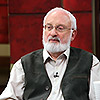
Dr. Michael LaitmanThree questions I received on explaining Kabbalah:

Question: We disseminate Kabbalah to people who have a point in the heart. But what do we have to teach to the rest of the world?

My Answer: Everyone must know about Kabbalah. However, every person is free to choose it for himself, to whatever degree he needs it, from 0% to 100%. Everything is in motion, and the question about the meaning of life is rapidly starting to surface in people. This is a question that only Kabbalah can answer.

Question: The language used in Kabbalah is confusing. Why don’t we simplify it? If your objective is dissemination, then in my opinion, the presentation style should be modified and simplified.

My Answer: You are correct, and I hope I will be able to do this. Baal HaSulam writes that we have to write new books, presenting Kabbalah in a simpler and more accessible manner. You should study and try doing this yourself!

Question: Can you please give us a dictionary defining the terms used in Kabbalah classes, like Klipot, Kli, vessel, Lishma, Parsa, Machsom, Ohr, Yechida, Gadlut, Beria, Adam HaRishon, Tzimtzum, Ohr Makif, and etc.? For people who are not familiar with Aramaic or Hebrew, this is difficult to understand.

My Answer: There are already several dictionaries like this, which include the terms’ translation, interpretation, commentary, and so on. (See the links in the Related Material section below.) I think that knowing and repeatedly going over the terminology is a foundation for success when it comes to understanding the system and the structure of the worlds. This is a sure means of attuning oneself to the sensation of spiritual forces.

Related Material:
Laitman.com Post: How Do You Explain Kabbalah to Others?
Kabbalah on Education
Kabbalah for the Student Appendix A: Kabbalah Glossary
A Short Dictionary of Kabbalistic Terms
Kabbalistic Dictionary

Find A Partner Among Those Similar To You

Fulfillment Can Only Be SpiritualQuestions I received on men and women:

Question: Why does a woman desire to be “the one and only,” and for the Creator to reach only her alone? Does this have a spiritual root? A man also shows that he wants to be the one and only: to be the best, the strongest, to show that he can do anything, and so on.

My Answer: A woman wants to be connected to the Source, whereas a man wants to become the Source himself.

Question: All I can think about half the time is making love to some beautiful woman studying Kabbalah. Is this normal?

My Answer: This will force you to become interested in Kabbalah in order for her to like you. But then you will discover so many new and attractive things in Kabbalah that your attention will shift to it instead. Meanwhile, the beautiful woman will remain, but just as someone who accompanies you, instead of being the main reason you study.

Question: What is the best solution for me: to marry a man who does not aspire for spirituality or to stay single until the Creator will want me to find a partner in life?

My Answer: Try to find a partner among those similar to you.

Related Material:
Laitman.com Post: Man, Woman and Divinity Between Them
Laitman.com Post: Woman = Desire
Article: Why Are We So Preoccupied with Sex?
Booklet: Relationships

The Story Of Jacob And Esau Teaches Us How To Trick Our Egoism

thin lineA question I received: Why does the Torah justify Jacob when he lies to Esau? Esau comes to Jacob with open arms, yet Jacob turns away from him and tries to buy himself off with gifts.

My Answer: The Torah speaks about a person’s correction, whereby he becomes similar to the Creator. Jacob represents the intention of bestowal and Esau represents the will to receive, our egoism. Esau doesn’t understand that he always remains empty because his intention is “for the sake of himself,” and that only by changing it to the intention of “for others” will he instantly be filled by the Upper, eternal fulfillment – the Light. This is something egoism doesn’t understand, and that’s why a person must trick his egoism. He has to entice the ego to work on spiritual development by telling it that it will avoid suffering and to be filled by spiritual fulfillment and revelation.

This way, one’s egoism helps one to study Kabbalah, because it expects fulfillment from it. It studies Lo Lishma – for the sake of oneself. However, in the process of studying, connecting with friends, and thereby receiving the Light of Correction, the person ceases valuing the intention “for himself” and instead starts valuing the intention “to bestow” – for the sake of others, for the sake of the Creator.

This happens by virtue of the Light’s influence. And when one’s intention changes, he can begin to use his egoism (Esau) in order to receive for the sake of bestowal. This is how one attains eternal, perfect fulfillment. This maneuver is similar to the way we trick or entice a child to study, and eventually he comes to understand that it was done for his own good. This is how the Creator plays with each and every one of us.

Related Material:
Laitman.com Post: Preface to the Science of Kabbalah. Items 13-16
Laitman.com Post: The Only Point of Freedom Is Your Reaction to the Creator
Laitman.com Post: The Goal of Creation Is Perfect Fulfillment
Article: “One Law”
Lesson on “The Introduction to the Book ‘From the Mouth of a Wise Man'”
Shamati #20: “LISHMA (for Her Name)”

Why Do We Die?

There Are No Family Dynasties In KabbalahQuestions I received on ghosts, death and reincarnation:

Question: Why must correction happen over numerous lifetimes instead of in one extended lifetime? Is there a spiritual necessity for corporeal death? Would people avoid correction if it meant an extended corporeal existence, thus granting egoism the victory?

My Answer: The body goes through renewal because its inner qualities are renewed. These qualities cannot go through the change while in the same body, since a particular body is always the most suitable for realizing a particular set of qualities.

Question: Will the soul of a deceased person return to this world regardless of whether this person studied Kabbalah?

My Answer: If the person didn’t study Kabbalah, he will definitely return to this world in order to correct his soul with the help of studying Kabbalah. It is only after the soul’s complete correction that a person doesn’t return to this world, which is the worst of all worlds. For more on this, see the “Introduction to the Book ‘From the Mouth of a Sage.'”

Question: When there’s a physical death, the Light departs from the will to receive, and if that person hasn’t developed a soul, then he has no soul to live in the spiritual world. Consequently, the will to receive is once again clothed into another corporeal body – this is called reincarnation. But what are ghosts: creatures that don’t have a corporeal body but they can be photographed or captured on film?

My Answer: They are no more than physical (optical) phenomena that only seem to appear to you!

Related Material:
Laitman.com Post: The Body’s Death Does Not Affect the Soul
Laitman.com Post: In Spirituality, Nothing Disappears
Laitman.com Post: Demons, Spirits, Angels, Devils – Do they Exist?
Article “Perfection and the World”
The Open Book: “The Purpose of Reincarnation According to the Zohar”

Egypt And The Snake Are Your Egoism


Questions I received on interpreting Kabbalistic terms and phrases:

Question: What is Shechina?

My Answer: It is the desire to reveal the Creator, and if the desire is whole, then the Creator becomes revealed inside it. The Creator is called Shochen – one who fills this desire.

Question: What is the recognition of evil?

My Answer: It’s when you get to know you own egoism!

Question: Is suffering the same as falling behind in realizing the Reshimo?

My Answer: Yes!

Question: Can we envision humanity’s path of development as a ready-made, paved route from the point of “Adam” to the point of “the Creator”?

My Answer: That is absolutely correct!

Question: How are we to understand this verse: “Rabbi Shimon said: ‘Kill the best of the Egyptians, and split the head of the best snake’”?

My Answer: Egypt and the snake are your egoism.

Question: What is the Kabblistic meaning of the verse, “You shall not boil a young goat in its mother’s milk”?

My Answer: Don’t mix the developing egoism (the young goat) with bestowal (the quality of Bina, milk). If you do, not only will you fail to correct egoism, but you’ll make the egoism even bigger due to the quality of bestowal (Bina): you will get “bestowal for the sake of reception” instead of “reception for the sake of bestowal.”

Question: Can we say that the inanimate matter, plants, and animals are angels? They are like angels (spiritual forces that influence us) because they have no freedom of will.

My Answer: That’s right!

Related Material:
Laitman.com Post: Why Do We Feel Suffering?
Laitman.com Post: Angels in Kabbalah
The Path of Kabbalah: “The Recognition of Evil
Lesson on Shamati #2: “Divinity in Exile”
Foreword to the Book: “The Tree of Life”
Shamati #86: “And They Built Store-Cities”

The Body’s Death Does Not Affect The Soul

We Are In the Center of All the WorldsThree questions I received on spiritual attainment throughout different life cycles:

Question: If one’s soul has already ascended to a certain degree in the previous life cycle, how does one ascend in the current life cycle?

My Answer: In the new life cycle, the person quickly attains his previous spiritual level and then continues to ascend higher. It’s because the soul has no age, and the body’s death does not affect it at all.

Question: Is it possible to reach the next spiritual level in the current life cycle, without dying first?

My Answer: Anyone whose point in the heart has been revealed can attain his full correction within one life cycle, without leaving it and returning for another life cycle.

Question: How do the people who never knew or studied Kabbalah attain the Upper Spirit? What is the outcome of their life when they leave our world? Do they attain the Light unconsciously, and to what degree?

My Answer: To attain the Upper Spirit means to attain the Upper Light. This is possible only by means of a screen – an anti-egoistic quality that emerges in us under the influence of the Upper Correcting Light (Ohr Makif). This Light descends on us only during the study of authentic Kabbalistic sources.

Related Material:
Laitman.com Post: What Will Happen to the World if I Die?
Laitman.com Post: The Only Books That Can Correct Egoism In Our Generation Are Baal HaSulam’s
Laitman.com Post: The Book of Zohar. Chapter “Raising a Prayer” – 1
Free online Kabbalah course

In Kabbalah, Pleasure And Desire Are Defined Relative To The Light


Questions I received on the meaning of Kabbalistic words and the point in the heart:

Question: What is the meaning of the expression, “There are many thoughts in a person’s heart, but the Creator will save us from all of them”?

My Answer: Only the Upper Light can fill all our desires and thoughts by giving them the correct properties and forms.

Question: Does the point in the heart depend on the number of life cycles one has gone through? I just don’t understand why it is still dormant in many people.

My Answer: The point in the heart awakens when a person grows disillusioned in trying to fulfill all his earthy desires. It is for this purpose that he goes through a history of lives for many millennia!

Question: I have been studying Kabbalah for the past two years or so. There are two things that seem to confuse me and that could be because I keep on associating the meaning of “pleasure” and “desire” with our world. It would be greatly appreciated if you could expand on these two words for me or direct me to the place I can find the information.

My Answer: Pleasure is the sensation of a fulfilled desire – any desire. Desire is an aspiration to fulfill oneself with something one desires, with pleasure. However, in Kabbalah the desire is a desire for the Light, and the pleasure is pleasure from the Light.

Question: Is it possible to convey the essence of your lessons through sign language?

My Answer: Yes, if someone will understand it, for example, deaf people.

Related Material:
Laitman.com Post: Preface to the Science of Kabbalah. Items 13-16
Laitman.com Post: A Kabbalist Feels the Same Pleasure As the Creator
Chapter from Book The Path of Kabbalah: “The Awakening of the Point in the Heart”
Chapter from Booklet The Secret Meaning of the Bible: “The Language of Kabbalah”

Kabbalah Is For Those Who Ask About The Meaning Of Life


Questions I received on finding the right spiritual path:

Question: In my search for spirituality I found many methods of spiritual development, including different forms of Kabbalah, yet I still haven’t found a remedy for my soul. Does it even exist?

My Answer: Only you can find your own path, without any influence from others, without “help” from outside, and without looking at what others are doing. And the same goes for every person.

Kabbalah is intended only for those who ask about the meaning of life. Hence, only those who ask this question, and who delve into the heart of it, find that authentic Kabbalah is for them. The rest are satisfied with false methods, psychology, religion, or mysticism, all of which may be presented under the name “Kabbalah.”

Question: Say a Hindu sage reduces his ego to zero point. Would he not then sense the spiritual world? Does he attain the screen? Or does one experience the illusion of evolution from the very beginning all over again?

My Answer: A screen can only appear over a desire that is above our world, but all the religions and other methods actually decrease the egoism of our world. So how can a screen appear over the leftovers of a suppressed egoism?

Question: Does Kabbalah talk about the non-dualistic? Meaning, that there is no person, ego, world, etc. Just consciousness. What prevents us from seeing that consciousness is the concept of “I” which takes credit for everything that happens in the world when in reality the “I” has no real choice whatsoever. Choice and events just happen.

My Answer: In Kabbalah, everything is researched and verified experimentally. The only proof for something is one’s perception of it, rather than any kind of fabrication. Kabbalah does not negate or assert anything; it is a practical expansion of our perception.

You should philosophize less and focus more on what you have personally experienced. You can only validate something through facts, without connecting them to any theories. Work according to the principle, “I will recognize You from Your actions to me.”

Related Material:
Laitman.com Post: Using the Sixth Sense, One Perceives Like the Creator
Kabbalah Today Article: The One Link Google Can’t Reach
Book: “Kabbalah, Science and the Meaning of Life: Because your life has meaning”
Baal HaSulam Article: “The Wisdom of Kabbalah and Philosophy”

Live Your Life As Usual, And Study Kabbalah

Spiritual Food Is the Light That Fills One's SoulQuestions I received on physical observance and Kabbalah:

Question: I study over the Internet, and I am a secular person, but I am not clear on what to do about the commandments (such as Kashrut, Tefillin, Tzitzit, Kippah, prayers, and so on). Even after listening to your lessons on religion, I’m still not clear on this: is the path of personal correction enough or do I have to start observing the commandments in addition?

My Answer: Kabbalah encourages every person to remain the way he is. Only the Upper Light can correct a person; therefore one does not have to do anything else other than study (which includes the group, Maaser, books, dissemination, and for a man, it’s preferable to be married). All the corrections inside you will be done by the Upper Light (Ohr Makif).

Question: Should one observe the commandments or only study? And how do people get to the point of completely nullifying their egoism and attaining love?

My Answer: Live just like you did before, and study Kabbalah. The Light will guide you as to how you should change.

Question: Should a married woman who studies Kabbalah observe the corporeal commandments? If yes, then which commandments should she observe? And what is the spiritual root of a family’s ritual purity?

My Answer: The purpose of all the corporeal commandments is to preserve the boundaries of one’s existence, but not to correct one’s soul. We at Bnei Baruch observe them as a cultural heritage or tradition. Kabbalah does not obligate anyone to perform any physical actions.

Question: Aren’t the commandments that were commanded to us advice that we received on how to build the proper vessels suitable for our spiritual root? Then, once we acquire experience in building the proper intention, we will come closer to creating a vessel for the Light that will fill it?

My Answer: Certainly, you are correct. All 613 commandments are the correction of the 613 desires of the soul by means of 613 Lights that shine and correct them during the study of Kabbalah.

Question: If one is living in such a circumstance of being in a community where the outward observance of Mitzvot and Halakah are a norm, then isn’t one required to live in accordance to this social decor? One may remain inwardly “secular,” or constantly questioning the validity of their own intentions and desiring to know (not believe in) Ribono Shel Olam (the Creator), correct? May we be inwardly connected to the World Kli, studying with Ari Online, being part of the group, and yet outwardly walk in clothing of Orthodoxy?

My Answer: Of course, and this is what the Torah demands of you: while following the external rituals, to add their inner, true observance. Or in other words: to add the true Torah to the simple Torah. Kabbalah is referred to as Torat Emet – the true Torah, and also as Pnimiut HaTorah – the inner Torah.

Related Material:
Laitman.com Post: The Difference Between Spritual Correction and Ritual Observance
Laitman.com Post: Kabbalah Teaches Love and Bestowal, and Nothing Else
Laitman.com Post: Everyone’s Place Is in Union With the Creator, and You Don’t Have to Follow Religious Observances to Get There
Free online Kabbalah course

What To Do If You’re An “Altruist”

thin lineA question I received: As one who struggles with being an egoistic altruist, I’d like to know what advice you can give us when we wear ourselves down to the point where we are no good to anyone? My mother used to say, “If you don’t look after yourself; you can’t look after anyone else.” I haven’t yet been able to discern some kind of “magical line” that tells me to stop looking after others and look after myself.

My Answer: You won’t be able to change without the Upper Light, but will always apply your egoism in different ways that appear altruistic, but are really egoistic underneath. Only the Upper Light which created egoism can correct it. We draw the Upper Light upon us through our studies. We have to approve of the way it will change us ahead of time, because right now we are unable to imagine our new, altruistic form.

Therefore, you should only study and “take less care” of others, until you understand how to do it correctly. Some people are unable to study; they can only “act.” They should follow the advice of Kabbalists on how to help others. Otherwise, the help turns into harm for the giver and the receiver.

Related Material:
Laitman.com Post: The Source of All the World’s Problems
Laitman.com Post: The Book of Zohar. Chapter “Raising a Prayer” – 2
The Path of Kabbalah – Chapter 3.1 “Altruism”
Free online Kabbalah course