
Entries in the 'Q&A' Category

“What Do You Think About 150 Mass Shootings Taking Place So Far In The United States?” (Quora)
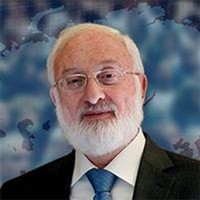
Dr. Michael LaitmanMichael Laitman, On Quora: “What do you think about 150 mass shootings taking place so far in the United States?“

Meaninglessness and purposelessness are the key problems. More and more people have no idea what they live for, and life with no meaning and purpose makes human life lose its importance and preciousness. Mass shooters thus feel human life as cheap and worthless, and the more this meaninglessness and purposelessness spreads throughout human society today, the more mass shooters surface.

The remedy to this problem is simply education.

Education does not mean the education systems that abound today, which are mostly systems for acquiring knowledge. The aim of education should not be to simply fill job positions and create a workforce. On the contrary, education needs to aim at creating happy, fulfilled, confident and well-connected human beings. And this is possible if we learn why we are alive, what the meaning of life is, who we are, what is our nature, how nature works and how we can elevate ourselves to a dimension above life and death, above love and hatred—to realize principles and values that are eternal and whole, and which lead us all to a new harmonious state that completely fulfills us.

If we all knew and felt how nature operates, then we would become more considerate of other people, because we would clearly sense our interdependence.

When we feel that we are all parts of a single closed system, then we would be incapable of causing any harm to others, because we would feel how doing so solves nothing. On the contrary, we would feel that harming others destroys us.

Therefore, the alleviation of future mass shootings and all kinds of other violence and suffering that we inflict on each other depends on our education. If we fail to upgrade our education to raise human beings who know why they are alive, how nature works, and how they can achieve lasting genuine happiness, then we can expect more and more mass shootings and other tragedies to befall us.

Written/edited by students of Kabbalist Dr. Michael Laitman.

“Why Is It Important To Develop A Positive Self-Image?” (Quora)

Dr. Michael LaitmanMichael Laitman, On Quora: “Why is it important to develop a positive self-image?“

Developing a solely positive self-image is actually detrimental to our development because it can blind us from what we need to change in ourselves.

On the contrary, we need control and balance between a positive and negative self-image. For example, doubting ourselves as we head into exams at school or university urges us to study more and prepare better. Excessive self-confidence and being a know-it-all are harmful to our progress. We thus have to be able to direct the shift of our self-image from positive to negative and vice versa.

In addition, we should aim our self-image at a goal that we set out to achieve, so that we measure ourselves in relation to that goal. We thus need to regularly examine that goal and how we progress toward it—questioning whether we have the necessary means to achieve it, and accordingly adjust our self-image to be optimally goal-oriented.

Written/edited by students of Kabbalist Dr. Michael Laitman.
Photo by Malcolm Lightbody on Unsplash.

“For The Purpose Of People Unity, What Are The Proven Methods Throughout History?” (Quora)

Dr. Michael LaitmanMichael Laitman, On Quora: “For the purpose of people unity, what are the proven methods throughout history?“

The wisdom of Kabbalah is a time-tested method of unity, which was first implemented to unite people above their differences and disputes in the time of ancient Babylon, some 4,000 years ago.

It acts on the premise that we people are by nature in a broken and divided state, and when we start bringing ourselves together in order to connect, we discover the impossibility of connecting positively without the guidance of a method.

The reason we cannot connect positively is because we are egoistic by nature, instinctively prioritizing self-benefit over benefiting others, and the latter tendency needs to be higher in priority if we are to positively connect.

The wisdom of Kabbalah is a method that explains first and foremost not to move in a direction that opposes another person’s opinion, but how to make a sandwich, so to speak, of forces of separation (our egoistic nature) and forces of connection, which we draw through study. It is written about such a sandwich that “Love will cover all crimes.” That is, we understand that due to our egoistic nature, we are divided, that we endlessly criticize each other, and feel varying degrees of rejection to one another, from indifference to hatred. However, we pay no attention to this natural rejection we feel toward each other.

Instead, the wisdom of Kabbalah provides a method for how to concentrate ourselves on uniting above the ego. All of our differences remain, and we focus on connecting positively to each other above the differences. We maintain the differences and build a second level upon them.

Moreover, the wisdom of Kabbalah states that humanity is going to reach a level where everyone will unite above their divisions, however for the time being, only a small critical mass of people will be drawn to such a wisdom in order to implement unity above their differences. Through this critical mass realizing this method on themselves, their unity will start acting throughout humanity. In other words, the current period involves a group of people applying the method of unity on themselves similar to how a small group of scientists perform several experiments in a lab with the goal of discovering a new technology to improve human life in a certain way. Once they discover it, then it becomes patented and released on a mass scale, and humanity receives the ability to use it with a few simple instructions.

Based on New Life episode 1145, “The Image of the People of Israel,” with Kabbalist Dr. Michael Laitman and Oren Levi. Written/edited by students of Kabbalist Dr. Michael Laitman.

“What Is The Counting Of The Omer?” (Quora)

Dr. Michael LaitmanMichael Laitman, On Quora: “What is the Counting of the Omer?“

An Omer is a sheaf gathered from produce that is harvested and tied together. The spiritual meaning of “Omer” is a share (count, numbering) of levels that we attain, which are seven levels of successive connection. The connection becomes stronger and tighter on each level, and we constantly count our seven Sefirot in such a process, namely the Sefirot of Hesed, Gevura, Tifferet, Netzach, Hod, Yesod and Malchut.

Each of these Sefirot is made of another seven Sefirot, for instance, Hesed of Hesed, Gevura of Hesed, Tifferet of Hesed, Netzach of Hesed and so on. Seven times seven equals 49, which is where the 49 days discussed in the Torah about the Omer count come from.

During the Omer count, we undergo introspection and scrutiny of our inner qualities in how they connect to one Omer with all the rest. Such connection is different to that which helped the people of Israel escape from Egypt. The Omer count starts on the second day of Passover. It is a time when we each scrutinize in what Sefira and states we perform corrections on our desire to receive.

We connect more and more among each other, i.e., adding to our bundle of sheaves, until we eventually discover ourselves standing at the foot of Mount Sinai. The spiritual meaning of Mount Sinai is a mountain of hatred (“Sinai” from the word, “Sinah” [“hatred”]). It is when we discover the tremendous size of the ego that separates us from connecting to each other and with the Creator. We arrive at this state on the day 50 of the Omer count, i.e., during the process of correcting ourselves in order to become increasingly connected.

In other words, the more we connect, the more we discover our inborn ego blocking us from genuinely connecting. However, together with the discovery of our immensely divisive egoistic nature, we also develop a great desire to connect, which becomes expressed as the condition of “Arvut” (“mutual guarantee”). That is, we want to be connected to each other in one Omer, but we lack the strength to annul our egos. We thus agree to the Torah’s conditions and method to increasingly connect and thus gradually correct the ego, and we also do not outright eliminate the ego.

The Omer count thus represents the start of our progress toward a deep spiritual connection among each other and with the Creator—the force of love and bestowal that connects us. It describes a process that we undergo toward a more corrected future state of positive connection among each other, where on the way to such a state, we discover the vastness of our ego standing in the way of our connection. We experience several inner contradictions and paradoxes on this path, and ultimately a tiny point within us—our spiritual desire, called a “point in the heart”—lets us scale Mount Sinai, where our egoistic selves are unable to.

The idea of a major obstacle in the form of the ego that stands in our way to positively connect was also expressed in the story about the Tower of Babel. However, with Mount Sinai, it assumes a completely different form, and exists on a whole new level. Specifically, it is in that we have passed through the states of Babylon and the exodus from Egypt, and we start understanding that if we rise above the ego, then at its peak, we will discover the Creator in our connection.

Spirituality is attained through opposite states residing in the same place. We aim at increasing our positive connection to each other, and discover a massive ego in the process, i.e., pride, arrogance, and our failure to control such states, and we also agree to lower our heads and accept the need to correct our ego in order to genuinely connect and discover the Creator—the force of love and bestowal dwelling in our connection.

Based on “Secrets of the Eternal Book” on May 28, 2014. Written/edited by students of Kabbalist Dr. Michael Laitman.

“What Are Some Tips For Boosting Self Esteem?” (Quora)

Dr. Michael LaitmanMichael Laitman, On Quora: “What are some tips for boosting self esteem?“

Self-esteem is the starting point from which we shape ourselves, our image, in relation to our goals, our needs, the world, society and ourselves.

Therefore, shaping ourselves in relation to a goal that we envision to ourselves is key here, and self-esteem is an element that we can work with in the process.

In order to develop or boost our self-esteem, we need to clarify the goal that we want to reach, depict our image or form when we reach such a goal, and then we can measure ourselves accordingly and determine whether or not we are on route to its achievement.

We should thus view self-esteem as a means by which we can progress to the goal. We should not feel guilty about any traits that we were born with, but be at peace with them, understanding that we were given exactly the right qualities in order to fully realize ourselves.

Then, we should question what is our correct realization? What image, form and goal should we aspire to? Also, how can we advance toward it?

After clarifying these questions to ourselves, we should be able to discern what should we be content and discontent with about ourselves, and that it is all in order to advance us optimally toward our goal.

Written/edited by students of Kabbalist Dr. Michael Laitman.

Photo by Emmanuel Bior on Unsplash.

“What Does It Mean To Conquer Yourself?” (Quora)

Dr. Michael LaitmanMichael Laitman, On Quora: “What does it mean to conquer yourself?“

Conquering yourself means aiming to organize your egoistic drives in order to reach life’s final destination—balance with nature—and not caving into the ego’s demands.

By doing so, we enter into a constant struggle with the ego, which always draws us in different directions and makes us fail, and if we play our cards right, then we also overcome it time and again.

Human nature is egoistic. Due to the ego residing in each of us, we either consciously or subconsciously aim to benefit ourselves at the expense of others and nature. However, we are developing toward a final state of total balance with nature, which functions according to opposite altruistic laws.

Therefore, if we seek our final state, trying to align ourselves with it, and try to build positive connections and altruistic attitudes to each other above our innate egoistic quality, i.e., thinking in terms of what would benefit others, nature and the world above thoughts of self-benefit, then we would be on course to conquering ourselves.

Based on the show “News with Kabbalist Dr. Michael Laitman” on February 15, 2021.
Written/edited by students of Kabbalist Dr. Michael Laitman.

“How Important Is Sense Of Humor In One’s Life?” (Quora)

Dr. Michael LaitmanMichael Laitman, On Quora: “How important is sense of humor in one’s life?“

Nature gave us a sense of humor in order to transcend and criticize ourselves, and laugh at what nature does to us.

A sense of humor lets us see ourselves from a higher degree, and thus can also help elevate us outside of our current degree to a higher one. Viewing and laughing at ourselves from aside can spark an inner scrutiny into who we truly are, and whether we can be more than what we currently are.

Kabbalists not only laugh at themselves but also constantly criticize who and what they are, and how they can change. If we know how to laugh at ourselves, then as it is written, “God has brought me laughter” (Genesis 21:6) from which we can grow.

I personally like jokes about human weaknesses and how we can rise above them. Such jokes help us develop, because if we know that we have such negative qualities, then we can work on rising above them.

Everything has been created for our development, including a sense of humor. A sense of humor gives us the strength and the ability to develop.

On the other hand, we should never make fun of others. We should laugh only about qualities that exist generally in humanity, as by so doing, we can highlight weak spots that we can change in ourselves, and as such progress to more and more balance and harmony among each other and with nature.

Written/edited by Kabbalist Dr. Michael Laitman.
Photo by Siviwe Kapteyn on Unsplash.

“What Is The Importance Of Interdependence In Nature?” (Quora)

Dr. Michael LaitmanMichael Laitman, On Quora: “What is the importance of interdependence in nature?“

Interdependence in nature exists on its still, vegetative and animate levels. No created being—including human beings—can exist on their own, separate from other beings. In nature, there is a constant exchange of substances with their environment. Even a rock feels its environment and the environment feels the rock through several forces and systems that we have yet to fully understand.

Also, the higher up the levels of nature we go, and also between the levels, the more interdependence there is. There is a very tight connection between the still, vegetative, animate and human levels of nature.

We people are, on one hand, part of the animate world, intimately connected to the still, vegetative and animate levels of nature. However, on the other hand, due to the human ego, we want control and power over nature, to make nature submit to our demands. Such an inclination backfires on us as the subjective ego is blind to what it really needs in order to truly benefit itself.

We are all parts of a whole interdependent and interconnected system. However, our egoistic attitude disrupts, corrupts and brings about imbalance in such a system.

Today, we live in an era where we are becoming more and more aware of the extent to which we harm nature, ourselves and our future generations. Moreover, we seemingly do not care much, if at all, about the harm we cause, which is also due to the same ego.

Therefore, the importance of interdependence in nature is that it should lead us humans to acknowledge how we think and act contrarily to such interdependence—in our egoistic attitudes to each other and to nature.

In order to reach balance with nature’s interdependence, we need to change our attitudes to each other so that they match the overriding attitude in nature: egoistic to altruistic, divisive to connected. We will then enter into balance with nature and experience a whole new kind of harmonious existence, the likes of which we cannot even imagine right now.

Written/edited by students of Kabbalist Dr. Michael Laitman

My Thoughts On Twitter 4/10/21

Dr Michael Laitman Twitter

I have to make the group more important than the world, so it will pull me upwards, just as the world sucks me in with its worthless values. I have to feel how the upper force operates inside the group. Then I should speak in the group about the Creator’s greatness because it is easy to annul oneself before one who is great.
From Twitter, 4/10/21

Related Material:
My Thoughts On Twitter 4/5/21
My Thoughts On Twitter 4/4/21
My Thoughts On Twitter 3/31/21

“Can Singing Benefit Your Health?” (Quora)

Dr. Michael LaitmanMichael Laitman, On Quora: “Can singing benefit your health?“

According to various scientific studies, singing lowers blood pressure, cortisol levels, and stress, and increases the level of dopamine that creates feelings of pleasure and increases motivation.

Singing helps sync ourselves with our feelings and hopes. Animals also sing, and it is an activity that has been around before we developed language.

Singing generates a certain reality because it stems from the innermost places of the heart. We cannot sing what we disagree with. We can lie when we talk, but we cannot lie when we sing.

When we sing together with other people, we connect our hearts, sharing a connection in a common activity.

Singing can connect the hopes, aspirations and emotions of a whole nation, and even the whole world.

Singing together with others gives us a boost of energy and strength as it involves the mutual participation of several hearts, desires, intentions, aspirations, disappointments and hopes.