Entries in the 'Kabbalah Study' Category

Love Always Rises Above Hate
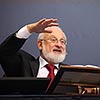
Dr. Michael LaitmanThere cannot be love without hate. After all, love comes precisely as the correction for hate. It isn’t an innate part of us, but we have to build it by ourselves. This is where the command of “love thy friend as thyself” comes from: From the love of the created beings we move on to the love of the Creator. The Creator is the general, sum of all the forms of love.

But first I discover the matter of my egoistic desire, my “Mt. Sinai“, my mountain of “hatred,” the shattered vessel to its dark depth. This is called the “illumination of Malchut,” and it is really frightening.

Then I have to correct this hatred, and only by that do I reach love.

There is no independent love; there are no independent vessels of bestowal. There is the Light that Reforms that I draw in order to correct myself. I don’t leave the hate, I still feel and acknowledge it, it is kept, and above it instead of the “mountain of hate,” I build a “mountain of love.”

This is how the vessel is built; below there is thickness and above a Masach and the Returning Light (RL), which means adhesion. In the upper part I form my attitude to the Creator, all my intentions, and then I cover my hate with the Light of Hassadim below. Then comes the Light of Hochma and fills the vessel.

This happens time after time until the end of correction. Hate which is opposite from the Light remains, since otherwise I will not be able to be independent.

Question: Does that mean that I have to come to the lesson charged with rejection, and aversion in order to overcome it? What deficiency, what feeling of a flaw, should I bring with me?

Answer: Don’t look for hate. You should not come with a flaw, but with love. There is only one goal and what comes along the way is not our business. If hatred is revealed—let it be revealed, and if not—then it isn’t. I have to be attracted to one thing only, and if in the process I discover in me an inability, lack of understanding, lack of knowledge, etc., it means that that’s the way it should be.

I want to be clever, and on the way I discover that I am still stupid. But I am yearning for something that is totally different. So despite everything, I need to focus on the final goal.
[95754]
From the 4th Daily Kabbalah Lesson 12/17/12, “The Wisdom of Kabbalah and Philosophy”

Related Material:
Penetrating Love Through Barricades Of Hate
Love That Defeats A Mount Of Hatred
About Love And Hate
About Facts And Myths

Dr. Michael LaitmanBaal HaSulam, “The Peace,” First Method: Nature

This method is an ancient one. Since they did not find a way and an outlet to bring these two conspicuous opposites closer, they came to assume that the Creator, who created all these, who watches mightily over His reality lest any of it be cancelled, is mindless and senseless.

Hence, although He watches over the existence of reality with wondrous wisdom, yet He Himself is mindless, and does all that senselessly. If there had been any reason and feeling in Him, He would certainly not leave such malfunctions in the provision of reality without pity and compassion for the tormented. For this reason, they named Him “Nature,” meaning a mindless, heartless supervisor. And for that reason, they believe that there is no one to be angry at, to pray to, or to justify oneself to.

This is an ancient concept, approach, although we see it as a new attainment of materialism. The simplest way is to see the world as it is, and this was actually the initial approach of humanity. Religions, beliefs, and philosophical approaches came along much later, when man developed internally, became more complex, and began to invent different myths. In the beginning people simply saw nature and lived in it like animals who also don’t believe in anything. This is how we should actually relate to nature, as it says, “a judge only has what his eyes can see.”

The following approaches stemmed from the disagreement with what happens in nature; people invented them as different excuses, and so they are all false. In fact, we see facts that are independent of our attitude towards them. But man invents different excuses in order to sweeten life or to enjoy false hopes.

A healthy attitude to life is in the scientific approach. We see the effect of unchangeable exact laws everywhere, the activity of systems and the periodicity of natural elements. If I see that that’s the way things are, then it is so, and don’t offer me different lies. I see the truth and any addition to it is individual and cannot be counted on. It is in these additions that beliefs are created, while nature is revealed in facts as it actually is.

The wisdom of Kabbalah continues this approach, telling us about the principles of the perception of reality. We see this world before us, and, except for that it, says that there is a whole area called “the upper world,” which is not imaginary, but which can be studied scientifically. Thus the wisdom of Kabbalah continues conventional science and conducts research beyond the boundaries of conventional science.

With the help of the wisdom of Kabbalah, I continue scientific research and develop new vessels of perception, expand their range, and keep the principle of “a judge only has what his eyes can see.” There is nothing more than that; everything else, including religions, is actually philosophy.
[95592]
From the 4th part of the Daily Kabbalah Lesson 12/14/12, “The Peace”

Related Material:
The Science Of Changing Oneself
Are The Exact Sciences Really So Exact?
The Wisdom Of Kabbalah And Philosophy: Who Has The Last Word?

Fundamentals Of Kabbalah – 12.16.12

A Virtual Lesson on Fundamentals of Kabbalah

[media 1]   [media 2]

Why Do Humans Draw? – Laitman Unplugged

Concealed And Revealed

Dr. Michael LaitmanThe wisdom of Kabbalah consists of two parts: the concealed and the revealed.

“Concealed” means forbidden to reveal. And what is the point in revealing? Indeed, everything can be written in books, but what a person can get from them depends on the state he is in. Thus one of the parts of the wisdom of Kabbalah is called “concealed,” because it is revealed only after certain conditions are fulfilled as a person goes through the cleansing of his ego.

It is also called that way since the upper part of the world of Atzilut is inaccessible to us. Even if I learn about the smallest, initial level of the spiritual ascent and am still in the worlds of Assiya, Yetzira, Beria and only later enter the world of Atzilut, still, even the smallest level I am on, the first ten parts called “one level” (one level is made of ten Sefirot), already gives me an idea about all of creation, but in a minimal way, on a small scale. Then I rise and see, like on a map that I read on a larger scale, everything there is enlarged.

But being at the bottom, I cannot bring the concealed part, GAR of Atzilut, its upper part, close to me in any way, which means to depict it. I can imagine different lower levels more or less, and then too I am always wrong, since every upper level is a new attribute regarding a lower level. Still, I can somehow imagine it, but not the levels that are concealed or that are called secret. All the levels below them are called revealed and we can reach them all, anticipating in advance what revelations they will bring us.

The first Partzuf of the world of Atzilut is called Atik, from the Hebrew word “ne’etak” – “cut,” detached and cut off, from our attainment. The next Partzuf is called Zeir Anpin, and the upper part of its “head” is called Keter, or more accurately Kitra (in Aramaic), and this part is also concealed.

Everything that is below this part is gradually revealed to us: Kruma of Avira, Mocha of Avira, Mocha Stima. The structure of all these parts is very interesting, since it is from them, from the revealed part of the head of Arich Anpin, that the Providence descends into our world, that our fate descends.
[94499]
From a Virtual Lesson 11/25/12

Related Material:
The Forbidden Secret Is Open To Any Baby
Standing At The Threshold
Like Water Seeping Through Sand

Educational Program Of Terminology

Dr. Michael LaitmanAll of our life, history, and everything that we went through from the beginning of creation until now divides into two parts: exile and redemption. There is nothing else except for these two states:

      • It could be that I separate from the upper force and exist in exile, in some kind of illusion, in a “dream” that is called “this world” under the influence of my egoistic desire which detaches me from seeing and feeling the spiritual world;
      • Or by means of certain actions, which the wisdom of Kabbalah teaches us, I reach the revelation of the upper force and demand it to take me out of exile, and to raise me above this world to the upper world, and when that finally happens, then I am rewarded with redemption.

The difference between exile (Galut – גלות) and redemption (Geula – גאולה) is the letter “Aleph” (א), which  symbolizes the Creator, (Aluph – אלוף) Champion of the world. This is how all of our reality is divided, all the process of development. We certainly aren’t aware of this until suddenly we receive an awakening which allows us to stop the period of exile, the darkness, the feeling of this world, the intolerable and worst state, and to pass to a new period, a new level, a new state, that is called redemption. It’s for this that we study.

Since we exist in this world, we use the words to describe the upper world, the spiritual state. But together with this, it’s forbidden to forget that the contents and meanings of the words are different from their usual meanings. For example, Adam (man/human) belongs to the category of “Israel,” which isn’t according to one’s birth, but according to his spiritual longings.

“Religious,” from the spiritual meaning of the wisdom of Kabbalah, are the Sefirot of “Daat” (intellect/knowledge), “Tifferet” (Splendor) and “Yesod” (Foundation) which is the middle line. In other words, a person who already works with three lines and arrives, or at least longs to adhere to the Creator is called “religious.” And secular is one who is found under the control of the desire to receive. “Holiness” is the attribute of bestowal and love.

In this way, all our terms and definitions are characteristic of only one thing: identifying what force operates on a person in determining his intention in each action. Either it’s with the intention for the sake of bestowal, according to the principle of “love your friend as yourself,” which comes to “love of the Creator,” or the opposite, with the intention to receive for oneself. That is all the difference that exists between people.

A person who studies the wisdom of Kabbalah without the intention to attract the Light that Reforms has no chance to attract this Light in any other way. And without this Light he remains “secular,” meaning he exists with the intention to receive for himself. He is separated from the Creator and even from the Light that Reforms, which is also called the “Torah.” Thus, when we are reading the writings of the Kabbalists, we need to always understand and remember that they express solely spiritual terms.
[94589]
From the 4th part the Daily Kabbalah Lesson 12/3/12, “Exile and Redemption”

Related Material:
The Correct Attitude Toward Sacred Books
Kabbalah: One Simple System Of The Basic Laws Of Nature
TES: A Kabbalist’s Personal Diary

Deviations Are Impossible

Dr. Michael LaitmanBaal HaSulam, “The Essence of the Wisdom of Kabbalah”: Thus, one should wonder how is it possible for Kabbalists to use false words to explain the interconnections in this wisdom? Also, it is known that there is no definition through a false name, for the lie has no legs and no stance. Indeed, here you need to have prior knowledge of the law of root and branch by which the worlds relate to one another.

Hence, we can understand that the wisdom of Kabbalah is one hundred percent authentic. In chemistry, for example, they use very long formulas that define the composition of a substance. The name itself describes the material, its components, and the relationships between them. However, the formulas and names display only their external qualities. In order to understand formulas, you first have to study the language they are written in. If any other scientist, who is unfamiliar with the accepted nomenclature of modern chemistry and doesn’t know the latest research in this field, begins to explore the same phenomena, he would describe them in his own language and would use quite different terminology.

It means that there is no authenticity in our regular language, even though it also is given to us from Above as is anything else in this world; however, this is a different issue.

On the other hand, when Kabbalists do their research in order to find truth, or when they explore a phenomenon, or investigate its outcome, they go to their roots. The upper Light turned the desire into a black point and then expanded it into two directions: Hassadim and Hochma, in other words, upward and downward, to the left and to the right, forward and behind. We observe various phenomena, their consequences, words, letters and combinations thereof. We start at a single point of creation; everything is defined for us by the connection between the Lights and the vessels: shapes, arrangement of letters, combination of words, and even the way we read them.

This is why Kabbalah is an ideal and unambiguous wisdom that doesn’t depend on any subjective factors that are contingent upon any particular person. It doesn’t get identical medications that are named differently only because they were made at different enterprises. We attain truth, perceive genuine phenomena that are of an internal nature, and learn how to express them in a way that is unchangeable and independent.

In other words, one attains the Absolute to the extent of the correctness of one’s desires. This is the only limitation there is. To the degree to which we associate ourselves with the Creator, we become similar to Him in our properties. It happens in accordance with the only law that works in nature. We discern the world and discover new things that can be described orally or in writing in real terms.

In general, it is what we call “the language of branches.” This language has its own specifics. It contains certain words that are built of spiritual elements, but all in all the names are taken from this world. Why? Because on our way to spirituality we discover that the worlds impact one another, making a chain that goes from top to bottom; this influence reaches the “lowest” state, the very last step. Accordingly, we pick up authentic words at this step, trace their connection with the roots, and assign names in accordance with the branch they belong to.

Naturally, it can be done only by those who see the connection between the root and the branch.
[93797]
From the 4th part of the Daily Kabbalah Lesson 11/19/12, “The Essence of the Wisdom of Kabbalah”

Related Material:
Names With An Inner Content
This World Is A Dictionary Of Spiritual Terms
The Language Of Branches That Connects The Worlds

A Handmaid Devoted To Her Mistress

Dr. Michael LaitmanBaal HaSulam, “Introduction to The Study of the Ten Sefirot,” Item 33: If one’s faith is incomplete, and he does not engage in the Torah or in the work only because the Creator commanded him to study, then we have seen above that in such Torah and work the Light does not appear. This is because one’s eyes are flawed, and like a bat, turn the Light into darkness.

Such a study is no longer considered a maid of Kedusha, since he will not acquire Lishma through it. Hence, it comes to the domain of the maid of Klipa (shell), which inherits these Torah and work, and robs them for herself.

Hence, “the earth doth quake,” meaning the Holy Divinity, called “earth.” This is so because those Torah and work that should have become to her, as possessions of the Holy Divinity, that evil handmaid robs and lowers them to be a possession of the Klipot (shells). Thus, the handmaid is heir to her mistress.

At some point in life a person living in this world asks himself: “What is the meaning of my life?” This question gives him a certain connection with the Torah, the wisdom of Kabbalah, and he starts studying it, feeling that this can give him an answer to the question about the meaning of life, its secret.

If he studies the Torah specifically for the sake of this, it is a correct attitude. But if he does so only because “the Creator commanded it,” it is called Klipa, an impure intention. It would seem why is that, if he fulfills the Creator’s order? But the fact is that we are egoists by nature, motivated by the desire to receive pleasure, to fill ourselves, and to win. If a person says that he studies the Torah only because it is the Creator’s commandment, it means that he doesn’t have a real desire for it and his approach is erroneous. The true desire that could lead him to the purpose of creation hasn’t awakened in him yet.

However, if he studies because he wishes to find out why and for what purpose he exists, what the meaning of his existence is, what the purpose of life is, then it is a useful, natural, inner desire, need, to reveal the secret of his life. And hence even by studying with the egoistic intention, being confused, and mixing in various other goals, he nevertheless can come to a result. Most important is that he has an inner, true desire.

Even if the correct intentions and pure desires, the aspiration for bestowal and love of the other, of the Creator are non-existent, it’s not terrible: He is already on the right path. The Book of Zohar calls this state a handmaid who tends to her mistress.
[94673]
From the 1st part of the Daily Kabbalah Lesson 11/26/2012, “Introduction to TES“

Related Material:
Malchut That Wanted To Attain Keter
The Patient Is Dead And Feels Good About Himself
Know What You Want Precisely

The Cure For Insomnia – Laitman Unplugged

Weakness At The Great Moment

Once, on the eve of the Sabbath, ARI told his students, “Let’s go to Jerusalem. I know where the ashes of the red cow are hidden. Let’s pour them on us and purify ourselves from evil, and build the Temple since I see that this hour is the end of exile.”

One said, “How can we get to Jerusalem if it’s more than 30 parsaot away?” The others added, “We are ready to go, but, first, we want to notify our wives so that they won’t worry about us.”

Then, the Rav exclaimed, “From the time of the Rashbi (the author of The Book of Zohar) until today, there was no other time so suitable to correct the world (from egoism), but we lost this chance!”
[82591]

Related Material:
The end Of Slavery In Egypt Is Near
Everyone Will  Have To Go Through The Exile In Egypt
If You don’t Want To, You Won’t Find Anything