
Entries in the 'Quora' Category

“What Are The Most Important Things We Need To Teach Our Children Early In Their Life?” (Quora)
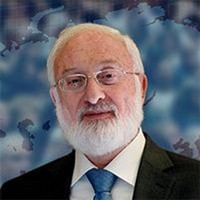
Dr. Michael LaitmanMichael Laitman, On Quora: What are the most important things we need to teach our children early in their life?

Today’s globally interconnected and interdependent world where we raise our children is very different from the world we grew up in.

In order for children to grow up prosperous and happy in today’s world, they need to gain awareness of how connected we are, and the sooner they learn about it, the better.

We should teach them about the planet we live on, so that they understand how we exist in a single ecosystem, with myriad interactions running throughout nature’s still, vegetative, animate and human levels.

We should also teach them about the solar system, the influence of the sun and the moon over the Earth, how seasons change, and how natural forces shape our lives.

In terms of human development, we should show children that divided civilizations and nations become antagonistic and filled with problems, while united ones prosper.

Most importantly, we need to teach them the interconnectedness and interdependence of nature’s forces as a single system and their effect on us. They should understand that even though they connect through today’s technologies, their connection extends beyond technology to other people and nature on all of its levels.

The goal of emphasizing humanity’s and nature’s interconnectedness in children’s education is to nurture their positive connections with their environment, i.e. with other people and nature. If they grow up with a sensation that caring for other people and nature positively affects them, and vice versa, that not caring about other people and nature negatively affects them, then they will bypass a lot of suffering and live enjoyable, peaceful and harmonious lives.

The key point in this connection-enriching education is to understand that our attitude to other people and nature is an ongoing relationship. We can then understand the reciprocity in nature. Thriving relationships, whether in families, friendships, couples, work relations, or in society at large, require mutual consideration. The advantages of reaching genuine friendship and even love in a relationship always override the efforts we apply to get there. Therefore, gaining awareness of our interconnectedness and interdependence should lead us to the conclusion that we should invest in our connections to realize our interdependence positively.

Animals have no instinctive drive to harm other animals. Any killing of other animals that they do is out of necessity for their survival, but not out of a sinister intention to enjoy the other animals’ suffering. People, however, have an additional egoistic quality, as it is written, “The inclination of a man’s heart is evil from his youth.” We should thus raise our children with a constant concern that they will learn the interconnectedness and interdependence of everyone and everything, and think and act accordingly.

Based on a Q&A with Kabbalist Dr. Michael Laitman and a team of writers on September 2, 2021 – Writers Meeting 274. Written/edited by students of Kabbalist Dr. Michael Laitman.

“What Is The Purpose Of Public International Law If There Are No Effective Enforcement Mechanisms To Apply It?” (Quora)

Dr. Michael LaitmanMichael Laitman, On Quora: What is the purpose of public international law if there are no effective enforcement mechanisms to apply it?

Today, international law is in the hands of speculating politicians who use it for their egoistic goals. The solution to this problem can take place on condition that we change our social values to altruistic ones. With such a shift, we can affect positive change in relationships between people and between countries. Doing so will impact a fundamental shift in our increasingly malevolent attitudes to each other to positive connections. It is necessary for altruistic values to be the foundation for all international agreements.

Of course, there is no just international law today, and therefore there are also no effective mechanisms to apply it. Only on condition that it will be altruistic and directed at humanity’s benefit, that humanity will want such laws and governance to become implemented, and will understand the need for them, will a worldwide form of governance emerge.

Today, we also discover that the UN fails to fulfill its task. It cannot do so, as it is like a toy, a means, in the hands of politicians, and it fails to carry out what we had counted on and hoped for in the past. We could form a thousand more international organizations, whether altruistic or egoistic ones, and governments—but the same situation will continue until we change their foundation: a transformation for them to be for humanity’s benefit, fortified by the understanding of the general law of nature.

Based on a Q&A with Kabbalist Dr. Michael Laitman on September 9, 2006. Written/edited by students of Kabbalist Dr. Michael Laitman.

“Do We Need To Fix Humans?” (Quora)

Dr. Michael LaitmanMichael Laitman, On Quora: Do we need to fix humans?

The weakness of world reformers throughout the generations [is that] they regarded man as a machine that is not operating properly and needs mending, meaning to remove its broken parts and replace them with working ones. – Kabbalist Yehuda Ashlag (Baal HaSulam), “Peace in the World.”

There is nothing faulty in a person and nothing needs changing in him. Everything was given to the person by nature, so different negative attributes, and even desires to kill and to steal, were given to us by God or the Creator. (“Nature” and “God” are regarded as the same force of love and bestowal in the wisdom of Kabbalah. In Gematria, “God” and “the nature” are equal in number.)

We do not correct people by imprisoning or executing them. We can correct ourselves by placing ourselves in frameworks where we can reach the understanding that we need to correct our nature, or in other words, to positively connect above our most negative impulses toward them.

We need to rise to the next level of our development without destroying our negative attributes, and we needs to acquire positive impulses instead of negative impulses in relation to others.

When we actively apply a positive impulse above our negative impulses in such a way, then we will start feeling a new state of connection between plus and minus as between the negative and positive poles of the same field. We will then start feeling a whole new peaceful and harmonious reality.

Based on “Fundamentals of Kabbalah” with Kabbalist Dr. Michael Laitman on July 7, 2019. Written/edited by students of Kabbalist Dr. Michael Laitman.

“How Come There Are 7 Billion People, Yet We Feel Alone?” (Quora)

Dr. Michael LaitmanMichael Laitman, On Quora: How come there are 7 billion people, yet we feel alone?

Egoism, the desire to enjoy at the expense of others, is at the basis of our nature. Over the course of our lives, we constantly develop and grow. As a result, we find ourselves increasingly separated from each other, and in our time, we have reached the fact that we can no longer stand each other. We find ourselves becoming increasingly divided, isolated, detached and hateful of one another, and sink deeper into depression, anxiety, stress, loneliness and drug abuse. The growing ego separates us, and we feel that we are truly cut off from everyone and even from our very selves.

On the other hand, we also start feeling the opposite: that we increasingly depend on each other and cannot live without each other.

So how can we resolve this dilemma, where we find ourselves becoming increasingly interdependent, but at the same time, we hate and reject each other? How can we tie this problem into one?

We cannot do so in our current life. There is but a single solution: we need to rise from our current level of existence, where we all live with self-concern as our top priority, to a different level, where we prioritize the benefit of others, and positively connect to them. If we reach the understanding that our egoistic mode of existence is out of gas, and that we need to shift to a different state, opposite to the current one, then we will merit a harmonious existence in balance with nature, and no one will feel alone.

Based on a Q&A with Kabbalist Dr. Michael Laitman on September 9, 2006. Written/edited by students of Kabbalist Dr. Michael Laitman.

“If You Could Give One Piece Of Knowledge That You Have To Everyone In The World, What Would You Choose? Anything As Long As It Is Something Specific.” (Quora)

Dr. Michael LaitmanMichael Laitman, On Quora: If you could give one piece of knowledge that you have to everyone in the world, what would you choose? Anything as long as it is something specific.

We began developing in our ego 6,000 years ago. This ego constantly pushed us to develop and severed us from the truth. In the past, like animals, we were connected with nature and instinctively carried out its laws. However, our ego separated us from nature. We thus found ourselves out of balance with nature and we became egoists. This is because nature is altruistic and operates by altruistic laws.

We thus became increasingly egoistic and separated from nature. In our era, globalization has revealed the great extent of our interconnectedness and interdependence, and the degree to which we hate each other. Today, we start seeing our shaky egoistic base as the base of our misfortunes. This is why we need to understand that there is no way out other than to invert our ego to bestowal, to altruism.

This is the knowledge that I would like to pass on to people. It exists in the wisdom of Kabbalah, which discusses the fact that by means of the method called “the wisdom of Kabbalah” we can change our nature, and save ourselves from extermination and disasters that are increasing in our time. This is how we provide a good future for ourselves, our children and the world, and it is how we elevate our existence from the materialistic level to the spiritual, eternal and perfect level. Unless we do so, and do so quickly, then we will reach the same outcome by means of suffering. The global crisis will nevertheless obligate us to undergo our fateful transition from egoism to altruism.

Based on a Q&A with Kabbalist Dr. Michael Laitman on September 9, 2006. Written/edited by students of Kabbalist Dr. Michael Laitman.

“Can Anybody Destroy His Desire?” (Quora)

Dr. Michael LaitmanMichael Laitman, On Quora: Can anybody destroy his desire?

Desires cannot be destroyed.

Desires are the matter of creation. However, above every desire, the intention should be changed from a self-serving intention to one that is aimed at the benefit of others and nature.

Likewise, by ceasing to work with intentions aimed at self-benefit, then our egoistic desires die off. Once our egoistic desires are dead, we can then revive our desires to operate altruistically.

While we cannot destroy the desire, we can remove the desire from the self-aimed egoistic intention upon it. The desire then remains in a completely amorphous and suspended form, and its egoistic intention disappears.

It then becomes possible to work with the desire again, however with an altruistic intention.

Based on “Secrets of the Eternal Book 7” with Kabbalist Dr. Michael Laitman and Semion Vinokur, on August 2, 2021. Written/edited by students of Kabbalist Dr. Michael Laitman.

“Is The Current Economic System Inherently Corrupt? If So, How Do We Go About Dismantling It?” (Quora)

Dr. Michael LaitmanMichael Laitman, On Quora: Is the current economic system inherently corrupt? If so, how do we go about dismantling it?

We need to reveal the egoism present in each of us as the source of evil, to reach a desire to use everything that we have from nature solely in order to reach a positive state, and to understand that a positive state depends on our society.

Through globalization, we see the vast extent to which we depend on each other. Our global interdependence will become increasingly apparent up to a point where every one of us will feel complete dependence on everyone else, down to the fact that if other people who are not under my control will not want to be benevolent toward me, then I will have no right to exist.

If we will all understand the tightness of our interdependence, then we will want to correct ourselves, i.e. to invert our egoism to altruism. If we will each know that we depend on everyone else, then we will want everyone else to be kind to us. Also, we will know that others will express kindness toward us only on condition that we express kindness toward them.

If we succeed in understanding our mutual dependence, the law of mutual guarantee, then we will be able to arrange our lives such that our economic system will also change and start providing everything for us in the best and most effective way possible. Our interactions, including economic ones, will then change to be for humanity’s benefit.

This change depends on one condition: for us to open our eyes and see that in nature there is a law of equality between everyone. Just like the physical and chemical laws of nature’s still level, or the biological and genetic laws of nature’s animate level, there is also a law of life—the law of altruism—in the nature of humanity. Our body’s cells merit life on condition that every cell rejects any excessive benefit beyond its necessities and lives together with the entire body, providing it with everything necessary. Similarly, like a cell, a person in society must provide everything for society.

Based on a Q&A with Kabbalist Dr. Michael Laitman on September 9, 2006. Written/edited by students of Kabbalist Dr. Michael Laitman.

“Does God Belong To Any Religion?” (Quora)

Dr. Michael LaitmanMichael Laitman, On Quora: Does God belong to any religion?

God is the general nature and law of reality. In Gematria, the words for “God” (“Elokim”) and “the nature” (“HaTeva”) have the same numerical value, as they both represent the law of bestowal and love, or altruistic love. It does not mean the egoistic altruism inherent to us, where we perform altruistic acts in order to earn and receive something in return. Rather, it refers to the altruistic law, without any consideration of, or return to, oneself.

Our purpose in life, from God’s or nature’s side, is to bring us to full equivalence of form with Him/it. Such is God’s or nature’s goal in relation to each person. We were created by God/nature solely for this purpose.

God/nature leads us to this goal where we resemble Him/it. That is why we are called “human,” which in Hebrew is “Adam,” from the word “Domeh,” “Lehidamot” (“to become similar”). We need to become similar to God/nature by transforming our ego to altruism, to a form of bestowal. When we complete such a transformation, we complete our role in this world, and we then no longer have to return to this life. We then remain solely in the eternal spiritual life, without dressing into the materialistic body.

We need to use our freedom of choice by means of society’s influence upon us so that we become similar to God/nature. From God’s or nature’s side, He/it pushes us via positive or negative forces—depending on what we choose—pushing us toward the same goal.

It can also be added that God has no religion, because religions are an invention of people who wish to give themselves a psychologically-justified explanation of our existence in this world having a certain goal.

God is our general nature, which advances us to become eternal and perfect like Him.

Based on a Q&A with Kabbalist Dr. Michael Laitman on September 9, 2006. Written/edited by students of Kabbalist Dr. Michael Laitman.

“Why Is It Socially Acceptable To Hoard Wealth While So Many Go Without Basic Needs?” (Quora)

Dr. Michael LaitmanMichael Laitman, On Quora: Why is it socially acceptable to hoard wealth while so many go without basic needs?

We exist in an egoistic nature that constantly develops. It makes us want to enjoy at the expense of others and nature, and it is the source of all misfortunes and problems. We can fight with the many problems that we encounter, whether they be poverty, disease, inequality, oppression, drug abuse, depression, stress, anxiety, and the list goes on and on. However, in the end, all problems are an outcome of the constantly growing human ego.

Human egoism has been developing since ancient times. Our desires were originally very small, merely wanting to provide for our basic survival needs. They later developed through stages where we aspired for money, honor, control and knowledge. Moreover, the desire for knowledge is the desire for information about how to more effectively exploit people in order to optimally fulfill our egoistic desires. Money is equal to all the other pleasures, because everyone aspires for money. This is why, in our world, money gives people a sense of confidence in the present and in the future. If society would hold no value on money, then we would not accumulate it.

If we knew that our life depends on attaining nature’s eternity and perfection by unifying “as one man with one heart,” that precisely by means of attaining an altruistic sense of existence in our connections we would reach another level of life, and another guarantee for our lives—then we would be able to change our approach to money and stop treating it as a value that surpasses everything else.

This is why we need to realize the general law of nature, the law of altruism. By becoming equal to the law of altruism, we can merit perfection and eternity. Accordingly, we will also reach a state where money will disappear from the world.

Based on a Q&A with Kabbalist Dr. Michael Laitman on September 9, 2006. Written/edited by students of Kabbalist Dr. Michael Laitman.

“What Would Affect The Future Of Humanity Most Likely In A Positive Way?” (Quora)

Dr. Michael LaitmanMichael Laitman, On Quora: What would affect the future of humanity most likely in a positive way?

In our world, there is just one force that governs everyone: the will to receive pleasure. No matter what we do, we are constantly searching and choosing that which will ultimately bring us the greatest pleasure in the most optimal and safest way.

Humanity develops through intellect and emotions, which are sufficient to gain knowledge to better succeed in this world. There comes a time when humanity feels that it is not enough anymore, and finds itself in trouble, seeing that there are problems and obstacles. This pushes humanity toward the search for different methods, ideas, inventions and gadgets to mitigate life, to seek how to better advance. However, what we start finding is that our technologies and scientific discoveries bring us more harm than good.

We have reached a state where the development that we aspired for and respected suddenly becomes increasingly dangerous. From various harmful elements being released into the environment, to many countries possessing nuclear weapons, or toxic chemicals in our food, and even our actions toward each other have become increasingly toxic.

An inner enemy, our ego, stands in the way of positive further progress. The wisdom of Kabbalah reveals and teaches that our salvation is in developing positive human connections. Our connections, the connections between all of us, are all that we need to fix.

Based on the video “What’s in the Way of Humanity’s Future Progress?” with Kabbalist Dr. Michael Laitman. Written/edited by students of Kabbalist Dr. Michael Laitman.