The material world, which is simply called “this world” in the wisdom of Kabbalah, is our inner sensation of reality. It seems as if there is a world outside of our inner sensation, but it is all within.
Whether we see an immense universe full of galaxies and stars, or even the vastness of our very planet, with its still, vegetative, animate and human levels, we perceive it all in our desire to enjoy. Our egoistic desire is our nature, and if we detached it, then we would not feel ourselves or the world.
“This world” is the picture we perceive in our inborn desire to enjoy. It is an outcome of a higher force in reality acting on the desire. The myriad changes and movements we see take place solely in our desire. Nothing moves outside of us, but rather motions take place in our desires, which makes us perceive change and movement on the outside.
On the contrary, the spiritual world includes our innate impression of reality, but we also act together with that impression. If this world is the outcome of a higher force acting on the desire, then the spiritual world is the outcome of the interaction, the connection between the person’s action and the action of the upper force.
The more we resemble the upper force, the more we discover the spiritual world as the extent of our equivalence with that upper force.
Based on the Daily Kabbalah Lesson with Kabbalist Dr. Michael Laitman on November 16, 2021. Written/edited by students of Kabbalist Dr. Michael Laitman.
Fate is what we go through in our feelings, our lives and our conditions. It is an outcome of nature’s influence on us and our interaction with nature.
We have the ability to learn what our fate is and also manage our fate if we apply a certain amount and quality of effort in doing so. In other words, we can both reach a clear understanding of our fate and also take control over it if we wish.
In order to understand our fate and control it, we need to discover our operating program. By doing so, we gain a clear comprehension of the process we are in and how it urges us, from one generation to the next, to reach a final destination.
This process began with the beginning of creation, before the emergence of our universe, and gradually develops to a state where it will transition into another form completely to the form it is now in.
While we exist in our current reality, called “this world” in the wisdom of Kabbalah, we have the ability to change and influence our fate. Through the study of Kabbalah, we can attract the forces that let us influence our fate at every moment, and by doing so, change the nature of the myriad states that we undergo.
For instance, if a child’s parents sent the child to first grade at school, then that child has no choice but to undergo several years of schooling before graduating. The question is whether the child will enjoy these years learning and achieving, or feel them as a burden, getting punished.
Based on “New Life” with Kabbalist Dr. Michael Laitman and Oren Levi on December 21, 2014 and “Spiritual States” with Kabbalist Dr. Michael Laitman on October 26, 2021. Written/edited by students of Kabbalist Dr. Michael Laitman.
There are two forces operating in the world: the force of reception, which is the human ego, and the force of bestowal, the altruistic force that we need to attract to ourselves in order to reach balance and harmony among each other and with nature.
These two forces contradict each other.
In the egoistic nature of our world, there is a small group called “Israel,” which comes from the words “Yashar Kel,” which means “straight to the upper force,” that had once detached itself from the ego’s control, and achieved a genuine altruistic nature.
The more humanity—and the human ego—develops, the more the forces of reception and bestowal endure an ongoing struggle, and this conflict becomes expressed in our world as friction between Jews, i.e., the ones who bear the altruistic quality in potential, and non-Jews, i.e., the nations of the world, which defines the opposite quality of reception.
Antagonism between the two forces of receiving and giving aims at pulling us, the people of Israel, and then the rest of the world, toward the giving force.
At this juncture, antisemitism appears as a law of nature that helps Jews realize their mission: to unite above differences and be a conduit for an atmosphere of unity to envelop humanity.
Doing so would elevate humanity to another level of existence, one of peace, balance and harmony with nature.
Based on the video “Why the Urgency to Discuss Anti-Semitism Specifically in Our Time?” with Kabbalist Dr. Michael Laitman. Written/edited by students of Kabbalist Dr. Michael Laitman.
We ask about the meaning of life because, in contrast to the still, vegetative and animate levels of nature, the human level is qualitatively higher than the animate. In other words, the human level of existence is driven by the question about the meaning of life. Contrary to the animate level of existence, which does simply live life, the human level of existence hosts the question about the meaning of life, and has the ability to attain the meaning of life.
We have a question about the meaning of life because we have an innate tendency to wish to live eternally. If we cannot live eternally, then life loses its value, because everything dies and disappears.
Therefore, specifically the human’s most important question is about the meaning of life.
Based on a Q&A with Kabbalist Dr. Michael Laitman on “What Is the Meaning of Life?” Written/edited by students of Kabbalist Dr. Michael Laitman.
There are over 4,000 religions and beliefs in the world. The main religions stem from Abraham, who lived in ancient Babylon close to 3,500 years ago.
Abraham taught his method, the wisdom of Kabbalah, to a small group that he called “the people of Israel.” He also gave gifts, or other forms of faith, to the rest of the people. The Torah states that Abraham gave gifts to the children of his concubines and sent them eastward, where these methods reach back to us.
The difference is that Abraham’s method possesses the ability to correct a person, something that exists in no other method.
Kabbalah gives us the ability to attract the positive force toward us, which is concealed in nature, and which will correct our hatred toward each other by covering it with love.
The positive force becomes added to our egoistic nature and we then possess two forces. Their incorporation makes it possible for us to work with them, develop by redirecting our self-aimed desires in a direction of positively connecting to others, and discover an additional form of reality that is outside of us.
Modern physics discusses the existence of such a reality. Other than the universe, i.e. the world that we now perceive, there are other forms of reality.
The wisdom of Kabbalah makes it possible for us to break through our world’s limits and enter into the perception of higher worlds.
We have no such possibilities in other methods because they provide no access to the force that we can attract through the study that gives us the ability to make such a breakthrough. In the wisdom of Kabbalah, such a force is named the “reforming light.” That is, the uniqueness of the wisdom of Kabbalah is that it lets us attract this force that corrects our egoistic nature, elevating us above it to an opposite nature of love and bestowal, while we alive in our world. It is as is described in kabbalistic texts, that “You will see your world in your lifetime” (Berachot 17a).
Based on a talk “Short Stories” with Kabbalist Dr. Michael Laitman on October 22, 2014. Written/edited by students of Kabbalist Dr. Michael Laitman.
Besides the still, vegetative, animate and human levels of nature, there is nothing else in the universe. No matter how much we seek other life forms, we will nevertheless discover nothing outside of these four levels.
The human degree is the highest life form because it holds the ability to exit the corporeal world and enter into the higher spiritual and eternal world, a completely different level of existence beyond the universe as we know it.
As large as our universe seems, it is in fact a very tiny and limited place. It emerged from a tiny spark that broke through from a higher degree of existence, called a higher “world” in Kabbalah. We know this event as the Big Bang, a starting point for the construction of life forms and the existence we now have.
It is important for us to note that everything existing in our universe, including us, everything on our planet, and all the stars and galaxies, are merely the outcome of a tiny speck of light that came from a higher degree of existence.
We perceive a vast and endless expansiveness in the universe, with tremendous distances and an immense picture because of how we are created. However, when we look at it from a different point of view, we see it all as something very small and limited, and there is nothing special about it but the ability for the small tiny living creatures in that small circle to come out of it, to rise above that circle and exist on a higher level.
Our universe and everything in it exist on the lowest degree of reality, and by rising above this degree, we discover much bigger and more expansive degrees. We can rise through more and more degrees that exist in reality up to the final perfect and eternal degree. However, we do not need to reach that final degree in order to see that the universe as we currently perceive it, with the still, vegetative, animate and human levels of nature contained in it, stems to us from a higher degree of reality, creating all life forms in our universe and on our planet. There are no other places or degrees from which to emanate for any life forms, but solely from that higher degree.
Based on “Ask the Kabbalist” episode 12 with Kabbalist Dr. Michael Laitman and Joseph (Asaf) Ohayon. Written/edited by students of Kabbalist Dr. Michael Laitman.
To cross the barrier that separates our corporeal world from the spiritual world means to feel the reality within, and it is done by developing our desire for spirituality to a point where it is ready to resemble a certain portion of the spiritual world.
Our desire for spirituality, which is called the “point in the heart” in the wisdom of Kabbalah, emerges in our lives when we are ready to shift beyond corporeal fulfillment of food, sex, family, money, honor, control and knowledge, and embark on a spiritual path.
Such a desire becomes characterized by us questioning the meaning and purpose of our lives, when we feel an underlying dissatisfaction in our daily lives, and long for a certain “something else” that we cannot yet pinpoint.
Depending on the intensity of this sensation, we seek through various environments, such as books, teachers and groups, until we eventually come across the wisdom of Kabbalah. The wisdom of Kabbalah was created as a method specifically for answering our existential questions by guiding us to a clear perception and sensation to the purpose of our lives.
According to the wisdom of Kabbalah, the purpose of our lives is to attain the higher reality. The higher reality has several names, including the “spiritual world,” and it is characterized by a quality of bestowal, love and connection.
The more we apply ourselves to the method of Kabbalah, the more we develop our spiritual desire until it eventually gains the minimum “volume” necessary in order to resemble and enter the spiritual world. This minimum “volume” for crossing the barrier between our world into the spiritual world is called “the ten Sefirot.”
In the ten Sefirot, we start perceiving and sensing the higher reality. We feel how the quality of bestowal, love and connection, also called “the light,” enters and exits us, bringing about various sensations.
It starts with small changes in our perception as we start sensing and relating to the causal level of reality. We then start seeing our world amid a backdrop of a much vaster and more complete spiritual world.
By crossing the barrier into the spiritual world, while living in this world, we understand and feel the connection between the two worlds as causal and consequential levels of reality. These two levels of reality are called “root and branch” in the wisdom of Kabbalah.
During our application of the method of Kabbalah, we attract the light from the higher spiritual world to ourselves, and it repeatedly enters and exits our desire for spirituality, giving us the sensation of what is known in the method as “ascents and descents,” i.e. closeness and remoteness from the spiritual world. Before we cross the barrier between our world and the spiritual world, we feel these sensations in a relatively unclear way, similar to how a newborn baby experiences our world, yet without knowing clearly what is going on.
For instance, if the baby is in a room where the light is turned on and then turned off again, it does not know how to define that phenomenon as light turning on and off, but the baby nonetheless experiences the phenomenon. Likewise, as we apply the method of Kabbalah and enter the process of drawing the light from the spiritual world closer to ourselves, then that entrance and exit of the light provides us with a sensation of the spiritual world (as the light enters) and our world as its mere imprint (as the light exits).
In later stages of development, we start orienting ourselves in this light more optimally to the extent of our abilities, and we develop qualities that resemble the light more and more, entering into increasing balance and harmony with the spiritual world. Such a process continues until we eventually reach the completion of our soul, a state of eternity and perfection.
Based on “Ask the Kabbalist” episode 7 with Kabbalist Dr. Michael Laitman and Joseph (Asaf) Ohayon. Written/edited by students of Kabbalist Dr. Michael Laitman.
According to the wisdom of Kabbalah, there is an upper force called “the Creator” that created creation, which is a desire to enjoy.
The pleasure that the Creator fills the desire to enjoy with is called “light.”
The state where the Creator fills the desire completely is called the “world of Infinity.”
As the desire develops, it reaches a stage where it shatters into a multitude of individual desires, which in the wisdom of Kabbalah is called a shattering into “600,000 souls.” Since all of these desires shattered, they each hold only a minuscule portion of the light, and each one of these desires is called an “individual soul.”
However, such souls are incomplete. They are each only a tiny point within the complete soul. Moreover, they feel nothing of the complete soul but only a tiny point that leads it to yearn to return to its root, completely connected to all the other points as a large and complete single soul—a harmonious state of perfection where all parts are completely connected together as a single soul.
Our current times are ripe to start connecting these points together. In other words, today we are able to organize a closed system among each other where we can connect these points together as a segment of the complete soul, and discover the Creator’s light in such connection.
How does an individual point differ from a segment of the soul?
The point of the soul is also called the “point in the heart” in the wisdom of Kabbalah. It is a part that yearns to return to the complete soul. On the contrary, a segment of a soul is a gathering of these points as a group, what is called “a ten,” which is the minimal part of the collective soul that can function as a complete soul.
The soul is composed of ten parts, called “ten Sefirot.” We can differentiate parts of the soul that will operate exactly like the whole, but on a reduced scale. If we start connecting these parts, then the scale will increase.
However, in principle, the laws discovered in a group of ten will be identical to the laws in the complete collective soul, albeit to a smaller degree, because they will be less apparent, not rounded in the same manner.
Connecting the parts of the soul together is thus possible by organizing ourselves into small groups, where we each come together by having points of the soul, i.e. points in the heart, and realizing the method of Kabbalah that connects these points together. We then discover segments of the soul through these points’ connection, and the connection of the totality of these segments becomes the complete soul, where we discover complete harmony, eternity and perfection.
Based on a Kabbalah lesson with Kabbalist Dr. Michael Laitman on November 6, 2016. Written/edited by students of Kabbalist Dr. Michael Laitman.
The myriad phenomena that people believe takes place after death are merely theories about death, and even the phenomena that people have experienced in near-death experiences are psychological reactions within the temporary state of clinical death that they enter.
If we do not attain a clear perception and sensation of our soul during our current lives, then our body dies and rots away, and the level of desire we reach in our current lives assumes a new body. Such a process continues until we eventually attain our soul while we are alive in our world, in our bodies.
Therefore, while we are alive in our current bodies, if we hear about an opportunity to attain our soul, to access the spiritual world, then we we would be wise to take hold of that opportunity with both hands and start our spiritual ascent.
We need to stop believing in all kinds of angels and other phenomena that we think happens to us when we die. If we achieve no revelation of the spiritual world in our current lives, then we have no soul, and we simply keep incarnating in new bodies, accumulating experience and suffering, until our desire eventually ripens to embark on the process of spiritual ascent. It is as is written in the kabbalistic texts, “You shall see your world in your life.”
Based on “Ask the Kabbalist, episode 4” with Kabbalist Dr. Michael Laitman and Joseph (Asaf) Ohayon. Written/edited by students of Kabbalist Dr. Michael Laitman. For more information on what happens when we die, visit this page.
The door is always open for anyone to change, to improve themselves, and to become a beneficial part of society. Even people who have committed the worst crimes toward human society, and I am not just talking about murder or theft toward one or a few people, which we hear about on a daily basis, but even those who are considered the wicked of the world will have an awakening moment where they will understand what they have done, and will also desire to change.
Take, for example, the example of Adolf Hitler, who implemented mass murder and genocide within his own country, as well as devastation throughout Europe. Such people have no free choice. The upper providence guides them to perform such atrocities, and they themselves have no idea what they are doing.
In later incarnations, they will have to acknowledge the harm that they brought to humanity. It is said about such people that “the hearts of ministers and kings are in the hands of the Creator.” That is, there is an upper providence guiding human development, and certain times come along whereby humanity needs to experience certain blows, and then the upper providence—which can be called “the Creator,” “nature,” or several other names—acts through a certain person such as Hitler in order to implement a certain amount of suffering that humanity needs to experience in its development.
There are also other people through which good comes to the world, but unfortunately, barely any good comes to our world, so these examples are much rarer.
However, if we discuss ordinary people committing felonies here and there toward society, such people always have the ability to rise above their divisive inclinations and become beneficial contributors to society.
If we take serial killers as an extreme example, these are still very complicated matters to understand because in order to understand them completely, we need to understand how incarnations work. For instance, a person that someone harms in this incarnation could become their child in a future incarnation whom they will need to take care of.
We simply lack the tools of perception in order to understand the complete system we are parts of. In our world, we have no choice but to judge people according to specific actions that they perform at specific times, because we have no other ways of evaluating them. Moreover, we have to sustain a certain amount of balance in human society, and to not let all kinds of forms of evil break out into the open too much.
Yet, in order to perceive the truth in nature, we have to see nature’s beginning and end. And in such matters, there is none as wise as the experienced. There are people who have attained access to such perception of the order of reality and how our future states need to unfold until their very final state. Such people can also see what took place throughout every nook and cranny of human development, understanding the reason and purpose behind every form of suffering that took place, and accordingly, they can justify every event that has taken place throughout history.
Without such perception, then we operate in our narrow perceptions here in this world. It is very difficult to understand and agree with what I am saying here, but to put it as simply as possible, if we gain the full perception and sensation of reality, seeing nature from its beginning until its end, then we will be able to justify literally everything that has taken place.
This is why I teach and spread the wisdom of Kabbalah. It is a wisdom that guides us on how to achieve the complete perception of reality. By doing so, we will know how to operate our lives mistake-free, and free from all kinds of terrible outbursts. We will gain the tools to build a harmonious and peaceful society, where a heightened sense of unification and love will dwell among all people. Also, we will see exactly why certain people are born with certain inclinations.
Nobody is to blame for having certain inclinations. Just as some people aspire to become scientists, and other people aspire to become musicians, and so on and so forth, likewise some people have inclinations that society considers evil, like killing and stealing. If we developed a sensitivity to the precise inclinations different people have, then we would be able to guide them to channel their energy in ways that benefit society. For instance, we could channel such people to catch fish instead of catching people, to work as butchers, to cut people open as surgeons in order to heal them, instead of stabbing people to death, or to steal from our own egos in order to give to others, instead of stealing from others in order to gain selfishly for ourselves. All in all, we are made of desires to enjoy, and the type of enjoyment depends on the values and examples in society that we are raised with.
We have to understand that nature implants our inclinations into us, and we should not be punished or blamed for having certain inclinations. Instead, society has to discern each of us according to our inclinations, and to the extent by which we direct them at society’s benefit, we then undergo certain corrections. We would then gradually come to see how each and every inclination exists in order for us to decipher how to direct it for a positive purpose.
Directing our inclinations for positive purposes depends on the enveloping values and examples that society instills in us. For instance, if a person has an inclination to kill, and that person grows up with examples in society, such as the media and entertainment he consumes, coupled together with cutthroat competitive “every man for himself” values and divisive drives that promote hatred to blossom among people, then such a person is more likely to use his inclination in a negative and destructive way.
If, however, the enveloping social values and examples were enriched with positive examples of people aiming to benefit others and nature over their own benefit, with media and entertainment striving to promote such values, and also if our education systems shifted from raising us to compete with each other materialistically to instead cooperate with each other in order to positively connect above our divisive drives, then the person with an inclination to kill would also seek how to use that inclination in order to best serve the positive social environment that embraces him.
We are all born with different inclinations, and if we each supported each other to rise above them to relate positively to each other, then we enter a new network of connections with nature’s positive force of connection holding us together. We can then find our optimal places in society, and we can then each realize ourselves in a perfect and whole fashion. Then, even our worst inclinations—killing, raping and stealing—would find a positive expression as we would seek how to use these inclinations in order to positively contribute to society.
Based on the show “Ask the Kabbalist, episode 11: How to Correct Evil Inclinations” with Kabbalist Dr. Michael Laitman and Joseph (Asaf) Ohayon. Written/edited by students of Kabbalist Dr. Michael Laitman.

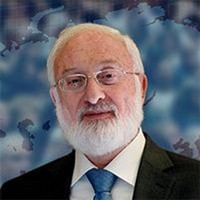 Michael Laitman, On Quora: “What is the spiritual world and material world actually?“



