
Entries in the 'Quora' Category

“Can American and Israeli Jews stay together?” (Quora)
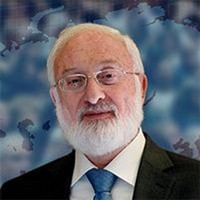
Dr. Michael LaitmanMichael Laitman, On Quora: Can American and Israeli Jews stay together?

A recent survey of US and Israeli Jewish millennials conducted by the American Jewish Committee shows that roughly a quarter of the respondents in the US have been forced to hide their Jewishness due to the anti-Israel climate, which also made roughly a quarter of the respondents rethink their connection to Israel.

In times where the anti-Israel climate intensifies, American and Israeli Jews can stay together as a result of us Jews strengthening ourselves. Also, we need to accurately define what being Jewish means, and what it means to be an Israeli in the State of Israel and in today’s world.

A Jew is one who aspires for unity with everyone (the Hebrew word for “Jew” [Yehudi] comes from the word for “united” [yihudi] [Yaarot Devash, Part 2, Drush no. 2]). People who have no aspiration for unity cannot be considered Jews.

If we accept and start living according to the true spiritual meaning of being Jewish, then one’s place of residence would not matter, whether it be Israel, America or the moon. We would all live according to the same values. If you aspire to positively connect with others, then you are a Jew because you want unity with everyone.

Based on the video “Can American and Israeli Jews Stay Together?” with Kabbalist Dr. Michael Laitman and Oren Levi. Written/edited by students of Kabbalist Dr. Michael Laitman.

“How is envy or jealousy ever good?” (Quora)

Dr. Michael LaitmanMichael Laitman, On Quora: How is envy or jealousy ever good?

Envy is a great developmental force. It is bad only if it sets us on a destructive course. However, if envy makes us build and improve ourselves, then the envy is good.

Envy is a characteristic quality of our egoistic desires. With its help, we see that others have things that we do not have. It thus makes us develop ourselves.

Envy integrates us, and such integration can continue up to a point of grasping other people’s desires, thoughts and qualities.

Based on the video “How Can Envy be Good?” with Kabbalist Dr. Michael Laitman and Oren Levi. Written/edited by students of Kabbalist Dr. Michael Laitman.

“How do parents appreciate teachers?” (Quora)

Dr. Michael LaitmanMichael Laitman, On Quora: How do parents appreciate teachers?

As a part of an Israeli news program, three parents were assigned as teachers at a prestigious school for a day, and it led them to have a much greater appreciation of teachers afterward.

I support such an experiment, i.e. to let parents be teachers for a day.

While teachers have their work to do, which requires constant listening to their students and a constant concern for how the students absorb the teacher’s messages, parents should likewise work similarly at home. Parents should raise the importance of teachers in the students’ eyes, that the teachers teach the students significant material that they will need for life, which they will be unable to hear elsewhere. Teachers should also go to school with such a feeling of responsibility.

A well-oiled triangle of teacher-parent-student comes about when parents and teachers work in tandem toward children in order to guide the children’s development into happy and successful human beings.

Based on the video “Should All Parents be Teachers for a Day?” with Kabbalist Dr. Michael Laitman and Oren Levi. Written/edited by students of Kabbalist Dr. Michael Laitman.

“Were Jews ever really slaves?” (Quora)

Dr. Michael LaitmanMichael Laitman, On Quora: Were Jews ever really slaves?

The people of Israel were a nation of slaves who escaped slavery in Egypt. This is what the story of Exodus discusses.

Being a slave means being enslaved to the human ego, our innate desires to enjoy at the expense of others, which determines our every desire, thought and action. Escaping that slavery means running away from the ego’s orders and rising to a different level. On the new level, we solely wish to observe the quality of bestowal, that it will guide our every desire, thought and action from now on.

What does “observing the quality of bestowal” mean? It means thinking about how to do good to everyone. Therefore, the escape from slavery in Egypt, as with all of the Torah’s accounts, is no historic story, rather it discusses our future development. We thus read such texts in order to learn about our future, what we will have to undergo in order to understand where we are headed. And it is written that we are headed out of slavery to freedom.

What is freedom? Freedom means being outside of the enslavement to our egos, that we think and act beneficially to everyone. We truly need freedom because once our sole wish is to benefit others, then we turn ourselves into conduits of the positive forces dwelling in nature: they pass through us to others. We then send everything we receive from nature to everyone, connecting everyone to nature’s quality of bestowal.

That state is called being a “trustworthy servant.” While it might sound like another slave-like state, being a connector between nature and humanity is in fact the greatest role that exists in our reality. It frees us from ourselves. It lets us realize the two desires that exist in reality—our desire to receive and nature’s desire to bestow—and we then take from nature what it wants for us, and take humanity’s deficiencies, and connect the two.

Based on the video “Were Jews Ever Really Slaves?” with Kabbalist Dr. Michael Laitman and Oren Levi. Written/edited by students of Kabbalist Dr. Michael Laitman.

“How do you get the most out of a relationship?” (Quora)

Dr. Michael LaitmanMichael Laitman, On Quora: How do you get the most out of a relationship?

We can get the most out of a relationship by first taking into account that we are parts of nature’s interconnected and interdependent system, and that we each have roles toward one another in this system.

That is simply how nature sets us up. We have to accept this as a given and seek how to correctly use this given, i.e., to give each other the opportunity to correct ourselves—to upgrade the way in which we view ourselves and the world as interdependent beings—in order to connect in wholeness and perfection.

In other words, it means that we need to reach a state of ever-increasing love between us. When we aim ourselves at achieving a state of mutual love in the shortest possible way, then it doesn’t matter what we experience on the way there.

Everything is headed toward a final state of love. If it will not happen right now, then it will take place in a few years, and if not in a few years, then in a few incarnations. Therefore, when we enter into a relationship, we should aim at no less than a state of complete and perfect love.

Based on the video “How to Get the Most Out of ANY Relationship” with Kabbalist Dr. Michael Laitman, Yael Leshed-Harel and Oren Levi. Written/edited by students of Kabbalist Dr. Michael Laitman.

“How do you find the strength to forgive?” (Quora)

Dr. Michael LaitmanMichael Laitman, On Quora: How do you find the strength to forgive?

How can we find the strength to forgive? We can find the strength to forgive when we understand human nature, and that our nature compels us to be the way that we are.

It is written about this, “Go to the Craftsman who made me.” In other words, “What are you getting mad at me for?” “Why are you blaming me?” “Go to the One who made me this way, which activates and operates me this way all the time. I, in and of myself, am nothing.”

In other words, there are puppets before you through which you need to relate to the One that made it all this way. By relating to the force behind everything and everyone, called “the Creator” in the wisdom of Kabbalah, then you make a request in order to understand those before you correctly, to see them as the Creator’s representatives toward you. Then, you reach the realization that everything in your life, in nature on the still, vegetative, animate and human levels, exists in order for you to discover the Creator’s attitude toward you.

What is the Creator? The Creator, which is given several names in the wisdom of Kabbalah, including “nature,” “upper light,” and “upper force” among others, is the general force of nature, the general law of reality: a quality, force and law of love, bestowal and connection. It has nothing to do with religion or belief.

We exist in a thought. Think of it like a massive computer program. Ultimately, in this system, the role of every person is to help us reach a final state of “Love your neighbor as yourself.” This is the law of the whole of reality, of our entire life and existence.

Based on “New Life episode 1185” with Kabbalist Dr. Michael Laitman, Yael Leshed-Harel and Oren Levi. Written/edited by students of Kabbalist Dr. Michael Laitman.
Photo by Gus Moretta on Unsplash.

“Where will love take you? To what extent will it influence people?” (Quora)

Dr. Michael LaitmanMichael Laitman, On Quora: Where will love take you? To what extent will it influence people?

If you start loving and caring about everyone and everything in nature—the still, vegetative, animate and human—according to the law of love, then you will see the immense influence it will have.

First, you will receive great satisfaction through everyone and everything in nature through your loving attitude toward them. You will start feeling reality through them as your and their mutual inclusion. You then integrate with the world and discover the force acting throughout the world. You start acknowledging the force that develops, evolves and enlivens nature. This is how all created beings exist. You thus start identifying with the force that controls nature.

Why is it that a loving attitude toward the still, vegetative, animate and human levels of nature, to everything and everyone around me, can reveal the force that controls nature?

It is because this force exists in everyone and everything, only you do not exist in the same values in order to reveal and feel it. Therefore, it is hidden. You hide it because of your disparity in qualities: you have hatred within yourself, and nature is absolute love.

Love toward everyone is life’s peak. Achieving it lets us feel the perfect and eternal reality, and you also become perfect and eternal.

Based on the video “Where Will Love Take You?” with Kabbalist Dr. Michael Laitman and Oren Levi. Written/edited by students of Kabbalist Dr. Michael Laitman.

“What is my role in my nature?” (Quora)

Dr. Michael LaitmanMichael Laitman, On Quora: What is my role in my nature?

We all live within a nature that is round, closed, whole and complete, with endless degrees and interactions and interconnections between its parts. We are parts of this immense system and cannot digest its wholeness, greatness, perfection and eternity. However, nature is a perfectly interconnected system, and as such, it is impossible for anything to move without everything else moving accordingly.

Nature is constantly headed toward a whole, perfect and complete state. Its parts belong to one of the five parts, which in Hebrew are called Shoresh (root), Alef (one), Bet (two), Gimel (three), Dalet (four) or still, vegetative, animate and speaking. They all move in a direction where they do not become one, but they connect, and through their connection, it is as if they become one.

In the relationships between the participatory parts is a law of connection that reveals itself up to a point of love, i.e. a state of complete interconnection and interdependence, where everyone is important and existing in a common love. It is as written, “the wolf also shall dwell with the lamb,” i.e. everyone understands that they are parts of the same body. Accordingly, as we cannot harm our own bodies, we likewise reach a state where we cannot harm any other part of creation, not even the smallest or the most distant ones.

Therefore, when we consider people or any other phenomenon in life, we should seek to know its source in the general global system of nature, and thus seek how we should respond correctly to what we feel from experiencing a certain phenomenon or a certain person, and how we mark their place in the general system.

Based on the video “What Is Our Role in Nature?” with Kabbalist Dr. Michael Laitman and Oren Levi. Written/edited by students of Kabbalist Dr. Michael Laitman.
Photo by Markus Winkler on Unsplash.

“What are your solutions to the overconsumption problem?” (Quora)

Dr. Michael LaitmanMichael Laitman, On Quora: What are your solutions to the overconsumption problem?

We need balance between us and nature.

We need to take care of our necessities—to kill animals for food, and burn coal, oil and gas in order to reasonably use mechanisms, equipment and heating. We cannot avoid doing so. We also need to use water wisely in an adequate measure. When we throw half of what we produce back into the ocean, which generates a lot of excess dirt and garbage, then we will naturally find ourselves drowning in such excess.

Yet, such a process is in the hands of those who greedily or foolishly try to produce and earn as much as possible, discarding whatever is unused while people around them keep quiet. It has become an unstoppable process, and it turns out that half of whatever we produce in the world today is unnecessary.

The solution is to work out what is necessary and unnecessary in our lives. By doing so, we would stop about 70 to 80 percent of our production.

Moreover, the issue of working out what is necessary and unnecessary can be approached logically. Even though we are unaware of several conditions, it is still possible to exercise this approach. For instance, economists have already calculated and estimated what it means to fulfill people’s needs. But is there anyone who takes that into account? Are there people who care about everyone having enough, with no more than what is truly needed?

Nonetheless, it is a starting point: to calculate what is necessary and unnecessary in our lives.

However, there is a major problem: human nature—the egoistic desire to enjoy at the expense of others, which wishes to place oneself over others—demanding its sustenance. And the problem is in the ego always wanting to outperform others, to be better off than them. So we can work out our necessities and surpluses all that we like, but in the end, the ego will constantly want more and more, to be above one’s neighbor and to have more than them.

Therefore, together with working out what is necessary and unnecessary in our lives, and providing for our necessities, we also need a more comprehensive educational approach that shows us how our egoistic nature operates, where it is leading us, and how we can rise above its influence by connecting to each other in a common giving intention. By working out our needs, taking care of them, together with the regular learning and implementation of positive connection in human society, we would be able to solve the problems of overconsumption and overproduction, and would find that we would be able to live comfortably and happily with about 70 to 80 percent less than what we currently produce, buy and throw away.

Based on the video “How to Deal With Overconsumption and Overproduction” with Kabbalist Dr. Michael Laitman and Semion Vinokur. Written/edited by students of Kabbalist Dr. Michael Laitman.

“What is a meaningful interaction?” (Quora)

Dr. Michael LaitmanMichael Laitman, On Quora: What is a meaningful interaction?

A meaningful interaction is any interaction where we consider:

Why is it happening?
What is its source?
What is the desired outcome?
By relating as such to our interactions, we would start moving in a direction where we start thinking that every person, animal, plant and object has its place and time.

The world is hidden from us, and it reveals itself to us one interaction at a time. These interactions are imaginary forms that exist solely in our perception and we make them meaningful by organizing our attitude toward this movie that is playing at every moment, i.e. toward the world.

Based on the video “What Is a Meaningful Interaction?” with Kabbalist Dr. Michael Laitman, Yael Leshed-Harel and Oren Levi. Written/edited by students of Kabbalist Dr. Michael Laitman.
Photo by Timon Studler on Unsplash