
Entries in the 'Quora' Category

“Will AI replace teachers in the future?” (Quora)
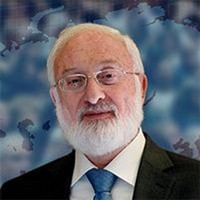
Dr. Michael LaitmanMichael Laitman, On Quora: Will AI replace teachers in the future?

In Tel Aviv schools, a pilot was launched in order to overcome a severe shortage of teachers with the help of virtual glasses and AI. In practice, it means that computers will replace some of the teachers.

A computer can replace certain aspects of a teacher, but it is unable to replace the heart-to-heart relationship between teacher and student.

Living breathing human beings can give examples to each other that computers cannot. We can teach various professions through the computer, and students can absorb a lot of information, solve problems and learn technical and creative skills, but they will be unable to learn how to correctly relate to other people without being in a society, in a classroom, without being connected to their teacher, friends and peers—and especially with their friends and peers.

In our era more than ever before, we need to learn that positive human connection and mutual support can save us from every problem, and we should seek to develop our heart-to-heart relationships at least for the sake of our survival, and moreover, for our overall satisfaction and happiness.

Based on the video “Will AI Replace Teachers?” with Kabbalist Dr. Michael Laitman and Oren Levi. Written/edited by students of Kabbalist Dr. Michael Laitman.

“Is happiness internal or external?” (Quora)

Dr. Michael LaitmanMichael Laitman, On Quora: Is happiness internal or external?

Everything we sense is internal. No one else senses what an individual senses, and if someone senses something and tells another about it, which the other person cannot adequately relate to as part of their feelings, they then do not know what they are talking about.

Whatever is not inside the person is thus nonexistent. Therefore, happiness is internal, and it appears when something we truly aspire for becomes fulfilled.

Such a feeling can be called “happiness.” However, there are a range of levels between what we suffer from and what makes us happy. It turns out that the greatest happiness appears when we feel ourselves coming closer to balance with nature, similar to how a child yearns for his or her mother. That is when we feel happiness.

Happiness is a strong desire for a fulfillment that we always wanted to materialize, but we had already lost hope. Then, the positive force of nature—the force of bestowal, love and connection called “the Creator”—appears. It utters “Where have you been? I have been looking for you!” And the person wants to say: “I am the one who has been looking for You! Not me—but You, where have You been?” That is how they come together, in a simple fashion, without any hesitation or words.

That is happiness. However, it is not the kind of fusion that occurs in our world, when two bodies cling to each other while retaining their own space and individual sensations. Here we have no bodies, but a reciprocal sensation of mutual diffusion. As a result, a certain state of being emerges.

In terms of our sense of self, we then want it to melt away. We feel absolutely no need for it. However, if the feeling of oneself disappears, then the feeling of the other will also disappear. That is why it is designed such that the self needs to exist.

In the language of Kabbalah, it is described as follows: the Aviut, i.e. the “thickness” of the ego, does not disappear. Moreover, as the ego keeps increasing, we can acquire the ability to harmonize it with the quality of bestowal. As a result, the ego, the hatred, becomes greater, and love also increases. In our linear world, we do not understand how it works. That is how it plays out in the spiritual realm. And such hatred and love increase to a state of infinity, where we feel infinity. There is then no limit to such happiness, but it has to be felt, otherwise it is meaningless. However, there is a very long path ahead of us before we reach such a sensation.

Based on the video “Is Happiness Internal or External?” with Kabbalist Dr. Michael Laitman and Semion Vinokur. Written/edited by students of Kabbalist Dr. Michael Laitman.

“Is there a creator?” (Quora)

Dr. Michael LaitmanMichael Laitman, On Quora: Is there a creator?

The wisdom of Kabbalah explains our complete interconnection in the general system of reality. We are completely connected whether we like it or not throughout the still, vegetative, animate and speaking degrees of nature.

Even though we do not see the full extent of our interconnectedness, we are nonetheless connected in a way where we each determine each other’s states.

The system of our connection is hidden, and we can thus harm each other because we perceive other people as disconnected from us.

The wisdom of Kabbalah, however, states that we share a deep essential connection, and the closer we come to discovering our deep and true connection, we likewise discover the force that dwells inside that connection, called “the Creator” or “the upper force.”

In other words, the more we discover the true connection we all share, then the more we discover the Creator that acts in this system, flowing through it like how blood flows through our bodies.

Based on the video “Where Is the Creator?” with Kabbalist Dr. Michael Laitman. Written/edited by students of Kabbalist Dr. Michael Laitman.

“Is money evil, or is it just a myth?” (Quora)

Dr. Michael LaitmanMichael Laitman, On Quora: Is money evil, or is it just a myth?

Money is the universal equivalent for effort. It is an indicator for our personal exertion that shows the extent to which we succeed by using the special talents we receive. For instance, money can somewhat measure whether one person is smarter, more successful, stronger or luckier than another person. It is essential to have a universal equivalent for such measurements.

Having such a universal equivalent is not evil. We cannot measure each and every person, yet we still need to be able to somewhat evaluate people and their efforts.

In Hebrew, the word for money is “Kesef,” which derives from the word for covering, “Kisuf.” It means that we cover our efforts correctly, with an intention to bestow goodness upon others, and the measure of covering our efforts is called “money” (“Kesef”). However, in its original Hebrew use, such a meaning of money/covering implies spiritual efforts and results.

Yet it also applies to our corporeal world. As mentioned, money is a certain universal equivalent we use to measure human efforts. It can, however, be replaced with another universal equivalent: relationships. That is, when we understand human relations and exercise positive connections among each other and with nature, when the laws of nature becomes our common universal equivalent, then the other dimensions will disappear, except for our inner attitudes to each other, our relationships. In the language of Kabbalah, such a measurement is called a “Masach” (“screen”) and “Ohr Hozer” (“reflected light”). The screen and reflected light become spiritual tools akin to the way in which we use coins and banknotes today. The strength of the screen and reflected light that we receive is equivalent to the strength we have to resist our own egoistic desires, which prioritize self-benefit over benefiting others, and raise the importance of benefiting others over benefiting each person’s own self. We can then measure the extent to which we positively connect in ties of bestowal above our egoistic resistance.

The more we can bestow above our egoistic resistance, the more we discover true spiritual wealth, which is eternal and completely fulfilling, unlike corporeal wealth that never truly satisfies. Wealth is about how much of ourselves we can give to others. That is the high spiritual root of money, and it has since descended to simple cash and coins that we relate to in our corporeal reality. However, we need to descend to the very bottom, and see the true egoistic extent of our relationships, in order to realize the lowliness of such relations and reach a critical juncture where we develop a genuine desire for change. At that point, nature’s positive forces will lift us. We just need to realize the lowliness of our current state and the desire to change, and accordingly ask for the kind of change that nature responds to: to improve our attitudes to each other and wish for nature’s quality of bestowal to enter into our connections.

Based on the video “Is Money Evil?” with Kabbalist Dr. Michael Laitman and Semion Vinokur. Written/edited by students of Kabbalist Dr. Michael Laitman.

“What is Kabbalah in one sentence?” (Quora)

Dr. Michael LaitmanMichael Laitman, On Quora: What is Kabbalah in one sentence?

Kabbalah is a wisdom that explains the single force of nature, which determines everything, and which exists and acts in every person and in the whole of humanity.

Based on the Daily Kabbalah Lesson on the article “The History of the Wisdom of Kabbalah” by Kabbalist Yehuda Ashlag (Baal HaSulam) with Kabbalist Dr. Michael Laitman. Written/edited by students of Kabbalist Dr. Michael Laitman.

“What are the qualities of a righteous person?” (Quora)

Dr. Michael LaitmanMichael Laitman, On Quora: What are the qualities of a righteous person?

At the outset, it is worthwhile clarifying that what people commonly think of as righteous—as people who give of themselves for the betterment of others, e.g. people who give money, clothes, and food to the needy—such people are not actually righteous.

Why? It is because such people have a natural desire to do good deeds, and instinctively following one’s desires is not a quality of a righteous person.

A righteous person is one who hosts two counter-forces, positive and negative, and who exercises their free choice to raise the positive force and action against their own natural desire.

The negative force is our egoistic desire, which makes us want to benefit ourselves without any concern for anyone else.

The positive force lets us receive what we need for our sustenance, and give the surplus we receive to benefit others, despite the negative force that tells us to take everything for ourselves. A righteous person is one who hosts these two forces, and who elevates the positive force over the negative one.

When we give of ourselves to others against our innate desire to receive for ourselves, we bring correction to our desire: from receiving for ourselves to giving unto others. Our soul, our collective desires, then become filled with a divine light.

If we receive what we need for our sustenance, and give the rest for the benefit of others, then we become great righteous people. Even more so, we become balanced with nature. Holding the right balance in life and with nature means that we leave for ourselves what we need in order to live normal lives, and contribute our surplus to society. It does not mean living merely on bare bodily necessities. We can be healthy and wealthy, and give a lot to others.

We are talking about an inclination in our hearts, and the more this inclination sorts itself out—from evil to good—in our hearts, the more we will see its positive materialization throughout the world.

Based on the video “What Are the Qualities of a Righteous Person?” with Kabbalist Dr. Michael Laitman and Oren Levi. Written/edited by students of Kabbalist Dr. Michael Laitman.

“Will AI ever replace the judicial system?” (Quora)

Dr. Michael LaitmanMichael Laitman, On Quora: Will AI ever replace the judicial system?

Scientists in China have created an AI judicial system has been shown to prosecute with 97% accuracy from tests at the prosecutor’s office in Shanghai. It was trained on 17,000 cases, and the system was found to arraign on charges of fraud, gambling, dangerous driving, theft and igniting unrest. For the time being, it helps the prosecutor, while the final decision remains in human hands. Nevertheless, there is a tendency to think that AI will be able to fully replace the judicial system in the near future.

I am certain that it will come to pass because we are predictable and limited beings. Prosecutors themselves are often as corrupt as the people whom they prosecute, and so an AI judicial system could likely be fairer than the current system.

That brings up the question: Why is there so much corruption in our current judicial system to begin with?

It is simply a consequence of a society that is uncorrected and egoistic, i.e. that we each host a desire to exploit others for personal benefit. There is thus nothing we can currently replace it with.

Until we repair human relations on a mass scale, from prioritizing self-benefit to benefiting others, then our own corrupt nature will become increasingly evident in our various systems.

Based on the video “Will AI Ever Replace the Judicial System?” with Kabbalist Dr. Michael Laitman and Semion Vinokur. Written/edited by students of Kabbalist Dr. Michael Laitman.

“How do you judge someone fairly?” (Quora)

Dr. Michael LaitmanMichael Laitman, On Quora: How do you judge someone fairly?

You judge someone fairly by being an intermediary between the Creator and the world.

The world can bring any charges against the Creator, and a fair judge can acquit everyone of almost all of these charges. That is, a fair judge should be neither a judge nor a prosecutor, but a defender, a “justifier.”

In other words, a fair judge passes acquittals, not sentences. How can we justify someone who is completely under the Creator’s control? If we see that he committed a crime, then the Creator committed the crime through such a person. We need to thus rise to a level above judgments, courts and investigations, a level of kindness and mercy.

A fair judge considers all other people as judges who judge him. In the Torah, judges were appointed collectively by the people. Naturally, they were held to great standards and expectations. A fair and true judge is both the Creator’s and the people’s representative. He must unite them, and be above the fray, so to speak.

Based on the video “What Is a Judge?” with Kabbalist Dr. Michael Laitman. Written/edited by students of Kabbalist Dr. Michael Laitman.

“Do you think you have the qualities to be a judge? Why? What qualities are important?” (Quora)

Dr. Michael LaitmanMichael Laitman, On Quora: Do you think you have the qualities to be a judge? Why? What qualities are important?

A true and fair judge is an intermediary between the Creator and the world.

The world can bring any charges against the Creator, and a fair judge can acquit everyone of almost all of these charges. That is, a fair judge should be neither a judge nor a prosecutor, but a defender, a “justifier.”

In other words, a fair judge passes acquittals, not sentences. How can we justify someone who is completely under the Creator’s control? If we see that he committed a crime, then the Creator committed the crime through such a person. We need to thus rise to a level above judgments, courts and investigations, a level of kindness and mercy.

A fair judge considers all other people as judges who judge him. In the Torah, judges were appointed collectively by the people. Naturally, they were held to great standards and expectations. A fair and true judge is both the Creator’s and the people’s representative. He must unite them, and be above the fray, so to speak.

Based on the video “Will AI Ever Replace the Judicial System?” with Kabbalist Dr. Michael Laitman and Semion Vinokur. Written/edited by students of Kabbalist Dr. Michael Laitman.

“Who was The Zohar written for?” (Quora)

Dr. Michael LaitmanMichael Laitman, On Quora: Who was The Zohar written for?

The Zohar was written for people who want to reach life’s peak, the purpose of creation, and strive to change their intention from our inborn egoistic one—reception for personal benefit alone—to one where we bestow, love and positively connect to others.

The Zohar provides the force, called “light,” which makes it possible to invert our intention in such a way, and discover the positive force dwelling in nature within our corrected intention.

Therefore, The Zohar, like the entire Torah, can be either the elixir of life or the potion of death. If we wish to study The Zohar, then we should check our intention for approaching it.

If we wish to change our intention by drawing the light that we can attract through reading The Zohar, then with the help of its study, The Zohar—a commentary on Five Books of Torah—becomes an elixir of life, as it is written, “I [the Creator] created the evil inclination [human egoism] and I gave the Torah for its correction because the light in it returns to the source.”

If we do not strive for an intention to bestow, that is, to return to the source, but our egoistic desires motivate our study of The Zohar i.e. to be fulfilled and to set other goals for ourselves, called “idolatry,” then our study turns into the potion of death and distances us from the purpose of creation.

Therefore, we should take care and remember that while reading The Zohar, we should prepare our intention in order to be granted the positive force of nature: love, bestowal and connection.

Based on the Daily Kabbalah Lesson with Kabbalist Dr. Michael Laitman on May 27, 2010 on “The Book of Zohar: VaIkra.” Written/edited by students of Kabbalist Dr. Michael Laitman.